

Maddy summaryThis bill renames a specific U.S. Postal Service facility in Rockford, Illinois, to honor Jay P. Larson. The building at 5225 Harrison Avenue will officially be called the "Jay P. Larson Post Office Building." All government documents, maps, and records referencing the location will automatically update to use the new name. This is a purely administrative designation with no policy changes or direct impact on citizens or services.
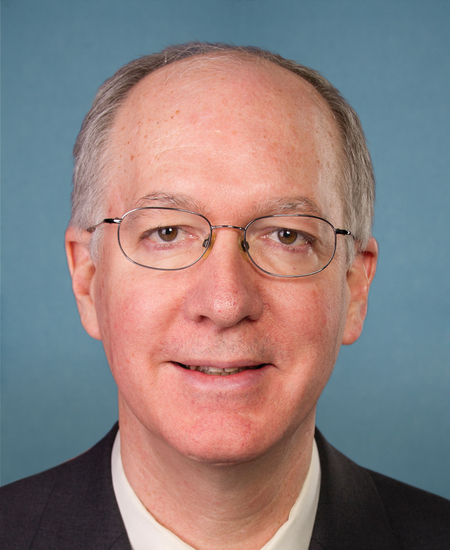
Rep. Bill Foster
Sponsored bills
Maddy summaryThe Our Homes, Our Votes Act requires landlords and public housing agencies managing federally assisted housing (including public housing, Section 8, and supportive housing programs) to include voter registration forms in lease agreements. When tenants sign their lease, it automatically serves as a voter registration application for federal elections, unless they opt out. Landlords must ensure forms include basic eligibility information, provide language access for limited-English speakers, and submit completed forms to election officials within 10 days. This applies to all tenants in covered housing units, streamlining registration without requiring separate action.
Maddy summaryThis resolution (HRES 1558) is a symbolic House of Representatives measure supporting October as "National Domestic Violence Awareness Month." It does not create new laws or allocate funding but formally expresses the House's support for raising awareness about domestic violence and its impacts, and urges continued backing for existing programs that address domestic violence. The resolution cites statistics on domestic violence prevalence (e.g., 24 people per minute affected by intimate partner violence) to underscore the importance of the observance. It directly affects public awareness efforts but does not change policies or directly impact individuals.
Maddy summaryThis bill modifies how disability benefits are treated for homeless disabled veterans seeking housing assistance. It excludes certain disability payments (under Chapter 11 or 15 of Title 38, U.S. Code) from income calculations when determining eligibility for HUD-assisted housing programs, including the supported housing program under Section 8(o)(19) and housing on Department property. Specifically, it ensures these benefits are not counted toward income for housing eligibility, though they still count for "adjusted income" definitions. The bill directly affects disabled veterans applying for HUD housing assistance who receive these specific disability benefits. It makes a concrete change to income calculation rules without altering benefit amounts or creating new funding.
Maddy summaryThis bill requires major banking regulators (Federal Reserve, FDIC, OCC, CFPB, and NCUA) to assess their current technology systems and procurement processes within 180 days. It mandates a detailed report to Congress every five years covering hardware/software used, challenges in acquiring new technology, workforce capabilities for tech development, data-sharing practices, and plans for future tech upgrades. The goal is to address outdated systems causing delays in monitoring banks, inaccurate data, cybersecurity risks, and difficulties in identifying financial risks or illegal activity. The bill focuses on improving regulators' ability to effectively supervise financial institutions using modern technology.
Maddy summaryThe VA Employee Fairness Act of 2024 modifies collective bargaining rules for employees of the Veterans Health Administration (VHA). It removes existing subsections (b), (c), and (d) from the law governing VHA employee bargaining and renumbers the remaining provision. This change streamlines the collective bargaining framework but does not alter the Secretary of Veterans Affairs' existing authorities over incentive pay and expedited hiring. The bill directly affects VHA employees by changing how their collective bargaining rights are structured under federal law. The law remains neutral, focusing solely on procedural adjustments to the existing bargaining framework.
Maddy summaryHR 9830, the Fair Credit for American Hostages Act, protects U.S. citizens wrongfully detained or held hostage abroad by preventing credit bureaus from reporting negative credit information during their detention period. It applies specifically to individuals certified as "covered consumers" under the Robert Levinson Hostage Recovery Act, requiring official documentation from the Special Presidential Envoy for Hostage Affairs or the Hostage Recovery Fusion Cell. Credit reporting agencies must remove any adverse credit entries tied to the time period of unlawful detention or captivity once they verify this documentation. The law directly affects victims of wrongful detention by ensuring their credit reports reflect the period of captivity as neutral, not negative.
Maddy summaryHR 9723 reauthorizes and updates the National Windstorm Impact Reduction Program, extending its funding and expanding its focus through 2029. The bill directs federal agencies to improve understanding of windstorm impacts - including wind-driven rain, fires, and storm surge - and develop cost-effective ways to reduce damage to buildings, infrastructure, and communities. Key changes include requiring interdisciplinary research (e.g., combining social science with engineering), adding Tribal governments to partnership requirements, establishing a new NOAA advisory committee, and prioritizing climate change impacts on future windstorm risks. This affects federal agencies like NOAA and HUD, researchers, and communities nationwide by advancing science-based strategies to enhance resilience against windstorms.
Maddy summaryHR 1719, the Honoring Our Fallen Heroes Act of 2023, establishes a presumption that certain cancers diagnosed in public safety officers (like police and firefighters) are work-related if linked to their duties. It defines 22 specific cancers (including lung, mesothelioma, and WTC-related cancers) as "exposure-related," allowing officers or their families to receive benefits without proving direct work connection, provided they were diagnosed within 15 years of leaving active service. The bill also creates a process for adding new cancers to the list based on scientific evidence, requiring the Bureau to review petitions and make decisions within 180 days. This applies to deaths or disabilities occurring on or after January 1, 2023, directly affecting officers who developed covered cancers during service.
Maddy summaryHRES 1495 designates September 2024 as "Sickle Cell Disease Awareness Month" to raise public education about sickle cell disease (SCD), which affects approximately 100,000 people in the U.S., predominantly in African American communities. The resolution urges the Department of Health and Human Services to address access barriers for SCD treatments in Medicare and Medicaid, calls for increased National Institutes of Health research funding, and proposes forming a federal interagency cabinet to coordinate SCD policy. It also encourages public events during September to highlight early detection, treatments, and preventative care for SCD complications. As a symbolic resolution, it does not create new laws but directs federal agencies to prioritize equitable access and research for SCD.