

Public Safety Officer Support Act of 2022 This act extends death and disability benefits under the Public Safety Officers' Benefits (PSOB) program to certain public safety officers and survivors of public safety officers who suffer or suffered from post-traumatic stress disorder, acute stress disorder, or trauma and stress-related disorders following an exposure to one or more traumatic events while on duty. The PSOB program provides death, disability, and education benefits to public safety officers and survivors of public safety officers who die or become disabled as a direct and proximate result of a personal injury in the line of duty. The act specifies that post-traumatic stress disorder, acute stress disorder, or trauma and stress-related disorders suffered by a public safety officer following an exposure to a traumatic event while on duty constitutes a personal injury in the line of duty if exposure to the traumatic event was a substantial factor in the disorder. Further, for the purposes of death and disability benefits, the act creates a presumption that an officer's death or permanent disability was directly caused by a personal injury in the line of duty if the officer took an action intended to bring about his or her death and exposure to a traumatic event was a substantial factor in that action or that action occurred within 45 days of an exposure and was consistent with a psychiatric disorder. Finally, the act requires the Government Accountability Office to report on the details of benefits issued pursuant to this act, including recommendations to improve the PSOB program.
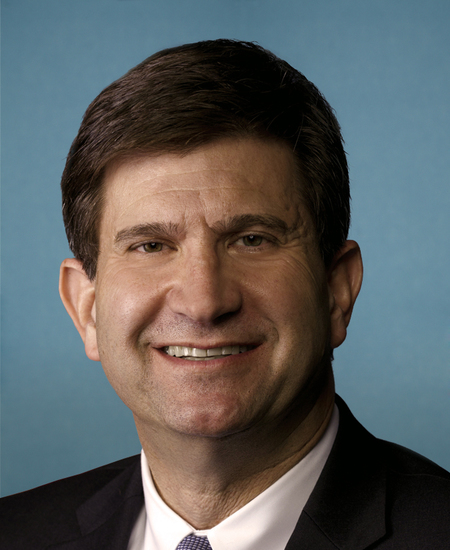
Rep. Bradley Scott Schneider
Sponsored bills
Harriet Tubman Bicentennial Commemorative Coin Act This bill directs the Department of the Treasury to mint and issue 50,000 $5 gold coins, 400,000 $1 silver coins, and 750,000 half-dollar clad coins emblematic of the legacy of Harriet Tubman as an abolitionist. The Secretary may issue coins under this bill only during the period of January 1, 2024, through December 31, 2024. All surcharges received by Treasury from the sale of such coins must be paid equally to the National Underground Railroad Freedom Center in Cincinnati, Ohio, and The Harriet Tubman Home, Inc. in Auburn, New York, for the purpose of accomplishing and advancing their missions.
Assault Weapons Ban of 2022 This bill makes it a crime to knowingly import, sell, manufacture, transfer, or possess a semiautomatic assault weapon (SAW) or large capacity ammunition feeding device (LCAFD). The prohibition does not apply to a firearm that is (1) manually operated by bolt, pump, lever, or slide action, except for certain shotguns; (2) permanently inoperable; (3) an antique; (4) only capable of firing rimfire ammunition; or (5) a rifle or shotgun specifically identified by make and model. The bill also exempts from the prohibition the following, with respect to a SAW or LCAFD: importation, sale, manufacture, transfer, or possession related to certain law enforcement efforts, or authorized tests or experiments; importation, sale, transfer, or possession related to securing nuclear materials; and possession by a retired law enforcement officer. The bill permits continued possession, sale, or transfer of a grandfathered SAW, which must be securely stored. A licensed gun dealer must conduct a background check prior to the sale or transfer of a grandfathered SAW between private parties. The bill permits continued possession of, but prohibits sale or transfer of, a grandfathered LCAFD. Newly manufactured LCAFDs must display serial number identification. Newly manufactured SAWs and LCAFDs must display the date of manufacture. The bill also allows a state or local government to use Edward Byrne Memorial Justice Assistance Grant Program funds to compensate individuals who surrender a SAW or LCAFD under a buy-back program.
This resolution expresses that the House of Representatives reiterates its commitment to ensuring Iran will never acquire a nuclear weapon, supports the important work of the International Atomic Energy Agency (IAEA) in safeguarding nuclear material around the globe, and condemns Iran for its lack of transparency and cooperation with the IAEA on the unresolved matter of uranium particles discovered at undeclared sites in Iran and for its additional escalatory actions related to its nuclear program.
Special Needs Trust Improvement Act of 2022 This bill allows a nonprofit charitable organization to be named as the remainder beneficiary of a Special Needs Trust (i.e., a trust that preserves a beneficiary's eligibility for needs-based government benefits).
Preserving Access to Home Health Act of 2022 This bill restricts the Centers for Medicare & Medicaid Services (CMS) from decreasing payments for Medicare home health services based on certain adjustments until 2026. Current law requires the CMS to make certain permanent and temporary payment adjustments under the Medicare prospective payment system for home health services based on behavioral assumptions for 2020 through 2026. The bill restricts the CMS from making adjustments that decrease payments until 2026; the CMS must also ensure that any such necessary decreases are made before 2032.
National Plan to End Parkinson's Act This bill requires the Department of Health and Human Services (HHS) to carry out a project to prevent and cure Parkinson's disease (a progressive brain disorder that causes unintended or uncontrollable movements) and related conditions. Among other components of the project, HHS must (1) implement and periodically update a national plan to coordinate and guide efforts to prevent and cure the disease; (2) improve diagnosis, treatment, and care of those with the disease; and (3) address health and other disparities related to the disease. HHS must also conduct annual assessments on the preparation for and response to the increased burden of Parkinson's disease. In addition, the bill establishes a council, comprised of federal and nonfederal stakeholders, to advise HHS on and make recommendations concerning the prevention and cure of Parkinson's disease. The bill's provisions terminate at the end of calendar year 2035.
Keeping Girls in School Act This bill authorizes the U.S. Agency for International Development (USAID) to enter into agreements to address social, cultural, health, and other barriers that adolescent girls face in accessing quality secondary education. The USAID shall seek to ensure that such activities meet various requirements related to monitoring and evaluating outcomes, collecting data, and using specified indicators and methodologies for international basic education. The Department of State shall periodically update and report to Congress a publicly available U.S. global strategy to empower adolescent girls, and the USAID shall periodically report to Congress on the activities initiated under this bill and efforts to monitor and evaluate such activities.
Atrocity Crimes, Relief and Accountability Act or the ACRA Act The bill requires the State Department and the U.S. Agency for International Development to provide assistance to suspected victims, survivors, and witnesses of war crimes; establishes a Ukraine victims trust fund; and establishes a Ukraine atrocity crimes rewards fund. The bill also allows the International Criminal Court to conduct limited activities in the United States relating solely to foreign nationals suspected of committing war crimes in Ukraine.
Formula Act This bill provides through December 31, 2022, duty-free treatment to infant formula. During this time period, articles of infant formula shall not be subject to (1) any additional safeguard duties that may be imposed under subchapter IV of chapter 99 of the Harmonized Tariff Schedule; or (2) any other import quotas, tariff-rate quotas, additional duties, or any other duties, fees, exactions, or charges that otherwise would apply to such articles. Importers shall provide the applicable and anticipated tariff classifications for articles of infant formula on applicable customs entry documents.