

Global Malnutrition Prevention and Treatment Act of 2021 This act sets out programs and otherwise directs the U.S. Agency for International Development (USAID) to carry out activities to prevent and treat malnutrition globally. Specifically, USAID may leverage resources to address malnutrition through the Global Nutrition Coordination Plan (an interagency effort to strengthen the impact of U.S. investments in nutrition) and its role on the board of directors of the U.S. International Development Finance Corporation. USAID must also select countries based on specified malnutrition-related indicators for purposes of targeting malnutrition prevention and treatment programs and update the selection within five years. Additionally, USAID may establish the Nutrition Leadership Council to coordinate federal government activities to prevent and treat malnutrition; and target resources and nutrition interventions to the populations most susceptible to severe malnutrition and otherwise support efforts to prevent and treat malnutrition globally. The act also requires USAID to provide to Congress an implementation plan and annual reports concerning its programs for treating and preventing malnutrition. The act's provisions terminate seven years after its enactment.
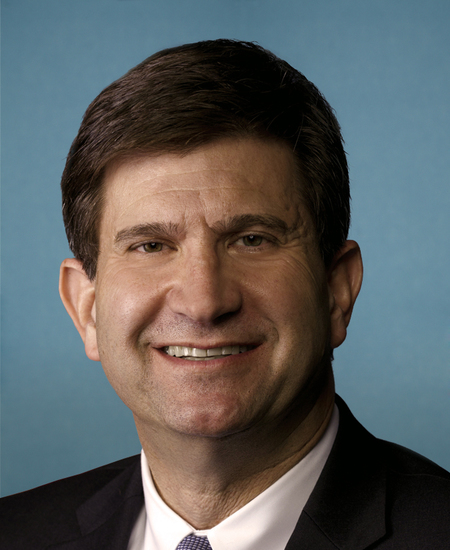
Rep. Bradley Scott Schneider
Sponsored bills
Bulk Infant Formula to Retail Shelves Act This act provides through December 31, 2022, duty-free treatment to certain infant formula base powder used in the manufacturing of infant formula in the United States, subject to quantity limitations. Infant formula base powder means a dry mixture of protein, fat, and carbohydrates that requires only the addition of vitamins and minerals in order to meet the definition of the term infant formula in the Federal Food, Drug, and Cosmetic Act. During this time period, articles of infant formula base powder shall not be subject to any additional safeguard duties that may be imposed under subchapter IV of chapter 99 of the Harmonized Tariff Schedule.
Senator Paul Simon Study Abroad Program Act of 2022 This bill expands access to study abroad for U.S. undergraduate students. It revises the Increase and Diversify Education Abroad for U.S. Students program (commonly known as the IDEAS program) and formally renames the program as the Senator Paul Simon Study Abroad Program.
This bill designates the facility of the United States Postal Service located at 3900 Crown Road Southwest in Atlanta, Georgia, as the John R. Lewis Post Office Building.
This resolution expresses support for the designation of a National Animal Rescue Day to create awareness for animal rescue programs throughout the year and address the challenge of pet overpopulation through continued spaying and neutering.
Maddy summaryThis resolution (HRES 1410) formally condemns and censures Representative Marjorie Taylor Greene (R-GA) for repeatedly comparing U.S. public health measures and political opponents to Nazi persecution, including Holocaust-related analogies in tweets from May 2021 and September 2022. It requires her to appear in the House chamber for the public reading of the censure resolution, which the House adopted as a symbolic rebuke. The resolution cites her specific posts - such as likening vaccine mandates to "gold stars" forced on Jewish people during the Holocaust and comparing President Biden to Hitler - as degrading the memory of Holocaust victims and violating the House’s duty to reject hate speech. As a procedural resolution, it has no legal effect but serves as a formal institutional condemnation of her remarks.
Maximizing Outcomes through Better Investments in Lifesaving Equipment for (MOBILE) Health Care Act This bill allows a health center that currently receives funding through a Health Resources & Services Administration Health Center Program grant to use a New Access Point grant to set up a mobile unit regardless of whether the health center also establishes a permanent health care delivery site. New Access Point grants help health centers establish new delivery sites to provide comprehensive primary care to medically underserved populations. Under current law, health centers may only use the grants to set up a mobile unit if they also establish a permanent site.
Nonprofit Security Grant Program Improvement Act of 2022 This bill modifies the Nonprofit Security Grant Program of the Department of Homeland Security and reauthorizes appropriations for such program through FY2028. The Federal Emergency Management Agency (FEMA) must establish an office, headed by a senior FEMA official, to administer the program. Office responsibilities include those related to outreach, engagement, education, and technical assistance. FEMA must also publish grant guidelines and may prohibit states from closing application processes before the publication of the guidelines. FEMA must seek to enter into a contract or other agreement with an independent research organization for the conduct of a study that analyzes and reports on (1) the effectiveness of the program for preparedness against terrorism and other threats; (2) the risk-based formula and allocations under the program; and (3) the risk profile of and any identifiable factors leading to the low participation of traditionally underrepresented groups and states under the program.
Invest to Protect Act of 2022 This bill directs the Office of Community Oriented Policing Services within the Department of Justice to award grants to local and tribal governments that employ fewer than 125 law enforcement officers. Grant funds may be used for various activities, including to provide de-escalation training and improve recruitment and retention.
Break the Cycle of Violence Act This bill establishes federal grant programs and related entities to support violence intervention initiatives. Specifically, the bill directs the Department of Health and Human Services (HHS) to award grants for coordinated community violence intervention initiatives in communities disproportionately impacted by homicides and community violence. HHS must also establish several related entities, including an Office of Community Violence Intervention to administer programs and activities related to violence intervention; the Community Violence Intervention Advisory Committee to advise and assist the office and HHS; and the National Community Violence Response Center to provide training and technical assistance, coordinate research, and develop data collection policies. Additionally, the bill directs the Department of Labor to award grants for job training and workforce programs in communities disproportionately affected by gun violence to connect youth ages 16 to 24 to in-demand occupations.