

Maddy summaryHR 987 authorizes the U.S. Mint to produce commemorative coins honoring Golda Meir, Israel's first female Prime Minister, and the 75th anniversary of U.S.-Israel relations. It specifies three coin types: $5 gold coins (max 50,000), $1 silver coins (max 400,000), and half-dollar clad coins (max 750,000), with detailed weight and composition requirements. All coins will include Golda Meir's image, her name, and commemorative inscriptions, and will be sold during 2026. A surcharge ($35 for $5 coins, $10 for $1 coins, $5 for half-dollars) will be paid to the American Friends of Kiryat Sanz Laniado Hospital Inc. to support its hospital operations.
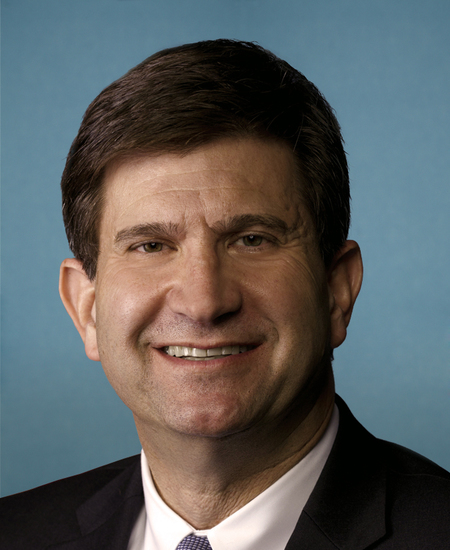
Rep. Bradley Scott Schneider
Sponsored bills
Maddy summaryHR 782 prohibits state officials from interfering with abortion services provided across state lines. It specifically blocks states from restricting: (1) out-of-state patients traveling for legal abortions, (2) providers offering such services, (3) assistance for travel or care, or (4) the interstate shipment of FDA-approved abortion drugs. The bill allows the federal Attorney General or affected individuals to sue violators for injunctions, damages, and attorney fees. It directly affects patients seeking care in other states, healthcare providers, transportation services, and pharmacies handling FDA-approved abortion medications. The law focuses on preventing state laws from blocking access to legally permitted abortion services.
Maddy summaryHRES 112 is a non-binding House resolution expressing condolences for five victims killed in a 2019 mass shooting at a Henry Pratt Company warehouse in Aurora, Illinois. It honors the memory of Russell Beyer, Vicente Juarez, Clayton Parks, Josh Pinkard, and Trevor Wehner, while also recognizing five Aurora Police officers wounded during the response. The resolution commends first responders and expresses support for the Aurora community, standing in solidarity with victims of gun violence nationwide. As a commemorative measure with no policy or funding changes, it serves solely to memorialize the tragedy and acknowledge community resilience.
This resolution expresses that the House of Representatives recognizes the Ukrainian famine of 1932-1933, known as the Holodomor, as a genocide; remembers the atrocities of the Holodomor and extends deepest sympathies to the victims, survivors, and families of this tragedy; condemns the systematic violations of human rights, including the starvation, repression, and persecution of the Ukrainian people by the Soviet Union; recognizes the findings of the Commission on the Ukraine Famine as submitted to Congress on April 22, 1988; and is resolute that Ukraine remain independent and sovereign to protect the people from future genocide.
This resolution condemns Azerbaijan's blockade of the Lachin Corridor to Nagorno-Karabakh (also known as Artsakh). The resolution calls on the U.S. government to work with international partners to deploy observers to explore opportunities for security and peaceful development. The resolution also calls on the President to (1) suspend military and security assistance from the United States to Azerbaijan, and (2) fully enforce a U.S. law prohibiting certain bilateral assistance to Azerbaijan until Azerbaijan takes demonstrable steps to cease all offensive uses of force against Armenia and Nagorno-Karabakh.
Maddy summaryHCONRES 13 is a concurrent resolution expressing Congress's support for maintaining the current policy that prohibits imposing new fees on local radio stations for playing music. It states that Congress should not impose any performance fee, tax, royalty, or charge on local radio stations for broadcasting sound recordings over the air, or on businesses like bars and restaurants that play music publicly. The resolution argues that such fees would harm local radio stations - critical sources for emergency information and community programming - and jeopardize the economic model that has supported both radio and the music industry for decades. This resolution does not create new law but formally opposes potential legislative changes to the existing fee structure.
Freight Rail Assistance and Investment to Launch Coronavirus-Era Activity and Recovery Act of 2023 or the Freight RAILCAR Act of 2023 This bill provides a new tax credit through 2025 for 10% of freight railcar fleet modernization expenses (i.e., railcar replacement and modernization expenses for meeting fuel efficiency and performance standards). The bill provides that no more than 2,000 freight railcars per taxpayer may be taken into account for purposes of determining the credit in a taxable year. The Department of the Treasury must report to Congress on the credit to provide information on the number of times the credit was claimed and the number of railcars scrapped or built as a result of the credit.
This resolution states that the House of Representatives (1) rejects hate, discrimination, and antisemitism; (2) stands united with the Jewish people against rising antisemitism; and (3) condemns antisemitic tropes such as claims of dual loyalty.
Maddy summaryHR 816, the SECURE Firearm Storage Act, requires federally licensed firearms businesses (importers, manufacturers, and dealers) to securely store firearms and transaction records when their premises are closed. It mandates specific methods like locking firearms in fireproof safes or securing them with hardened steel rods through the trigger guard, and storing paper records in locked, fireproof containers. Violations trigger civil penalties ($1,000-$10,000), license suspension for repeat offenses, or revocation for third violations. The law phases in requirements, with paper record storage taking effect 90 days after enactment and firearm storage requirements 1 year later.
Default Proceed Sale Transparency Act This bill establishes new requirements in the case of a firearm transfer by a federally licensed dealer, manufacturer, or importer to an unlicensed person prior to the completion of a background check. Current law permits these transactions—default-proceed transactions—if a submitted background check remains incomplete after three business days. With respect to a default-proceed transaction, the bill requires a federally licensed dealer, manufacturer, or importer to report the transfer to the Federal Bureau of Investigation (FBI) within 24 hours; requires the instant criminal background check system (NICS) to prioritize completing the background check related to the transfer; and requires the NICS to retain records related to a proposed or completed firearm transfer until the background check is complete. Finally, the bill requires the FBI to report publicly on data related to default-proceed transactions. Further, it requires the Bureau of Alcohol, Tobacco, Firearms and Explosives to report publicly on data related to the firearms transferred in default-proceed transactions.