

This resolution encourages the U.S. Holocaust Memorial Museum to continue its work in educating the public about the dangers of antisemitism and the origins of the Holocaust, congratulates those responsible for the creation of the museum, condemns antisemitism, supports educational and community-based programs that counter antisemitism and hate, and supports the designation of a U.S. Holocaust Memorial Museum Day.
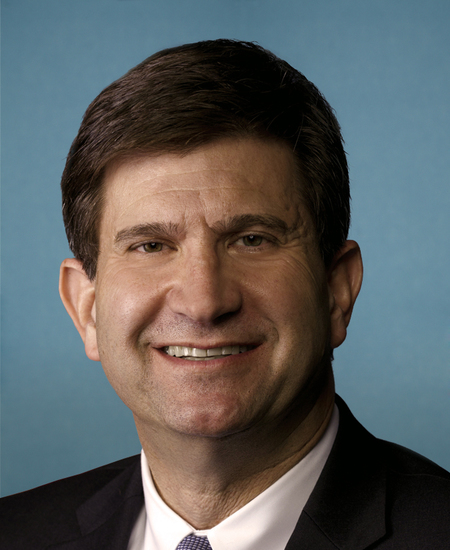
Rep. Bradley Scott Schneider
Sponsored bills
Maddy summaryThis bill would designate approximately 1.7 million acres of public land in Utah's Colorado Plateau and Great Basin regions as wilderness areas, protecting them from development while preserving traditional uses by Indigenous communities. It establishes specific wilderness areas across Utah's red rock canyons, including the Great Basin Wilderness Areas, Grand Staircase-Escalante Wilderness Areas, and others, with detailed acreage for each designated zone. The bill includes administrative provisions for managing these areas, such as maintaining existing livestock grazing rights, setting road setbacks to protect wilderness character, and reserving water rights for the wilderness areas. This legislation directly affects how the Bureau of Land Management administers public lands in Utah and defines the boundaries for public use of these designated wilderness areas.
Maddy summaryHR 3523, the Perinatal Workforce Act, provides $15 million annually from 2024 to 2028 to expand and diversify maternity care providers. It directs HHS to issue guidance for states on recruiting diverse providers (including midwives, nurses, and community health workers) and requires grant recipients to prioritize students from racial/ethnic minority groups, implement bias training, and target health professional shortage areas. The bill also mandates annual reporting on workforce diversity and outcomes, and requires a GAO report assessing barriers to equitable access in maternal healthcare. This legislation directly affects hospitals, nursing schools, midwifery programs, and insurers by funding targeted workforce development to address racial disparities in maternal care.
Maddy summaryThis bill requires that AM radio receivers be included as standard equipment in all new motor vehicles (such as cars and trucks) sold in the United States, with a rule to be issued by the Department of Transportation within one year. The rule must ensure AM radio is easily accessible on the dashboard and allows manufacturers to use digital AM radio technology instead of traditional AM. During the one-year period between the bill's enactment and the rule's effective date, manufacturers must clearly label vehicles without AM radio. The bill also directs a study to evaluate whether an alternative system could deliver emergency alerts as reliably as AM radio across the country, especially during crises.
Maddy summaryThe RAMP Act amends the Social Security Act to require group health plans (like employer-sponsored insurance) to pay first for medical expenses when Medicare is secondary. This directly affects group health plans and individuals with both Medicare coverage and a group health plan. The bill creates a private right for individuals to sue a group health plan if it fails to make primary payments or provide appropriate reimbursement to Medicare. This change aims to improve payment coordination and reduce disputes between insurers and Medicare.
Maddy summaryThe Maternal Vaccination Act amends public health law to specifically target vaccination outreach for pregnant and postpartum individuals and their children, directly affecting public health campaigns and health agencies. It updates existing provisions to include these groups in awareness efforts, requires new activities to increase vaccination rates - particularly among racial and ethnic minority communities - and increases annual funding from $15 million to $17 million for fiscal years 2024-2028. Key mechanisms include revising language in the Public Health Service Act to explicitly cover pregnant/postpartum individuals in campaign descriptions and adding a new requirement (Section 317(k)(1)(E)(vii)) to address vaccination equity. The bill focuses on concrete policy changes to expand access and awareness, not on predicting outcomes.
Maddy summaryThe Kira Johnson Act (HR 3310) provides $100 million annually from 2024-2028 to fund community-based organizations working to improve maternal health outcomes for racial and ethnic minority groups with elevated rates of maternal mortality, severe maternal morbidity, and health disparities. It requires hospitals to establish respectful maternity care compliance programs allowing patients to report racism or bias, and mandates training for all maternity care employees to address bias, racism, and discrimination. The bill also requires annual reports on program effectiveness and studies to evaluate strategies for reducing bias in maternity care settings. These provisions directly affect hospitals, maternity care providers, community-based organizations, and pregnant and postpartum individuals from racial and ethnic minority groups.
Maddy summaryThe Data to Save Moms Act allocates $10 million annually (2024-2028) to help maternal mortality review committees improve community engagement and diversity, with special focus on racial and ethnic minority groups. It requires committees to better document pregnancy-related deaths, consider nonclinical factors affecting maternal health, and collect more detailed demographic data including race, ethnicity, and socioeconomic status. The bill also mandates a comprehensive review of maternal health data collection processes and establishes a study specifically focused on maternal health outcomes for American Indian and Alaska Native individuals. Additionally, it provides grants to minority-serving institutions to research maternal health disparities among racial and ethnic minority groups. These provisions aim to improve data quality, community involvement, and address maternal mortality and severe maternal morbidity.
Social Determinants for Moms Act This bill requires the Department of Health and Human Services (HHS) to establish a task force and a grant program to address social determinants of maternal health. These are nonmedical factors that impact maternal health outcomes, such as transportation, food security, and economic security. The task force, composed of federal and nonfederal stakeholders, must develop strategies and coordinate efforts to eliminate preventable maternal mortality, severe maternal morbidity, and maternal health disparities. Additionally, HHS must award grants to community-based organizations, nonprofits, tribal organizations, public health departments, or consortia of these entities to address social determinants of maternal health and eliminate disparities in maternal health outcomes.
Innovative Maternal Payment and Coverage To Save Moms Act or the IMPACT to Save Moms Act This bill requires the Centers for Medicare & Medicaid Services (CMS) to establish a demonstration program to test alternative payment models under Medicaid and the Children's Health Insurance Program (CHIP) for maternity care. The CMS may consider payment models that include or are designed to address certain areas, such as improved maternal health outcomes for at-risk demographic groups, consideration of social determinants of health, or incorporation of diverse maternity care teams or settings. The CMS must evaluate the program's impact on maternal health outcomes, spending, patient experience, and other relevant areas.