

Maddy summaryHR 4889, the Raise the Wage Act of 2023, would gradually increase the federal minimum wage for most workers to $15.50 per hour by 2027, with specific annual targets: $9.50 starting in 2023, rising to $11.00 after one year, $12.50 after two years, and $15.50 after four years. It would also phase out the separate lower minimum wage for tipped employees (starting at $6.00/hour) by aligning their pay with the regular minimum wage by 2028, while requiring employers to let workers keep all tips. The bill includes similar phased increases for workers under 20 and transitions toward fairer wages for workers with disabilities under special certificates, which would sunset after 2028. Future annual increases after 2028 would tie the minimum wage to the median hourly wage of all workers.
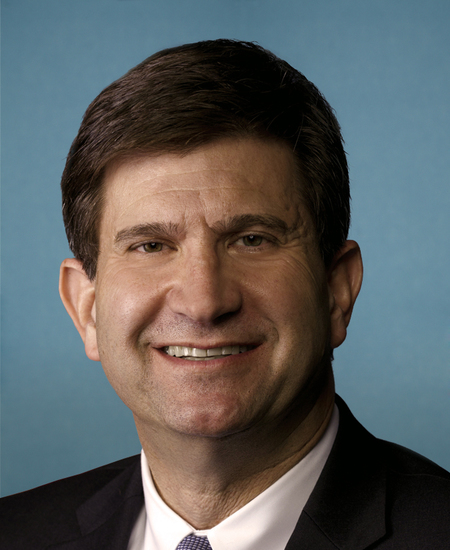
Rep. Bradley Scott Schneider
Sponsored bills
Maddy summaryHR 4769, the PFAS Alternatives Act, funds research and training to develop PFAS-free turnout gear for firefighters. It authorizes $25 million annually (2024-2028) for grants to eligible organizations to research, develop, and test next-generation gear without per- and polyfluoroalkyl substances (PFAS), which are linked to firefighter cancer risks. The bill requires partnerships with firefighting organizations to ensure research translates into practical training and gear care guidance, including decontamination protocols. It also allocates $2 million yearly for training programs on proper gear use and maintenance, aiming to reduce exposure to hazardous chemicals during fire operations.
Maddy summaryH.J.Res. 25 would remove the 1979 deadline for states to ratify the Equal Rights Amendment (ERA), which was originally proposed in 1972. This bill directly affects states that ratified the ERA after the deadline (such as Nevada, Illinois, and Virginia in 2017-2018) by making their ratifications legally valid. The key provision states that the ERA is valid as part of the Constitution if ratified by three-fourths of states, regardless of the original deadline. The bill does not create new rights but aims to finalize the constitutional amendment process by eliminating the time limit.
This resolution condemns the 1994 attack on the Argentine Jewish Mutual Association Jewish Community Center in Buenos Aires, Argentina, and calls for the perpetrators, including Iranian and Hezbollah operatives, to be held accountable for their crimes.
Maddy summaryThis bill, HR 1282 (Major Richard Star Act), expands benefits for certain military retirees by allowing them to receive both veterans' disability compensation and military retirement pay simultaneously. It specifically affects combat-related disabled retirees under Chapter 61 of the military retirement system who have fewer than 20 years of service. The key change removes the automatic reduction of military retirement pay when these retirees also receive disability compensation, as amended in Section 1413a(b)(3) of Title 10. Technical updates to the law’s structure and effective date (starting after enactment) complete the provisions.
Maddy summaryThis bill defines "ghost guns" as firearms lacking unique serial numbers from licensed manufacturers. It prohibits non-licensed individuals from selling, transferring, or possessing ghost guns in interstate commerce, with a 90-day transition period for licensed dealers. Exemptions include firearms manufactured before 1968, state-identified guns, and activities by licensed manufacturers. The law requires all new firearms to have traceable serial numbers to improve law enforcement's ability to track weapons used in crimes.
Maddy summaryHJRES 82 is a non-binding resolution stating that the Equal Rights Amendment (ERA) has been validly ratified by the required 38 states (including Virginia's 2020 ratification) and should be certified as the 28th Amendment to the U.S. Constitution. It directs the Archivist of the United States to fulfill their statutory duty under Title 1, U.S. Code, to certify and publish the ERA without delay. The resolution argues Article V of the Constitution has no ratification deadline, citing precedents like the 27th Amendment. It does not change the Constitution itself but urges the Archivist to complete the certification process. The bill affects the Archivist’s office, requiring them to act on the ERA’s ratification status.
Maddy summaryThis House Resolution condemns the April 2023 conflict in Sudan between the Sudanese Armed Forces (SAF) and Rapid Support Forces (RSF), calling for an immediate ceasefire and adherence to prior cease-fire agreements. It urges the U.S. government to scale up humanitarian aid, prioritize support for displaced civilians and children, and apply sanctions against those obstructing Sudan’s democratic transition or violating international law. The resolution directs U.S. agencies to coordinate with local actors, ensure aid reaches civilians, and develop strategies for civilian-led negotiations. As a non-binding statement, it expresses congressional support for Sudanese civilians and democratic transition without creating new legal requirements or funding.
Maddy summaryThis bill establishes the Emmett Till and Mamie Till-Mobley and Roberts Temple National Historic Site in Chicago, Illinois, as a unit of the National Park System. It requires the Secretary of the Interior to create the site only after securing an agreement with Roberts Temple Church (the Roberts Temple) for public access, interpretation, and maintenance. The site preserves and interprets resources tied to the Great Migration, Emmett Till’s memorial service, Mamie Till-Mobley’s activism following her son’s murder, and the civil rights movement. The National Park Service will administer the site under standard park laws, with management plans developed in coordination with Roberts Temple. The site directly affects Roberts Temple Church (as the managing partner) and the public (through access to historical resources).
Maddy summaryHR 4588, the Senator Paul Simon Study Abroad Program Act of 2023, renames and enhances the existing "IDEAS" grant program to increase U.S. student participation in study abroad. It authorizes $10 million annually to fund competitive grants for colleges and universities (especially minority-serving institutions and those with world language programs), requiring grantees to demonstrate plans for expanding access to underrepresented students, ensuring diversity in participation, and prioritizing study in developing countries. The bill sets a goal of 1 million U.S. undergraduates studying abroad annually within 10 years, with a focus on low-income students, students of color, and community college attendees who are currently underrepresented. It mandates annual reports to Congress on program implementation and requires grantees to maintain health/safety protocols for students abroad.