

Maddy summaryThe SUN Act (HR 4998) requires the President to submit a detailed report to Congress within 15 days whenever National Guard members are deployed domestically for non-disaster purposes under specific laws. The report must include the legal basis for the deployment, evidence of reduced violence, input from local law enforcement, total costs, and a certification that the deployment won’t interfere with disaster response capabilities. It applies to all domestic uses of the National Guard except for responses to natural disasters under the Stafford Act. The bill aims to enhance congressional oversight of military deployments on U.S. soil.
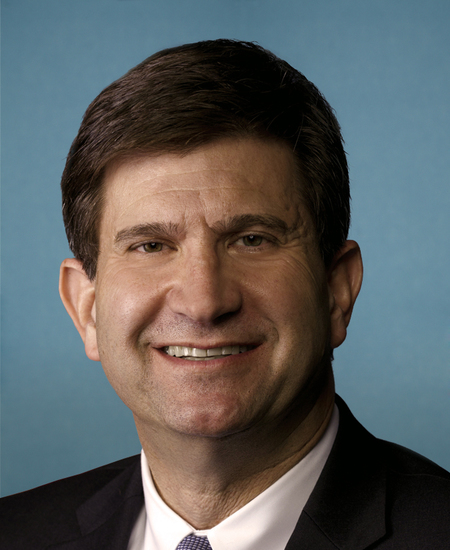
Rep. Bradley Scott Schneider
Sponsored bills
Maddy summaryThis bill (HJRES 115) terminates a presidential emergency declaration made on August 11, 2025, which claimed a "crime emergency" in Washington, D.C. It directly affects the District of Columbia by ending federal restrictions that prevented D.C. from using $1 billion in locally-raised funds for public safety, law enforcement, fire services, and schools. The resolution cites that the emergency declaration was legally flawed - section 740 of the DC Home Rule Act does not permit federalizing the Metropolitan Police Department - and notes that D.C. violent crime has reached a 30-year low. The bill formally ends the emergency under the DC Home Rule Act, restoring D.C.'s authority over its own budget and public safety resources.
Maddy summaryHR 4960 (BENES 2.0 Act) requires Social Security to include clear Medicare eligibility information in annual statements mailed to individuals reaching ages 60-65. The notice must explain enrollment rules, late penalties, relief options, and special considerations for veterans and Puerto Rico residents, with practical examples. Statements will be mailed 6 months before age 65 and updated every 2 years based on stakeholder feedback. This directly affects all Americans approaching Medicare eligibility through Social Security.
Maddy summaryThis bill requires the U.S. Department of State to include specific, detailed reporting on reproductive rights in its Annual Country Reports on Human Rights Practices. It mandates descriptions of each country's policies regarding access to contraception, abortion services, and comprehensive reproductive health care, alongside data on pregnancy-related deaths, discrimination against women and LGBTQI+ individuals, and disparities based on race, disability, or other factors. The bill also directs the State Department to consult with civil society organizations and health experts to ensure thorough reporting on these issues. This change aims to align U.S. reporting with international human rights standards and address past omissions of reproductive rights from these reports.
Maddy summaryThis bill adjusts health insurance subsidies by modifying the premium tax credit structure under the Internal Revenue Code. It replaces previous income thresholds with a sliding-scale formula, increasing subsidies for households earning between 150% and 400% of the federal poverty level - reducing their required premium payments as income rises within these tiers. The changes apply to tax years beginning after December 31, 2025, directly affecting middle-income individuals and families purchasing coverage through health insurance marketplaces. It also repeals specific provisions from a prior reconciliation law related to health care.
Maddy summaryHR 4796, the Restoring Essential Healthcare Act, repeals a provision that blocked Medicaid payments to certain healthcare providers during a specific period. It directly affects Medicaid beneficiaries who received care from these providers between the enactment of the prior law (Public Law 119-21) and this bill's enactment. The key provision retroactively restores Medicaid payments for services already provided during that blocked period, treating the payment restriction as if it never existed. This change ensures eligible individuals and providers receive reimbursement for covered care delivered during the prohibited timeframe.
Maddy summaryHR 4674, the Baby Hygiene Tax Relief Act, removes existing tariffs and prohibits future tariffs on 11 specific baby hygiene items, including diapers, baby wipes, baby soap, shampoo, and changing tables. The bill requires the President to terminate all current tariffs on these items imposed under the International Emergency Economic Powers Act and invalidates any similar tariffs from other authorities. This directly affects parents and caregivers who purchase these products, as it eliminates cost-increasing import duties. The key mechanism is a legal prohibition on tariff imposition and a mandate to end existing tariffs on the listed items.
Maddy summaryThe Baby Sleep Tax Relief Act (HR 4654) prohibits the President from imposing or continuing tariffs on specific baby sleep products under emergency economic powers. It directly affects parents, caregivers, and retailers by removing existing and preventing future tariffs on cribs, toddler beds, mattresses/bedding, bassinets, cradles, and baby monitors. The bill mandates the termination of all current tariffs on these items and invalidates any similar duties imposed under other authorities. This is a concrete policy change that eliminates a specific cost burden on essential baby sleep equipment. The legislation focuses solely on removing these tariffs, with no additional provisions or funding.
Maddy summaryHR 4726, the Educational Toy Tax Relief Act, removes tariffs on specific baby and children's products by prohibiting the President from imposing or maintaining import duties under the International Emergency Economic Powers Act. It directly affects importers and manufacturers of items like toys for children under three, tricycles/scooters, playpens, baby swings, and educational toys. The bill requires the immediate termination of existing tariffs on these items and invalidates any similar duties imposed under other authorities. This policy change eliminates import costs for these specific products, making them more affordable for consumers.
Maddy summaryHR 4746, the Baby Food Tax Relief Act, removes tariffs on specific baby products by prohibiting the President from imposing or continuing duties on them under emergency powers. It directly affects parents and caregivers purchasing baby bottles, breast pumps, highchairs, booster seats, and baby formula, which were previously subject to tariffs. The bill requires the termination of existing tariffs on these items and invalidates any similar tariffs imposed under other authorities. This creates immediate tax relief for these essential baby care products without altering existing tax structures for other goods.