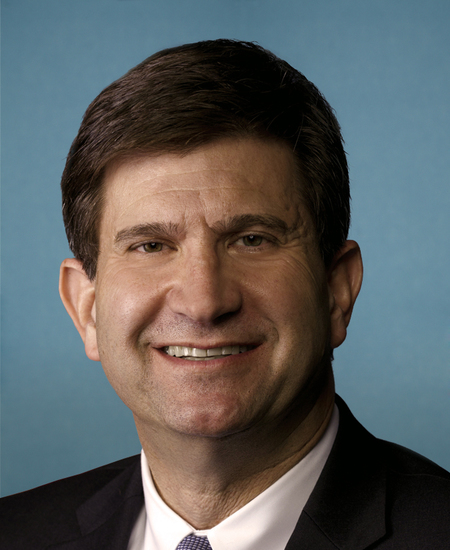
Photo of Bradley Scott Schneider
D United States House · District 10 · Illinois On the 2026 ballot

Rep. Bradley Scott Schneider

Compare
Total votes
2,837
all sessions
Attendance
98%
46 missed
Near the chamber average
With party
97%
of cast votes
Near the chamber average
Bipartisan score
2%
crosses aisle rarely
Near the chamber average
Sponsored
1,263
bills & resolutions
Near the chamber average
Committees
5
assignments
1,263 bills and resolutions

Sponsored bills

Total
1,263
Primary
116
Co-sponsor
1,147
This page
1,263
matching current filters
Primary HR 1078
In committee · United States House · Lead sponsor
Prohibiting Perks and Privileges Act

Prohibiting Perks and Privileges Act This bill makes former Members of Congress who are lobbyists ineligible to receive certain federal retirement and health benefits or to use certain congressional benefits and services. The bill also prohibits federal funds from being used to pay the travel expenses of spouses accompanying Members of Congress on official travel, restricts the use of travel promotional awards received by Members in connection with official air travel, and requires a Member's official website to include a link to the Member's financial disclosure reports.

In committee Feb 16, 2021 0 co-sponsors
Primary HR 1076
In committee · United States House · Lead sponsor
Real Time Transparency Act of 2021

Real Time Transparency Act of 2021 This bill revises the notification requirement for campaign contributions of $1,000 or more. Specifically, the bill applies this requirement to (1) any political committee, not just a candidate's principal campaign committee; and (2) cumulative contributions of $1,000 or more during a calendar year, instead of only single contributions that are received by a committee less than 20 days but more than 48 hours before the day of an election. Only the Federal Election Commission (FEC) must be notified within 48 hours of receiving these contributions, instead of the FEC and others. Any amount transferred by a joint fundraising committee established by a candidate's authorized committee to any other authorized committee of that candidate shall be treated as a contribution.

In committee Feb 15, 2021 0 co-sponsors
Primary HR 1077
In committee · United States House · Lead sponsor
Ethics in Public Service Act

Ethics in Public Service Act This bill provides statutory authority for provisions of the executive order titled Ethics Commitments by Executive Branch Personnel , which was issued on January 21, 2009, by President Barack H. Obama. The order required political appointees in the executive branch to sign an ethics pledge that restricted lobbying and related activities during and after government employment, including prohibitions on appointees communicating with their former agencies for two years post-employment and on lobbying agencies for the remainder of the presidential administration. The order was eventually revoked and replaced with executive orders from subsequent administrations. On January 20, 2021, President Joseph R. Biden, Jr. issued an executive order titled Ethics Commitments by Executive Branch Personnel , which requires appointees to sign an ethics pledge with both similar and different provisions. For example, the order's pledge (1) prohibits post-employment lobbying, including lobbying on behalf of foreign governments, for the remainder of a presidential administration or for two years after appointments end, whichever is later; and (2) restricts appointees from accepting cash payments or non-cash benefits from former employers that are contingent on government employment (also known as golden parachutes ).

In committee Feb 15, 2021 0 co-sponsors
Co-sponsor HRES 24
Passed · United States House · Co-sponsor
Impeaching Donald John Trump, President of the United States, for high crimes and misdemeanors.

This resolution impeaches President Donald John Trump for high crimes and misdemeanors. Specifically, the resolution sets forth an article of impeachment stating that President Trump incited an insurrection against the government of the United States. The article states that prior to the joint session of Congress held on January 6, 2021, to count the votes of the electoral college, President Trump repeatedly issued false statements asserting that the presidential election results were fraudulent and should not be accepted by the American people or certified by state or federal officials; shortly before the joint session commenced, President Trump reiterated false claims to a crowd near the White House and willfully made statements to the crowd that encouraged and foreseeably resulted in lawless action at the Capitol; members of the crowd, incited by President Trump, unlawfully breached and vandalized the Capitol and engaged in other violent, destructive, and seditious acts, including the killing of a law enforcement officer; President Trump's conduct on January 6, 2021, followed his prior efforts to subvert and obstruct the certification of the presidential election, which included a threatening phone call to the Secretary of State of Georgia on January 2, 2021; President Trump gravely endangered the security of the United States and its institutions of government, threatened the integrity of the democratic system, interfered with the peaceful transition of power, and imperiled a coequal branch of government; and by such conduct, President Trump warrants impeachment and trial, removal from office, and disqualification to hold U.S. office.


Passed Feb 13, 2021 1 co-sponsor
Primary HR 1024
In committee · United States House · Lead sponsor
COVID–19 Supply Chain Resiliency Act of 2021

COVID-19 Supply Chain Resiliency Act of 2021 This bill establishes the Office of COVID-19 Supply Chain Resiliency to identify and address supply chain issues related to the COVID-19 (i.e., coronavirus disease 2019) pandemic. Specifically, the office must establish a national strategy to address identified supply chain issues related to the pandemic, serve as a central point of contact for and provide technical assistance to entities dealing with these issues, and develop legislative recommendations to strengthen critical supply chains for pandemics. The office shall cease to exist 18 months after the COVID-19 public health emergency (and any renewal thereof) is terminated.

In committee Feb 12, 2021 0 co-sponsors
Co-sponsor HR 962
In committee · United States House · Co-sponsor
Law Enforcement Officers Equity Act

Law Enforcement Officers Equity Act This bill expands the definition of law enforcement officer under provisions of the Federal Employees Retirement System (FERS) and the Civil Service Retirement System (CSRS). Specifically, the bill expands the definition to include (1) federal employees whose duties encompass the investigation or apprehension of suspected or convicted criminals and who are authorized to carry a firearm; (2) Internal Revenue Service employees whose duties are primarily the collection of delinquent taxes and the securing of delinquent returns; (3) U.S. Postal Inspection Service employees; (4) Department of Veterans Affairs police officers; and (5) certain U.S. Customs and Border Protection employees who are seized-property specialists with duties relating to custody, management, and disposition of seized and forfeited property. The bill deems service performed by an incumbent law enforcement officer on or after the enactment date of this bill to be service performed as a law enforcement officer for retirement purposes. The past service of such incumbents shall be treated as service performed by a law enforcement officer for retirement purposes only if a written election is submitted to the Office of Personnel Management within five years after the enactment of this bill or before separation from government service, whichever is earlier. An incumbent who makes an election before the enactment of this bill may pay a deposit into the Civil Service Retirement and Disability Fund to cover prior service. A law enforcement officer shall not be subject to mandatory separation during the three-year period beginning on the enactment of this bill.

In committee Feb 11, 2021 1 co-sponsor
Co-sponsor HR 890
In committee · United States House · Co-sponsor
GYMS Act of 2021

Gym Mitigation and Survival Act of 2021 or the GYMS Act of 2021 This bill establishes a grant program to provide economic support to eligible fitness facilities in response to the COVID-19 (i.e., coronavirus disease 2019) pandemic. Specifically, the bill authorizes the Small Business Administration to make initial and supplemental grants to privately owned fitness facilities that primarily provide health or fitness services and that do not offer golf, hunting, sailing, or riding facilities. The total amount of grant funds for a recipient may not exceed $25 million, and the recipient must use these funds for payroll costs, rent or mortgage obligations, and other ordinary and necessary business expenses.

In committee Feb 5, 2021 1 co-sponsor
Showing 1,231 to 1,240 of 1,263 bills