

George Floyd Justice in Policing Act of 2021 This bill addresses a wide range of policies and issues regarding policing practices and law enforcement accountability. It increases accountability for law enforcement misconduct, restricts the use of certain policing practices, enhances transparency and data collection, and establishes best practices and training requirements. The bill enhances existing enforcement mechanisms to remedy violations by law enforcement. Among other things, it does the following: lowers the criminal intent standard—from willful to knowing or reckless—to convict a law enforcement officer for misconduct in a federal prosecution, limits qualified immunity as a defense to liability in a private civil action against a law enforcement officer, and grants administrative subpoena power to the Department of Justice (DOJ) in pattern-or-practice investigations. It establishes a framework to prevent and remedy racial profiling by law enforcement at the federal, state, and local levels. It also limits the unnecessary use of force and restricts the use of no-knock warrants, chokeholds, and carotid holds. The bill creates a national registry—the National Police Misconduct Registry—to compile data on complaints and records of police misconduct. It also establishes new reporting requirements, including on the use of force, officer misconduct, and routine policing practices (e.g., stops and searches). Finally, it directs DOJ to create uniform accreditation standards for law enforcement agencies and requires law enforcement officers to complete training on racial profiling, implicit bias, and the duty to intervene when another officer uses excessive force.
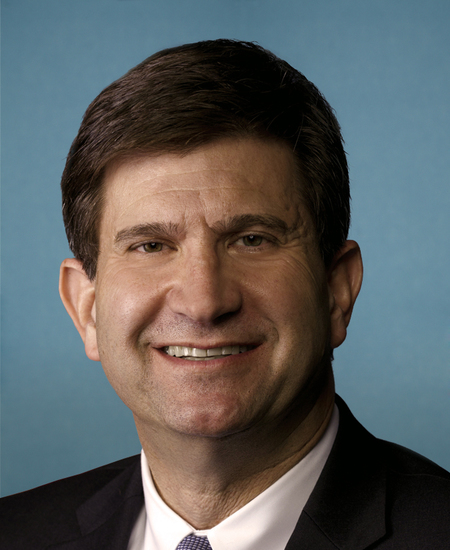
Rep. Bradley Scott Schneider
Sponsored bills
Capitol Remembrance Act This bill requires the Architect of the Capitol (AOC) to design and install in a prominent location in the U.S. Capitol a permanent exhibit that depicts the January 6, 2021, attack on the Capitol. To the extent possible, the AOC must preserve property that was damaged during the attack and include it in the exhibit. The AOC must also include (1) existing photographic records relating to the attack; and (2) a plaque to honor the U.S. Capitol Police and other law enforcement agencies that protected the Capitol, the individuals who died or sustained injuries to protect the Capitol, and the staff who helped restore the Capitol complex after the attack.
Girls' Leadership, Engagement, Agency, and Development Act of 2021 or the Girls LEAD Act This bill directs the Department of State and the U.S. Agency for International Development (USAID) to jointly report to Congress a strategy to strengthen the participation of adolescents, particularly girls, in democracy, human rights, and governance. The State Department and the USAID shall (1) implement activities to achieve this goal, including activities to increase adolescent girls' civic and political knowledge and skills and address barriers to political participation; and (2) prioritize foreign assistance funding for democracy, human rights, and governance programs toward achieving the goals in this bill.
This resolution thanks and honors the journalists and news staff who risked themselves to chronicle the insurrection at the U.S. Capitol on January 6, 2021, and it condemns the harassment and violent attacks on the media during the insurrection.
This joint resolution proposes a constitutional amendment authorizing Congress and the states to set reasonable limits on the raising and spending of money by candidates and others to influence elections. The amendment grants Congress and the states the power to implement and enforce this amendment by legislation. They are allowed to distinguish between natural persons and corporations or other artificial entities created by law, including by prohibiting such entities from spending money to influence elections.
This resolution honors Officers Brian Sicknick and Howard Liebengood of the U.S. Capitol Police, and it commends the bravery and service demonstrated by officers of the U.S. Capitol Police, the Metropolitan Police Department of the District of Columbia, and the other law enforcement agencies and protective entities that assisted in responding to the January 6, 2021, attack on the U.S. Capitol.
Preventing Future Pandemics Act of 2021 This bill establishes measures to address global public health risks posed by wildlife markets, which are commercial markets that sell or slaughter wildlife for human consumption as food or medicine in communities where alternative nutritional or protein sources are available. Specifically, the bill prohibits importing, exporting, purchasing, or selling live wild animals in the United States for human consumption as food or medicine. The Department of the Interior must hire, train, and deploy at least 50 new U.S. Fish and Wildlife Service law enforcement attachés around the world, and the U.S. Agency for International Development must increase specified activities to address the threats and causes of zoonotic (animal-to-human transmission) disease outbreaks. Additionally, the United States must work with other United Nations member states to urge a global ban on commercial wildlife markets and enforcement of laws to end wildlife trafficking. Further, the President may impose sanctions against a foreign country or foreign nationals that the Department of State has determined are taking certain actions that enable or facilitate commercial wildlife markets. Among other reports required by the bill, the National Academies of Sciences, Engineering, and Medicine must conduct a study and submit a report that includes an evaluation of (1) the impact that consumption of terrestrial wildlife as food or medicine has on the transmission of novel viral and other pathogens, (2) the role of consuming terrestrial wildlife as food or medicine in the transmission of microbes from animals to humans, and (3) the conditions at live wildlife markets that lead to this transmission.
Build America's Libraries Act This bill establishes and provides funds through FY2024 for the Build America's Libraries Fund, from which the Institute of Museum and Library Services (IMLS) must allocate funding to states and, through them, need-based grants to libraries to make long-term improvements to library facilities. The IMLS must also award grants to Indian tribes and organizations that primarily serve and represent Native Hawaiians. Specifically, the bill requires each state that receives an allocation, and each library that receives a grant, to carry out certain activities to improve library facilities. These activities include constructing and renovating library facilities, investing in infrastructure projects to improve internet access and connectivity, improving indoor air quality, and making facilities accessible to individuals with disabilities. The bill also outlines administrative and oversight provisions, including by requiring library projects to use iron and steel products that are produced in the United States.
Research Investment to Spark the Economy Act of 2021 or the RISE Act of 2021 This bill authorizes the Departments of Agriculture, Commerce, Defense, Education, Energy, the Interior, Health and Human Services, and Transportation, National Aeronautics and Space Administration (NASA), National Science Foundation, and Environmental Protection Agency to provide support for research regarding COVID-19 (i.e., coronavirus disease 2019) or research disrupted by the COVID-19 pandemic. Support may be used to provide supplemental funding to extend the duration of a grant to a research institution, national laboratory, or individual that was awarded prior to the enactment of this bill, or to expand the purposes of such a grant as specified; issue awards to research the effects of the current pandemic and potential future pandemics; and provide flexibility on awards to account for facility closures or other limitations during the COVID-19 public health emergency. Agencies must provide the support as rapidly as possible. Provided funds shall remain available through FY2021.
Alzheimer's Caregiver Support Act This bill authorizes grants to expand training and support services for families and caregivers of individuals living with Alzheimer's disease or a related dementia. The Department of Health and Human Services may award these grants to community organizations and health care and social service providers.