

Confidentiality Opportunities for Peer Support Counseling Act or the COPS Counseling Act This bill sets forth requirements related to peer support counseling programs. A peer support counseling program is a program provided by a law enforcement agency that provides counseling services from a peer support specialist to a law enforcement officer of the agency. Among other things, the bill does the following: generally prohibits the disclosure of the contents of a peer support communication, and requires the Department of Justice to develop best practices and professional standards for peer support counseling programs.
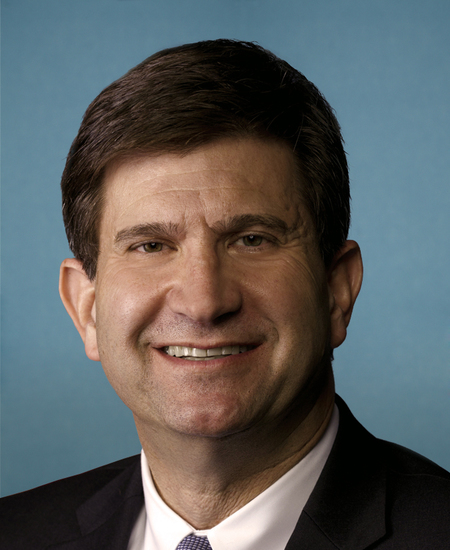
Rep. Bradley Scott Schneider
Sponsored bills
This resolution expresses the House of Representatives' support for the goals and ideals of National Veterans Small Business Week, celebrates the millions of people in the United States—especially veterans and their spouses—who benefit from Small Business Administration programs, and expresses appreciation for the continued service to the United States by the nation's veterans through small business ownership and entrepreneurship.
Fiscal State of the Nation Resolution This concurrent resolution requires the congressional budget committees to conduct an annual joint hearing to receive a presentation from the Comptroller General regarding (1) the Government Accountability Office's audit of the financial statement of the executive branch, and (2) the financial position and condition of the federal government.
Impacts and Outcomes for Health Career Training Act This bill requires the Department of Health and Human Services to study the impact of demonstration projects funded by grants for providing low-income individuals with education and training for health care occupations, including the effects of the projects on participants' employment and earnings.
Veteran Entrepreneurship Training Act of 2021 This bill provides statutory authority for the Boots to Business Program, which provides entrepreneurship training to individuals including veterans and active members of the Armed Forces, to be administered by the Small Business Administration.
This resolution expresses that the House of Representatives applauds the Biden administration for reaffirming the U.S. commitment to the Paris Agreement on climate change and to our collective responsibility to globally combat climate change; encourages the Biden administration to implement measures to ensure global climate change remains a top priority for this and future administrations and to cement the United States as a global leader in the fight to mitigate its most severe consequences; voices strong commitment as legislators toward achieving the climate goals of the Paris Agreement, fulfilling the forthcoming pledges from the COP26 in Glasgow, Scotland, and advancing other international efforts to keep global warming to no more than 1.5 degrees Celsius and realize global net-zero carbon emissions by 2050 using a whole-of-government approach; and recognizes the critical responsibility of the United States and other developed nations to ensure all societies have the capabilities to transition to a clean energy economy, the resources to protect against climate-induced disasters, and the necessary assistance to endure climate-related challenges to food security, regional migration, and public health.
Building Much Needed Rail Grade Separations Act of 202 1 This bill establishes a grade separation investment program to award competitive grants to certain entities for projects that separate railway-highway grade crossings, improve safety by reducing the number of deaths and injuries at rail-highway crossings, increase the efficiency and reliability of the movement of people and freight over rail-highway crossings, increase the capacity of the freight and passenger rail system, reduce the amount of noise from trains, and improve air quality and reduce greenhouse gas emissions from less idling at rail-highway crossings. Among other requirements, the bill (1) requires grant awards for large projects (projects with total costs of greater than $100 million) to be at least $50 million, and for any other projects not less than $2.5 million; and (2) directs the Department of Transportation to consider a number of factors in awarding grants, including accident history at the rail-highway crossing over the last 10 years, the annual average daily motor vehicle, cyclist, and pedestrian traffic at the crossing, the likelihood of a collision based on the geometry of the crossing, and the number of critical facilities near the crossing.
Social Security 2100: A Sacred Trust This bill makes changes to Social Security benefits, taxes, and other aspects of the program, including by raising the primary insurance amount, increasing the maximum taxable earnings that are subject to Social Security payroll taxes, and requiring Social Security account statements to be mailed unless the individual recipient opts for electronic delivery.
Original National Domestic Violence Awareness Month Resolution of 2021 This resolution supports the goals and ideals of National Domestic Violence Awareness Month. Further, it expresses the sense of the House of Representatives that Congress should continue to raise awareness of and support programs to end domestic violence.
Public Service Freedom to Negotiate Act of 20 21 This bill provides minimum collective bargaining rights and procedures for public employees and prohibits strikes by certain public safety workers. The Federal Labor Relations Authority (FLRA) shall determine for each state whether the laws of such state substantially provide for each of the minimum standard collective bargaining rights and procedures specified by this bill, including the right of public employees and supervisory employees to self-organize, form or join a labor organization, or collectively bargain. The FLRA must issue rules and take actions to establish and administer bargaining rights and procedures for those states that do not substantially provide for them. No employers, emergency services employees, or law enforcement officers may engage in a lockout, strike, or any other organized job action that is likely to result in a measurable disruption of the delivery of emergency or public safety services. Furthermore, no labor organization may be the cause of a violation of such prohibition.