Supply Chain Resiliency Act This bill establishes the Office of Supply Chain Resiliency within the Department of Commerce. The office must identify vulnerabilities in the supply chains for critical products and emerging technologies. It also must provide financial support to manufacturers to expand production of products that are part of supply chains experiencing shortages.
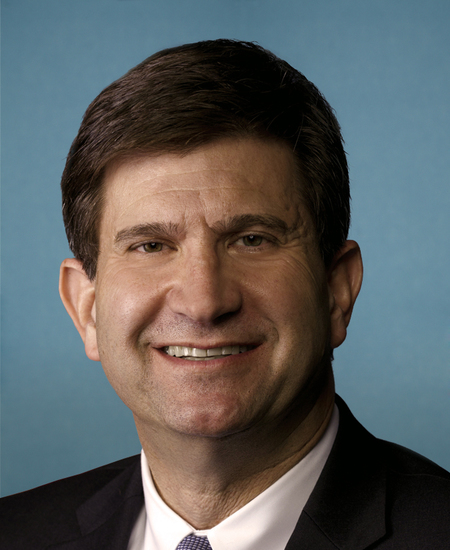
Rep. Bradley Scott Schneider
Sponsored bills
Climate Risk and Emergency Support In Livable Inclusive and Equitable Neighborhoods and Communities Everywhere Act or the Climate RESILIENCE Act This bill makes changes to the Robert T. Stafford Disaster Relief and Emergency Assistance Act to take into account climate change. The bill includes extreme temperature events, such as heat waves or freezes, within the scope of the act and defines resilience for purposes of disaster assistance and mitigation efforts. Federal and state preparedness and mitigation assistance may be used for reducing the impacts of extreme temperatures and improving air quality and mitigating against wildfire smoke.. The bill authorizes implementing predisaster hazard mitigation measures that will be cost-effective and equitable long-term and provide enhanced protection to the community. The Federal Emergency Management Agency (FEMA) must (1) provide technical assistance to underserved and disadvantaged communities for such measures; and (2) provide guidance to implement the latest published editions of relevant consensus-based codes, specifications, and standards that incorporate the latest hazard-resistant designs. The bill includes within the hazard mitigation program requirements the abatement of lead, mold, mildew, radon, asthma, and allergen triggers, or other pollutants and hazardous materials directly caused by a major disaster or emergency. FEMA must report to Congress regarding challenges posed by FEMA requirements for determining the cost-effectiveness of mitigation activities and how such requirements may disproportionately burden underserved or disadvantaged communities.
This resolution expresses support for the goals and ideals of Korean American Day and honors the 119th anniversary of the arrival of the first Korean immigrants to the United States.
Human Trafficking Survivor Tax Relief Act This bill excludes from gross income, for income tax purposes, any civil damages, restitution, or other monetary award (including compensatory or statutory damages and restitution imposed in a criminal matter) awarded pursuant to an order of mandatory restitution or in a criminal proceeding for peonage, slavery, or human trafficking.
PrEP Access and Coverage Act This bill requires private health insurance plans to cover prescription drugs that prevent HIV, including related screenings, diagnostic procedures, administrative fees, and clinical follow-ups, without any cost-sharing obligation for the plan holder. Further, insurance plans must not impose any preauthorization requirement for this coverage. These coverage requirements also apply to public health insurance programs, including Medicare, Medicaid, and the Children's Health Insurance Program. Additionally, the bill prohibits denying, limiting, or qualifying coverage or increasing premiums for disability insurance, long-term care insurance, or life insurance policies based on an individual taking medication for HIV prevention. The bill further requires the Department of Health and Human Services to award grants to states, or directly to eligible local organizations, to provide uninsured individuals and underinsured individuals access to prescription drugs and related services that prevent HIV. The Centers for Disease Control and Prevention also must develop a public awareness campaign that focuses efforts in communities with a high need for HIV prevention treatment.

This bill revises enforcement provisions under the Animal Welfare Act (AWA), including by directing inspectors to confiscate or destroy in a humane manner animals found to be suffering physical or psychological harm as a result of failure to comply with the AWA.
Accelerating Access to Critical Therapies for ALS Act This bill establishes grant programs to address neurodegenerative diseases, such as amyotrophic lateral sclerosis (also known as ALS or Lou Gehrig's disease), and contains other related provisions. The Department of Health and Human Services (HHS) shall award grants to eligible entities for scientific research utilizing data from expanded access to investigational ALS treatments for individuals who are not otherwise eligible for clinical trials. The Food and Drug Administration (FDA) shall award grants to public and private entities to cover the costs of research and development of drugs that diagnose or treat ALS and other rare neurodegenerative diseases. HHS shall also establish the Public-Private Partnership for Neurodegenerative Diseases between the National Institutes of Health, the FDA, and at least one eligible entity (generally, an institution of higher education or a nonprofit organization). The partnership shall support the development and regulatory review of drugs that address ALS and other rare neurodegenerative diseases. The FDA shall publish on its website a five-year action plan for fostering the development of drugs that improve or extend the lives of people living with rare neurodegenerative diseases. The Government Accountability Office must report to Congress about the grants provided under this bill, including an analysis of the impact of such grants on research and development of treatments for ALS.
This concurrent resolution expresses the sense of Congress that tax-exempt fraternal benefit societies provide critical benefits to the people and communities of the United States and their work should continue to be promoted.
This bill posthumously provides for the award of a Congressional Gold Medal in commemoration of the 13 service members who died on August 26, 2021, while stationed at Hamid Karzai International Airport in Afghanistan.
Combating International Islamophobia Act This bill establishes within the Department of State the Office to Monitor and Combat Islamophobia and addresses related issues. The office shall monitor and combat acts of Islamophobia and Islamophobic incitement in foreign countries. The bill establishes the position of Special Envoy for Monitoring and Combating Islamophobia, who shall head the office. The bill also requires certain existing annual reports to Congress about human rights and religious freedom in foreign countries to include information about Islamophobia, such as information about (1) acts of physical violence or harassment of Muslim people, (2) instances of propaganda in government and nongovernment media that attempt to justify or promote hatred or incite violence against Muslim people, and (3) actions taken by a country's government to respond to such acts. The office shall coordinate and assist in preparing these portions of the reports. No funds made available pursuant to the bill may be used to promote or endorse a boycott, divestment, and sanctions movement ideology (i.e., economic measures against Israel or Israel-related individuals or organizations) or used to promote or endorse a Muslim ban.