

Maddy summaryHR 3012 reauthorizes U.S. programs under the North Korean Human Rights Act of 2004 through 2028, extending funding and reporting requirements for existing initiatives. It directs the U.S. Agency for Global Media to continue broadcasting independent news into North Korea, supports transparent humanitarian aid delivery, and urges China to halt forcible repatriation of North Korean refugees. The bill directly affects North Korean citizens by promoting information access and refugee protection, and North Korean refugees in China by advocating for UNHCR access and refugee rights. Key provisions include extending program deadlines, reinforcing U.S. diplomatic efforts on human rights, and calling for swift confirmation of the Special Envoy on North Korean Human Rights Issues.
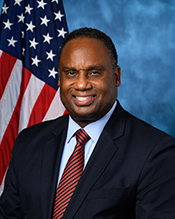
Rep. Jonathan L. Jackson
Sponsored bills
Maddy summaryThis resolution supports the United Nations' second International Decade for People of African Descent (2025-2034) and urges the U.S. Department of State to advance global efforts to combat racial discrimination. It specifically calls for U.S. backing of the UN Declaration on human rights for people of African descent, funding for the UN Expert Mechanism on racial justice, and collaboration with civil society to address systemic racism in areas like education, health, and justice. The resolution emphasizes a gender-focused approach, including support for Afro-descendant women, LGBTQIA+ individuals, and other marginalized groups. As a non-binding resolution, it directs U.S. foreign policy priorities without creating new legal obligations.
Maddy summaryHRES 1328 is a congressional resolution recognizing the actions of Sudan's Rapid Support Forces (RSF) and allied militias against non-Arab ethnic communities in Darfur - including the Masalit people - as genocide under international law. It cites evidence of mass killings, sexual violence, forced displacement, and targeted attacks on leaders, meeting the Genocide Convention's definition of acts intended to destroy a group. The resolution calls on the U.S. government to support humanitarian access, document atrocities, fund local aid, and review Sudan's genocide determination every six months. As a symbolic resolution (not a law), it does not impose new legal requirements but formally condemns the RSF's actions and urges U.S. diplomatic and humanitarian measures. It directly affects Masalit and other non-Arab communities in Darfur facing systemic violence.
Maddy summaryHRES 837 is a non-binding resolution passed by the U.S. House of Representatives on November 1, 2023, reaffirming U.S. commitment to the Philippines. It specifically calls for invoking the U.S.-Philippines Mutual Defense Treaty if Philippine assets (including Coast Guard vessels) are attacked in the South China Sea, urges joint U.S.-Philippines patrols in the region, and objects to China's disputed territorial claims. The resolution does not create new laws or funding but expresses congressional support for existing defense agreements and diplomatic positions. It directly addresses U.S. foreign policy toward the Philippines and the South China Sea disputes.
Maddy summaryThis bill creates a federal commission to address racial and gender biases in school discipline and improve mental health support for students of color. The commission will develop guidelines for tracking restorative practices, define key terms like "restorative justice," create training materials for school staff on culturally competent approaches, and recommend student-to-counselor ratios for schools receiving federal funds. The commission, composed of 13 members including federal agency representatives, advocates, and students of color, will report annually for five years on progress, including how training reduced disproportionate discipline. The bill directly affects elementary and secondary schools, school personnel, and students of color by establishing a structured process for implementing equitable practices.
Maddy summaryHRES 1581 is a symbolic resolution expressing congressional support for designating November 2024 as "Prematurity Awareness Month." It highlights the U.S. maternal and infant health crisis, including higher preterm birth rates and disparities affecting Black and Native American women and their infants. The resolution urges Americans, communities, and organizations to observe the month through events and education focused on preterm birth prevention. It does not create new laws or funding but aims to raise public awareness about this health issue, which contributes to infant mortality and costs an estimated $25.2 billion annually.
Maddy summaryHR 10165, the Security Clearance Review Act, requires the FBI Director to approve security clearances and access to classified information for political appointees working in the Executive Office of the President. It prohibits such appointees from holding clearances or accessing classified information without the FBI Director’s explicit authorization. If the FBI denies clearance, the Director must immediately notify the President and Congress. If the President overrides this denial, they must provide a written explanation to Congress within 30 days. The bill directly affects political appointees in the White House and establishes new oversight steps for security clearance decisions.
Maddy summaryThis bill authorizes a single gold medal to honor the 320th Barrage Balloon Battalion, an all-African American unit that served during the D-Day invasion in World War II. The medal commemorates their unique role as the only African American combat unit to land in Normandy, their deployment of barrage balloons to protect troops from air attacks, and their contributions to the Allied victory. The gold medal, to be struck by the Treasury and displayed at the Smithsonian Institution (including locations like the National Museum of African American History and Culture), will be made available for public display and research. This is a commemorative measure with no policy changes or direct impact on current laws or citizens.
Maddy summaryThis resolution (HRES 1558) is a symbolic House of Representatives measure supporting October as "National Domestic Violence Awareness Month." It does not create new laws or allocate funding but formally expresses the House's support for raising awareness about domestic violence and its impacts, and urges continued backing for existing programs that address domestic violence. The resolution cites statistics on domestic violence prevalence (e.g., 24 people per minute affected by intimate partner violence) to underscore the importance of the observance. It directly affects public awareness efforts but does not change policies or directly impact individuals.
Maddy summaryThis bill establishes the Advisory Council on African Diaspora Engagement within the U.S. Department of State. The council, composed of up to 12 members representing diverse African American and African immigrant communities, advises the Secretary of State on strengthening U.S. government connections with the African diaspora in the United States. Key functions include recommending strategies to advance equity, support UN initiatives, expand cultural and economic programs (like the Young African Leaders Initiative), and foster diaspora engagement in trade and development. The council meets quarterly, reports to relevant congressional committees, and operates using existing Department of State funding.