

Maddy summaryHR 3884, the Telemental Health Care Access Act of 2025, expands Medicare coverage for mental and behavioral health services provided via telehealth. It removes geographic restrictions that previously limited telehealth mental health coverage to rural areas, allowing beneficiaries nationwide to access these services through telehealth. The bill amends the Social Security Act to explicitly include "mental and behavioral health services furnished through telehealth" under Medicare coverage rules. This change directly affects Medicare beneficiaries seeking remote mental health care, making it easier to receive these services regardless of location. The policy change applies to all Medicare Part B beneficiaries using telehealth for qualifying mental or behavioral health services.
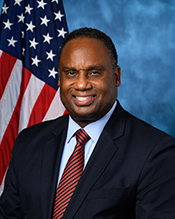
Rep. Jonathan L. Jackson
Sponsored bills
Maddy summaryThis bill requires all new Amtrak trains (purchased after enactment) to install baby changing tables in at least one restroom per train car, including in ADA-compliant restrooms. It mandates clear signage identifying these tables and defines a baby changing table as an elevated structure supporting children up to 30 pounds. The law directly affects parents traveling with infants on Amtrak, making diaper changes more accessible during train journeys. The requirement applies only to Amtrak-owned trains acquired after the bill becomes law.
Maddy summaryThe Complete Streets Act of 2025 requires states to establish programs that help local governments, transit agencies, Tribal governments, and other eligible entities design and build transportation infrastructure accommodating all users - including pedestrians, cyclists, transit riders, and people with disabilities. States must provide technical assistance and grants for complete streets projects, with funding coming from 5% of transportation funds apportioned to each state. The bill establishes new design standards requiring protected bike lanes, accessible sidewalks, and appropriate lighting for many road projects, with compliance required for certain new construction and reconstruction projects on Federal-aid highways within metropolitan areas. It also mandates that states develop "complete streets prioritization plans" focusing on improving safety, mobility, and accessibility, particularly in underserved communities.
Maddy summaryHR 649, the Whole Milk for Healthy Kids Act of 2025, amends the National School Lunch Act to allow schools participating in the program to offer students both organic and non-organic whole milk, in addition to reduced-fat, low-fat, and fat-free options. Key provisions include clarifying that milk fat in whole milk should not count toward saturated fat limits for meal compliance, prohibiting schools from purchasing milk from Chinese state-owned enterprises, and ensuring schools cannot be barred from offering the full range of milk types listed. The bill directly affects public and private schools serving the National School Lunch Program by expanding their milk options for students. It focuses on concrete policy changes to dietary offerings and sourcing restrictions within the school nutrition program.
Maddy summaryHRES 473 is a non-binding House resolution calling on the U.S. government to urgently use diplomatic efforts to ensure food and medical supplies reach civilians in Gaza. It directly addresses the needs of approximately 2.2 million Palestinians facing acute hunger, including 10,000 children identified with acute malnutrition, following a border blockade that blocked aid from March to May 2025. The resolution specifically urges the White House and State Department to secure "immediate and secure delivery and disbursement" of aid and a lasting end to the conflict, citing collapsed bakeries, exhausted food rations, and a near-total health system collapse.
Maddy summaryThe Family Vaccine Protection Act makes the Advisory Committee on Immunization Practices (ACIP) an official part of federal law, requiring it to provide vaccine recommendations based on strong scientific evidence. It mandates that the CDC Director must adopt ACIP's recommendations unless they don't meet the evidence standard, and if not adopted, the CDC must explain its decision and notify Congress within 48 hours. The bill establishes procedures for ACIP to review new vaccines within 90 days of licensure and to consider breakthrough therapies or public health emergencies. This act aims to strengthen transparency and evidence-based decision-making in vaccine recommendations for the public health system. It affects the CDC, ACIP, and Congress through formalized processes for vaccine policy development.
Maddy summaryThis bill repeals key provisions of the Protection of Lawful Commerce in Arms Act (PLCAA), which previously shielded gun manufacturers and dealers from civil lawsuits. It allows gun trace data from the federal Firearms Trace System to be used as evidence in civil court cases involving gun violence. Victims of gun violence (or their families) who sue gun manufacturers, dealers, or distributors in state or federal court can now access and rely on this trace information. The bill directly changes the legal landscape by removing a major barrier to holding gun industry entities accountable in civil cases. It does not alter criminal proceedings or affect gun ownership rights.
Maddy summaryHR 3694, the VALID Act of 2025, requires lenders to include specific information about VA loans in mortgage disclosures. It amends the National Housing Act to mandate that disclosures state the loan-to-value ratio and clarify that VA loans are available under Chapter 37 of Title 38 (veterans' benefits law), assuming prevailing interest rates. The bill also requires the Federal Housing Finance Agency to add a military service question to the Uniform Residential Loan Application form, placing it above the signature line within six months of enactment. This directly affects veterans and active-duty service members applying for VA-guaranteed mortgages, as well as the lenders processing those applications.
Maddy summaryThe JUST Act of 2025 strengthens civil rights enforcement at the U.S. Department of Agriculture (USDA) by requiring corrective actions for employees who engage in discrimination, retaliation, or harassment - such as failing to provide required application receipts or delaying program services. It establishes a new Assistant Secretary for Civil Rights to oversee compliance, creates an independent Civil Rights Ombudsman office to help program participants navigate complaints, and grants the Assistant Secretary authority to directly grant equitable relief (like restoring loan eligibility) without prior approval from other USDA officials. The bill also shifts the burden of proof in appeals to require USDA to justify its decisions with strong evidence, ensuring fairer outcomes for applicants and participants in USDA programs.
Maddy summaryThis bill requires colleges and universities to include suicide prevention contact information on student identification cards or their websites. Specifically, institutions must list the 988 Suicide and Crisis Lifeline, Crisis Text Line, and their campus mental health center on student IDs (or post the info online if IDs aren't issued). The requirement applies to all higher education institutions creating student ID cards after the bill's enactment, with a one-year implementation period. It directly affects students by ensuring immediate access to critical mental health resources through a routine campus tool.