

Buy Low and Sell High Act This bill revises requirements concerning the Strategic Petroleum Reserve (SPR), establishes an Economic Petroleum Reserve, creates a national network of Strategic Refined Petroleum Product Reserves, increases the size of the Northeast Home Heating Oil Reserve, limits the sale and exportation of petroleum products, and sets forth provisions to reduce the demand for petroleum fuel and increase fuel supply. Specifically, the bill directs the Department of Energy (DOE) to establish within the SPR an Economic Petroleum Reserve of up to 350 million barrels of crude oil. DOE may acquire crude oil from domestic producers at low prices and then sell the oil when the prices are high as specified by the bill. DOE must also establish a national network of Strategic Refined Petroleum Product Reserves to store up to 250 million barrels of gasoline and diesel fuel, which may be sold when there is a severe fuel supply interruption within the district in which the reserve is located. In addition, the bill increases the cap on the amount of barrels of petroleum distillate that may be stored in the Northeast Home Heating Oil Reserve from two million to four million. It also establishes limits on the sale and exportation of petroleum products from such reserves. For example, the bill prohibits the sale or export of fuel from the reserves to (1) China, North Korea, Russia, or Iran; (2) any other country under U.S. sanctions; or (3) any entity owned, controlled, or influenced by one of those countries or the Chinese Communist Party. However, DOE may issue a waiver of the prohibition if it is in the national security interests of the United States to allow such a sale or export. Finally, the bill establishes requirements and incentives to reduce fuel demand and increase fuel supply, including by (1) providing financial assistance for projects to electrify the transportation sector, (2) setting requirements concerning the minimum percentage of federal vehicles that must be zero-emission vehicles, and (3) directing DOE to establish a program to increase the amount of crude oil refined in oil refineries in certain countries in the Western Hemisphere.
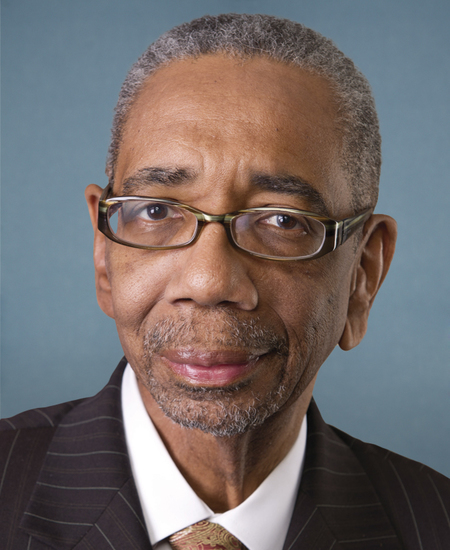
Rep. Bobby L. Rush
Sponsored bills
Maddy summaryHRES 1386 is a non-binding resolution designating the week of September 26-30, 2022, as "National Clean Energy Week." It expresses the House’s support for this designation and encourages individuals, organizations, and governments to promote clean energy solutions. The resolution highlights clean energy’s economic benefits (like supporting 7.8 million jobs in 2021) and urges investment in affordable, low-emission energy technologies. It does not create new laws, funding, or obligations - it is purely symbolic recognition of the clean energy sector’s role in the U.S. economy.
National Council on African American History and Culture Act of 2022 This bill establishes a National Council on African American History and Culture in the National Endowment for the Humanities (NEH). The duties of the council shall include gathering timely and authoritative information concerning historical developments and cultural trends in African-American history and culture; evaluating the various programs and activities of the NEH to determine the extent to which such programs and activities are contributing, or not contributing, to the successful preservation and celebration of African-American history and culture; and developing and recommending to the NEH national policies to foster and promote the understanding of African-American history, the preservation of African-American culture, and the celebration of African Americans as contributors to the country's economic, cultural, and political success.
Maddy summaryHR 4380 designates the Healing Garden at 6900 Delta Drive in El Paso, Texas, as the "El Paso Community Healing Garden National Memorial." This designation does not make the site part of the National Park System and explicitly states that no federal funds will be required or authorized for the memorial's upkeep or operations. The bill is purely procedural, focusing on naming the site.
Social Security Fairness Act of 2021 This bill repeals provisions that reduce Social Security benefits for individuals who receive other benefits, such as a pension from a state or local government. The bill eliminates the government pension offset , which in various instances reduces Social Security benefits for spouses, widows, and widowers who also receive government pensions of their own. The bill also eliminates the windfall elimination provision , which in some instances reduces Social Security benefits for individuals who also receive a pension or disability benefit from an employer that did not withhold Social Security taxes. These changes are effective for benefits payable after December 2021.
Peace Corps Reauthorization Act of 2022 This bill reauthorizes through FY2024 and modifies operations of the Peace Corps. Changes include increasing the readjustment allowance paid to volunteers when their service terminates and providing statutory authority for an executive order that grants returned volunteers noncompetitive eligibility for federal civil-service positions. Additionally, the bill entitles returned volunteers to sixty days of health care benefits. The Peace Corps must also provide volunteers with information about enrolling in U.S. health plans before service termination and mental health care during and after service. The bill also includes provisions to address involuntary termination of Peace Corps service in emergencies, including by expediting re-enrollment of involuntarily terminated volunteers. The Peace Corps must also adequately insure volunteers' safety and must coordinate with the Department of State to periodically update agreements concerning the security of Peace Corps volunteers and staff abroad. The bill also authorizes Peace Corps to recruit domestically based volunteers to serve in the United States at the request of another agency or to provide services in a host country virtually, modifies the Peace Corps National Advisory Council's membership and functions, expands whistleblower protections for volunteers, increases the rate of pay that applies to a volunteer's workers compensation claim, requires Peace Corps to implement a zero tolerance drug use policy regarding volunteer involvement with illegal drugs, and emphasizes the use of the internet in Peace Corps programs. Furthermore, the bill requires reporting, including on the provision of mental health services to volunteers.
Improving Seniors' Timely Access to Care Act of 2022 This bill establishes several requirements and standards relating to prior authorization processes under Medicare Advantage (MA) plans. Specifically, MA plans must (1) establish an electronic prior authorization program that meets specified standards, including the ability to provide real-time decisions in response to requests for items and services that are routinely approved; (2) annually publish specified prior authorization information, including the percentage of requests approved and the average response time; and (3) meet other standards, as set by the Centers for Medicare & Medicaid Services, relating to the quality and timeliness of prior authorization determinations.
This resolution affirms the use of diplomacy with the African Union and its member countries and expresses support for implementation of the African Continental Free Trade Area.
Harriet Tubman Bicentennial Commemorative Coin Act This bill directs the Department of the Treasury to mint and issue 50,000 $5 gold coins, 400,000 $1 silver coins, and 750,000 half-dollar clad coins emblematic of the legacy of Harriet Tubman as an abolitionist. The Secretary may issue coins under this bill only during the period of January 1, 2024, through December 31, 2024. All surcharges received by Treasury from the sale of such coins must be paid equally to the National Underground Railroad Freedom Center in Cincinnati, Ohio, and The Harriet Tubman Home, Inc. in Auburn, New York, for the purpose of accomplishing and advancing their missions.
National World War II Memorial Commemorative Coin Act This bill directs the Department of the Treasury to mint and issue up to 50,000 $5 coins, 400,000 $1 silver coins, and 750,000 half-dollar clad coins in commemoration of the National World War II Memorial in the District of Columbia. The design of the coins shall be emblematic of the memorial and the service and sacrifice of American soldiers and civilians during World War II. All surcharges received from the sale of such coins shall be paid to the Friends of the National World War II Memorial to support the National Park Service in maintaining and repairing the memorial, and for educational and commemorative programs.