

Fifth Amendment Integrity Restoration Act of 2021 or the FAIR Act This bill revises federal laws governing civil asset forfeiture. Specifically, the bill makes various changes to the general rules governing civil forfeiture proceedings. Among the changes, the bill requires counsel for an indigent property owner regardless of whether the owner requests counsel, raises the evidentiary standard from preponderance of the evidence to clear and convincing evidence, and sets forth factors courts must consider in determining whether a forfeiture of facilitating property is excessive. Additionally, the bill eliminates statutory authority for equitable sharing and directs forfeiture proceeds to be deposited into the general fund of the Treasury instead of the Department of Justice Assets Forfeiture Fund. Finally, the bill makes changes with respect to the civil forfeiture of money involved in structuring offenses (i.e., structuring currency transactions to evade currency reporting requirements). Among the changes, the bill specifies an evidentiary standard of knowingly for structuring offenses, and requires a prompt probable cause hearing following the seizure of money involved in a structuring offense.
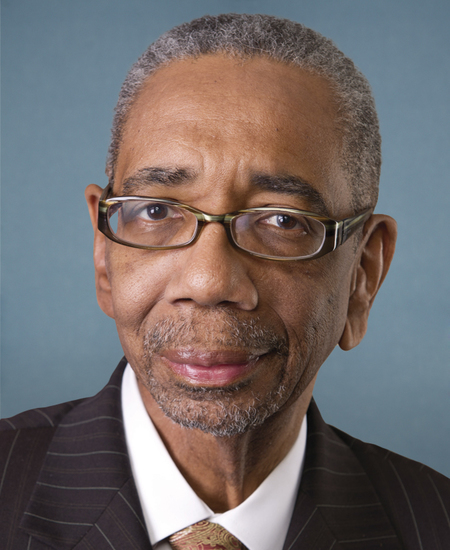
Rep. Bobby L. Rush
Sponsored bills
Honduras Human Rights and Anti-Corruption Act of 2021 This bill temporarily imposes sanctions and other penalties on Honduran president Juan Orlando Hernandez and the government of Honduras for systemic corruption and human rights violations, with particular focus on the Honduran police and military. Specifically, the President must impose asset- and visa-blocking sanctions on Juan Orlando Hernandez due to his corrupt practices, including the use of the state apparatus to protect and facilitate drug trafficking. Additionally, the President must prohibit, within 30 days, the issuance of licenses to export defense articles and services and specified munitions to the Honduran police or military. The bill also (1) makes Honduras ineligible for security assistance to equip and train police and military, and (2) requires U.S. representatives at multilateral development banks to oppose any loans for Honduran police or military. Furthermore, the Department of the Treasury must instruct U.S. leadership of international financial institutions and the U.S. International Development Finance Corporation to promote human rights due diligence and risk management in any loan, grant, policy, or strategy related to Honduras. The sanctions and other penalties put in place under this bill terminate in five years but may be lifted earlier if specified conditions are met.
Jaime's Law This bill establishes background check requirements for the sale and transfer of ammunition. Specifically, the bill prohibits a licensed importer, manufacturer, or dealer from transferring ammunition to an unlicensed individual prior to submitting a background check through the National Instant Criminal Background Check System. It also establishes penalties for violations. (Currently, background checks are required under these circumstances for the transfer of firearms, but not for ammunition.) Additionally, it prohibits an ammunition transfer between private parties (i.e., unlicensed individuals) unless a licensed importer, manufacturer, or dealer first takes possession of the ammunition to conduct a background check. However, this prohibition does not apply to certain ammunition transfers, such as a gift between spouses in good faith.
Maddy summaryHR 2584, the Judiciary Act of 2021, would change the structure of the U.S. Supreme Court by increasing the number of associate justices from eight to twelve. This bill directly affects the Supreme Court's composition and operations, requiring a quorum of eight justices instead of six to conduct business. The key provision amends Title 28 of the U.S. Code to reflect these numerical changes to the Court's membership and quorum requirements. This is a procedural change to the Court's statutory structure, not a policy affecting the public.
Help Empower Americans to Respond Act of 2021 or the HEAR Act This bill establishes a new criminal offense for the import, sale, manufacture, transfer, or possession of a firearm silencer or firearm muffler. The bill does not prohibit certain conduct with respect to a firearm silencer or firearm muffler, including the following: importation, sale, manufacture, transfer, or possession related to certain law enforcement efforts, or authorized tests or experiments; and importation, sale, transfer, or possession related to securing nuclear materials. In addition, the bill requires the Department of Justice to establish and implement a buy-back program to purchase firearm silencers and firearm mufflers. States and local governments may use Edward Byrne Memorial Justice Assistance Grant Program funds to compensate individuals who surrender firearm silencers and firearm mufflers under this buy-back program.
Keep Americans Safe Act This bill establishes a new criminal offense for the import, sale, manufacture, transfer, or possession of a large capacity ammunition feeding device (LCAFD). The bill does not prohibit certain conduct with respect to an LCAFD, including the following: importation, sale, manufacture, transfer, or possession related to certain law enforcement efforts, or authorized tests or experiments; importation, sale, transfer, or possession related to securing nuclear materials; and possession by a retired law enforcement officer. The bill permits continued possession of, but prohibits sale or transfer of, a grandfathered LCAFD. Newly manufactured LCAFDs must display serial number identification and the date of manufacture. Additionally, the bill allows a state or local government to use Edward Byrne Memorial Justice Assistance Grant Program funds to compensate individuals who surrender an LCAFD under a buy-back program.
Law Enforcement Protection Act of 2021 This bill includes armor-piercing, concealable weapons in the definition of firearm under the National Firearms Act.
Khalid Jabara and Heather Heyer National Opposition to Hate, Assault, and Threats to Equality Act of 2021 or the Jabara-Heyer NO HATE Act of 2021 This bill creates grants for state and local governments to combat hate crimes. It also authorizes additional penalties for hate crime offenses. Specifically, it establishes grants for states to create state-run hate crimes reporting hotlines. It also authorizes grants for states and local governments to implement the National Incident-Based Reporting System and to conduct law enforcement activities or crime reduction programs to prevent, address, or respond to hate crimes. Finally, in the case of an individual convicted of a hate crime offense and placed on supervised release, the bill allows a court to order that the individual participate in educational classes or community service as a condition of supervised release.
Defending Each and Every Person from False Appearances by Keeping Exploitation Subject to Accountability Act of 2021 or the DEEP FAKES Accountability Act This bill establishes requirements for advanced technological false personation records (i.e., deep fakes) and establishes criminal penalties for related violations. Specifically, it requires producers of deep fakes to generally comply with certain digital watermark and disclosure requirements (e.g., verbal and written statements). It establishes new criminal offenses related to (1) the production of deep fakes which do not comply with related watermark or disclosure requirements, and (2) the alteration of deep fakes to remove or meaningfully obscure such required disclosures. A violator is subject to a fine, up to five years in prison, or both. It also establishes civil penalties and permits individuals to bring civil actions for damages. Additionally, it revises the criminal offense of fraud in connection with certain identification documents to include deep fakes. The bill also directs the Department of Justice to take certain actions, such as publishing a report related to deep fakes that includes a description of the efforts of Russia and China to use technology to impact elections. Software manufacturers who reasonably believe software will be used to produce deep fakes must ensure it has the technical capability to insert watermarks and disclosures. Finally, the bill directs the Department of Homeland Security to establish a task force to, among other things, advance efforts of the federal government to combat the national security implications of deep fakes.
Voter Empowerment Act of 2021 This bill expands voter registration and voting access. Specifically, the bill expands voter registration by requiring states to (1) make available online voter registration, (2) establish automatic voter registration systems, (3) permit same-day voter registration, and (4) accept voter registration applications from individuals under age 18. Further, the bill limits removing voters from voter rolls and prohibits interference with voter registration or voting. Next, the bill requires states to allow individuals with disabilities to use absentee registration procedures and to vote by absentee ballot in federal elections. The bill also prohibits voter caging (the practice of sending mail to addresses on voter rolls, compiling a list of the undeliverable mail, and using the list to remove registered voters from voter rolls). Next, the bill expands voting access by requiring states to allow early voting and voting by mail without additional conditions. It also requires states to provide secured drop boxes at which individuals may drop off their completed absentee ballots. In addition, the bill declares that the right of a U.S. citizen to vote in any federal election shall not be denied or abridged because that individual has been convicted of a criminal offense unless, at the time of the election, such individual is serving a felony sentence. Finally, the bill permanently reauthorizes the Election Assistance Commission (EAC). It also directs the EAC to make grants to states for specified activities, including to implement automatic voter registration systems.