

Maddy summaryThis bill creates a new definition for "currently accepted medical use with severe restrictions" under the Controlled Substances Act, specifically for certain investigational drugs. It applies to drugs designated as breakthrough therapies by the FDA or authorized for expanded patient access under specific emergency protocols for serious diseases with no other treatment options. The definition excludes drugs that are already fully approved under standard FDA pathways or that lose their expanded access status. If a drug no longer meets these strict criteria, the Attorney General must reclassify it into the highest restriction category (Schedule I) within 90 days of notification from the Health Secretary. This changes how certain experimental treatments are classified under federal drug laws.
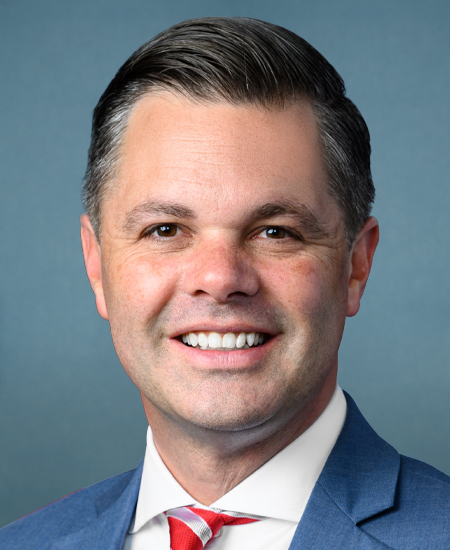
Rep. Zachary Nunn
Sponsored bills
Ban Members from Becoming Lobbyists Act This bill extends the ban on lobbying that applies to former Members of Congress. Specifically, the bill imposes a six-year ban for former Senators and a three-year ban for former Representatives; a ban begins once a former Senator or Representative leaves office. Under current law, former Senators are subject to a two-year ban, while former House Members are subject to a one-year ban.
USA Batteries Act This bill removes lead oxide, antimony, and sulfuric acid from the list of taxable chemicals subject to the environmental excise tax.
Maddy summaryThis bill authorizes a Congressional Gold Medal to honor the "Hello Girls" - female telephone operators who served in the Army Signal Corps during World War I. They provided critical battlefield communications in France (connecting 26 million calls), wore military uniforms, and faced combat risks, but were denied veteran benefits for 60 years due to being classified as civilian contractors. The medal recognizes their pioneering service, devotion, and the decades-long struggle to gain military recognition. The award follows similar recognition for other WWII women veterans and aims to correct the historical injustice they faced.
Maddy summaryThe PHIT Act of 2023 allows individuals and families to deduct certain fitness expenses as medical costs on their federal taxes. It covers gym memberships, fitness classes, and specific equipment used exclusively for exercise (like home workout gear), with a yearly limit of $1,000 ($2,000 for joint returns). Expenses for activities like golf, hunting, or non-exercise-focused facilities (e.g., private clubs) are excluded, and equipment must be used solely for physical activity. This directly affects taxpayers who pay for qualifying fitness programs, making these costs partially tax-deductible under revised IRS rules.
Maddy summaryThis bill designates an annual "Hostage and Wrongful Detainee Day" and establishes a specific flag for recognition. It requests the President issue yearly proclamations designating the day and calls for public observance, while requiring the designated flag to be displayed at the Capitol, White House, and State/Defense Department buildings on Flag Day (June 14), Independence Day (July 4), and days when U.S. citizens return from or die while held hostage/wrongfully detained abroad.
Maddy summaryThis bill expands the use of 529 college savings accounts to cover career training and credentialing costs. It allows funds to pay for tuition, fees, books, and testing expenses related to recognized postsecondary credential programs (like vocational certifications) that meet specific standards under the Workforce Innovation and Opportunity Act. The change directly affects workers seeking industry-recognized credentials - such as nursing certifications or IT certifications - instead of traditional degrees. It treats these expenses the same as traditional college costs for 529 account withdrawals, making it easier to save for career-focused training. The provision applies to expenses paid after the bill's enactment date.
Maddy summaryThis bill prohibits foreign governments (specifically China, Iran, North Korea, and Russia) from acquiring or transferring interests in two types of U.S. land: agricultural land used for growing corn or soybeans destined for renewable energy production, and land designated for wind energy infrastructure. It amends the Defense Production Act to add a new restriction (subsection (r)) blocking such transactions involving these lands. The policy directly affects foreign entities from the listed countries seeking to invest in U.S. renewable energy agriculture or wind projects. This creates a clear legal barrier to foreign ownership of these specific energy-related assets without altering existing renewable energy incentives.
Maddy summaryHR 1417 would end automatic pay raises for Members of Congress by repealing a provision in the 1946 Legislative Reorganization Act. This bill directly affects current and future members of Congress by removing their automatic salary increases tied to federal employee pay adjustments. The key mechanism is eliminating section 601(a)(2) of the Act, which previously adjusted congressional pay based on federal wage changes. The change takes effect when the 119th Congress begins, meaning members would no longer receive automatic pay increases under this rule.
Maddy summaryHR 1379, titled the *Access to Small Business Investor Capital Act*, simplifies reporting requirements for investment companies that hold shares in business development companies (BDCs). The bill allows registered investment companies (like mutual funds) to exclude BDC-related fees and expenses from their standard "Acquired Fund Fees and Expenses" calculations in registration statements, instead disclosing these costs in a footnote. This change directly affects investment companies managing portfolios with BDC investments and the BDCs themselves, reducing administrative complexity. The provision modifies existing SEC disclosure rules under the Investment Company Act of 1940 without creating new capital access for small businesses.