

Maddy summaryHR 2845, the Enhancing K-12 Cybersecurity Act, creates a centralized School Cybersecurity Information Exchange website managed by CISA to provide K-12 schools, school districts, and state education agencies with tailored cybersecurity resources, best practices, and funding opportunities. It establishes a voluntary registry for schools to report cyber incidents (like ransomware attacks) and requires CISA to publish annual, anonymized reports on incident trends. The bill also funds a K-12 Cybersecurity Technology Improvement Program to deploy protective tools, offer training, and prevent threats, with $10 million authorized annually for 2024-2025. This directly supports schools in strengthening digital security for students and staff, focusing on practical, accessible solutions rather than legislative changes.
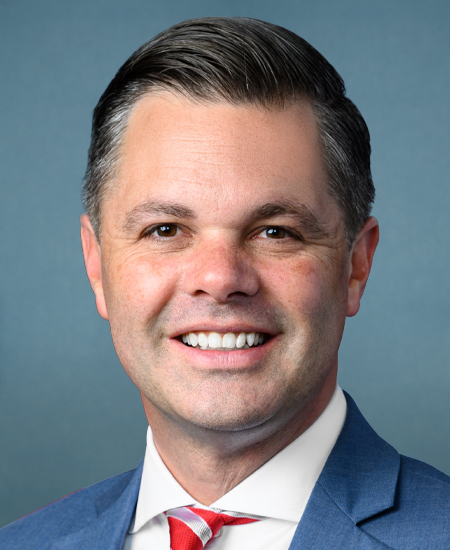
Rep. Zachary Nunn
Sponsored bills
Farm Credit Administration Independent Authority Act This bill specifies that the Farm Credit Administration (FCA) is the sole regulator of the Farm Credit System (FCS) and establishes reporting requirements for FCS institutions. Specifically, the bill states that the FCA is the sole and independent regulator of the FCS and exempts entities that are supervised by the FCA from the Equal Credit Opportunity Act (ECOA). (The bill addresses a proposed rule by the Consumer Financial Protection Bureau [CFPB] that would implement provisions of the ECOA by requiring covered financial institutions, including FCS lenders, to collect and report to the CFPB data on credit applications for small businesses, including the principal owner's race, sex, and ethnicity.) The bill also requires FCS institutions to (1) request that loan applicants and borrowers that are small farmers disclose information identifying their race, sex, and ethnicity; and (2) annually report the collected information to the FCA. If an FCS institution customer does not voluntarily report the requested information, the FCA may not require the institution to use other means to deduce the information.
Maddy summaryHR 1788, the "Goldie’s Act," strengthens USDA enforcement of the Animal Welfare Act. It requires annual inspections of all regulated animal businesses (like dealers, research facilities, and exhibitors) and mandates immediate, humane confiscation of animals suffering due to violations, while prohibiting owners from destroying animals during this process. The bill increases civil penalties to $10,000 per violation, requires hearing panels including veterinarians, and mandates that penalties consider business size and violation severity. It also requires USDA to share violation records with local animal control within 24 hours.
Maddy summaryHR 2743 prohibits large financial institutions (over $100 billion in assets) from denying banking services to lawful businesses based on subjective political reasons, industry type, or reputational concerns. It requires these institutions to use objective, risk-based assessments for service decisions and provide written justifications for denials. The law applies to banks, credit unions, and payment networks, with civil penalties for violations including fines up to $10,000 per incident. It specifically ensures businesses operating legally under federal law receive fair access to financial services without discrimination. The bill mandates that denials be based on documented risk factors, not political bias or category-based exclusion.
American Innovation and R&D Competitiveness Act of 2023 This bill eliminates the five-year amortization requirement for research and experimental expenditures, thus allowing continued expensing of such expenditures in the taxable years in which they are incurred.
Maddy summaryThis bill establishes a federal grant program to help states fund child care for the minor children of police officers during their irregular work schedules. It provides competitive grants to states, with 20% reserved for jurisdictions employing fewer than 200 officers, to support law enforcement agencies in creating or expanding child care services. States must match federal funds (10-33% over three years) and use grant money for startup costs, provider training, sick child care, extended hours, or facility construction. The program runs through 2028, requiring annual audits and two federal studies to assess its effectiveness.
Maddy summaryHR 2693, the Pay Our Coast Guard Parity Act of 2023, ensures Coast Guard members, civilian staff, and qualifying contractors receive pay and benefits during specific funding gaps. It requires Congress to appropriate funds for Coast Guard personnel pay, allowances, and key benefits (like death gratuities and housing allowances) if a Coast Guard-specific funding lapse occurs - when Coast Guard funding isn’t approved before a fiscal year starts but Department of Defense funding is. The bill mandates these payments continue until a full appropriation is enacted or for up to two weeks after the lapse begins, with costs charged to future appropriations. This addresses a gap in funding continuity for Coast Guard personnel during government shutdowns affecting only the Coast Guard.
Maddy summaryHR 1645 establishes a national biochar research network with up to 20 research sites to study how biochar (a charcoal-like soil additive) affects soil health, carbon storage, and crop production across different conditions. The network will test various biochar types, production methods, and applications to provide region-specific guidance for farmers, ranchers, foresters, and urban land managers on sustainable use. It authorizes $50 million annually (2023-2028) for USDA-administered research, focusing on soil carbon sequestration, climate mitigation, and practical farming applications. The research aims to develop science-based recommendations for improving soil health, reducing emissions, and supporting farm profitability through biochar integration.
Maddy summaryThe Puppy Protection Act of 2023 sets new standards for businesses that sell dogs (dealers), directly affecting pet stores and breeders operating under the Animal Welfare Act. It requires specific housing with space allowances based on dog size (e.g., 12-30 square feet per dog), temperature control (45-85°F), clean food twice daily, and daily exercise or socialization with humans/dogs for at least 30 minutes. The bill also mandates annual veterinary exams including dental care, strict breeding limits (e.g., age restrictions, maximum 2 litters in 18 months), and efforts to place retired breeding dogs in homes instead of selling them to other breeders. Regulations must be finalized within 18 months of enactment.
Maddy summaryHJRES 27 is a congressional resolution seeking to block a federal rule that redefined which waterways fall under the Clean Water Act's protections. It targets a rule submitted by the Army Corps of Engineers, Department of Defense, and Environmental Protection Agency (EPA) on January 18, 2023, which aimed to revise the "Waters of the United States" definition. The resolution would formally disapprove this rule under a specific federal procedure (Chapter 8 of Title 5), preventing it from taking effect. This would directly affect how federal agencies regulate pollution and development near water bodies, including wetlands and smaller streams.