

Maddy summaryThe Secure Payments Act of 2024 requires the Federal Reserve to study the impacts of the proposed "Reg II" rule (which would cap debit card interchange fees) on consumers, merchants, and small banks. Specifically, it mandates a study of how fee changes affect access to low-cost bank accounts, merchant costs, fraud mitigation, and the affordability of banking products in underserved communities. The Fed must also conduct a quantitative analysis of the rule's effects on small banks' capital and earnings. The Federal Reserve cannot finalize the Reg II rule until after it completes this study, issues a report to Congress, and considers the findings - including whether fee caps benefit low- and moderate-income customers. This bill delays the final rule to ensure the impacts are fully assessed before implementation.
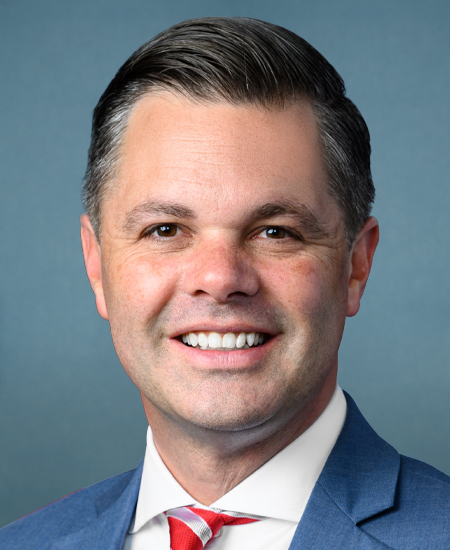
Rep. Zachary Nunn
Sponsored bills
Maddy summaryThe Farm to Fly Act of 2023 amends USDA programs to include sustainable aviation fuel (SAF) as a qualifying product for financial assistance, directly affecting farmers, biorefineries, and agricultural producers. It defines SAF as liquid fuel meeting strict environmental standards - requiring at least a 50% reduction in lifecycle greenhouse gas emissions compared to jet fuel and excluding sources like palm oil or petroleum. The bill mandates the Secretary of Agriculture to lead a cross-agency initiative focused on advancing SAF development, leveraging agricultural resources, and fostering public-private partnerships to expand the domestic SAF market. This aims to support rural economic growth, strengthen U.S. energy security, and align with national clean energy goals in aviation.
Maddy summaryHR 7361, the Flowers for Fallen Heroes Act of 2024, requires the American Battle Monuments Commission to establish a low-cost program allowing the public to order flowers for military gravesites at Commission-managed cemeteries. The bill mandates the Commission to partner with third-party florists (without excess fees) and create a user-friendly website and phone system for ordering by one year after enactment. It also authorizes credit card and electronic payment processing for these orders, with customers responsible for any third-party processing fees, and requires annual reports to Congress detailing program implementation, including order data and florist engagement. This bill directly affects the public seeking to honor fallen service members and the Commission’s operations at 25 overseas military cemeteries.
Maddy summaryThe CHILD Act of 2024 increases the maximum annual tax benefit for dependent care expenses from $5,000 to $10,000 (and doubles the spousal limit from $2,500 to $5,000) under Section 129 of the Internal Revenue Code. It also adds automatic annual cost-of-living adjustments to these limits, calculated using the standard inflation formula, rounded to the nearest $50. This directly affects working parents who claim dependent care expenses on their federal taxes, expanding their tax savings for childcare costs. The changes apply to calendar years beginning after December 31, 2023, and remove an outdated provision (subparagraph D) from the existing tax code.
Maddy summaryThe Uyghur Policy Act of 2023 establishes a U.S. Special Coordinator for Uyghur Issues within the State Department to coordinate policy and advocate for the protection of Uyghur cultural, religious, and linguistic identity in Xinjiang. It authorizes $250,000 annually for Uyghur human rights advocates to speak at public diplomacy events in Muslim-majority countries and mandates Uyghur language training for U.S. diplomats. The bill also directs the U.S. government to support United Nations monitoring of Xinjiang human rights issues and oppose efforts to block discussions of Xinjiang at the UN. These provisions focus on diplomatic advocacy and information-sharing, not direct sanctions or enforcement actions against China.
Maddy summaryHR 533, the "Promoting a Resolution to the Tibet-China Dispute Act," establishes U.S. policy recognizing Tibetans' right to self-determination under international law and rejects China's historical claims about Tibet. It directs the State Department to counter Chinese disinformation about Tibet’s history and status, including claims that Tibet has been part of China "since ancient times," and amends the 2002 Tibetan Policy Act to require specific disinformation countermeasures. The bill defines "Tibet" to include the Tibet Autonomous Region and Tibetan areas in Qinghai, Sichuan, Gansu, and Yunnan provinces. These provisions aim to guide U.S. diplomatic efforts toward resolving the Tibet-China dispute through dialogue and factual representation.
Maddy summaryHRES 966 is a symbolic resolution condemning alleged sexual violence committed by Hamas during its October 7, 2023, attack on Israel. It specifically references eyewitness accounts, forensic evidence, and Hamas fighters' admissions of ordering gang rape, sexual mutilation, and assault against Israeli civilians. The resolution calls for international condemnation of such acts as weapons of war, urges nations to criminalize sexual violence, and supports investigations into Hamas' actions. As a non-binding resolution, it does not create new laws or directly affect any individuals but formally expresses the House's position on the issue.
Maddy summaryHR 7355, the Early Childhood Workforce Advancement Act of 2024, establishes a federal grant program to fund career and technical education programs in early childhood education. It directly supports partnerships between institutions of higher education, child care providers, and community stakeholders to expand training and career pathways for early childhood educators. Key provisions include funding for curriculum development, educator recruitment/retention, professional development, and support services like childcare assistance for students pursuing credentials (such as Child Development Associate) or degrees. The grants aim to improve workforce readiness, address regional shortages, and enhance outcomes for students - particularly in underserved communities - by aligning training with industry needs and State strategic plans.
Maddy summaryHR 7338 establishes an Office of the Community Development Advocate within the Community Development Financial Institutions Fund to address concerns from community-focused financial institutions. The Advocate will handle complaints about certification processes, application delays, and administrative responsiveness, while ensuring clear decertification procedures with cure periods for institutions facing noncompliance. It mandates an annual report to Congress on the Fund’s responsiveness and process efficiency, and requires $1 million in funding for implementation. The bill directly affects community development financial institutions (CDFIs) and aims to streamline their access to programs by creating clearer, more transparent administrative processes.
Maddy summaryHR 2426, the Find and Protect Foster Youth Act, requires the federal government to evaluate state and tribal child welfare systems' protocols for identifying and responding to children missing from foster care. It mandates the Secretary to identify obstacles in these systems, share best practices, and provide technical assistance to states and tribes on tracking missing youth and improving services. The bill also specifically requires improved screening for sex trafficking risk when children return to foster care after running away, including new tools for caseworkers to assess trafficking risk and document appropriate services. These changes directly affect foster youth, particularly those missing or at risk of exploitation, and the states and tribes managing foster care systems. The law authorizes funding through fiscal year 2027 to support these efforts.