

Maddy summaryThis bill (HR 1753) ensures 310+ female service members who served in specialized cultural support teams (2010-2021, identified by skill codes R2J/5DK) receive proper military records and veterans benefits. It requires the military to include this service in personnel records and count it as combat service for disability claims. Veterans denied benefits for injuries from this service can now file supplemental claims within three years of enactment, with claims treated as if filed on their original claim date. The bill also mandates VA outreach to inform affected veterans and families about this new process.
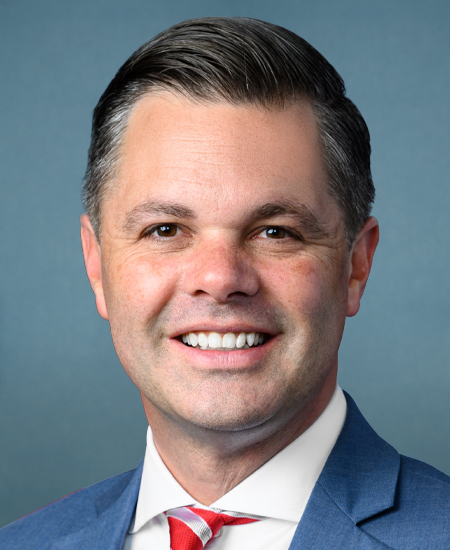
Rep. Zachary Nunn
Sponsored bills
Maddy summaryHR 9667 requires U.S. Customs and Border Protection (CBP) to hire 500 new officers and purchase 50 non-intrusive imaging systems to inspect vehicles and people traveling from the U.S. to Mexico at the southern border. It mandates that at least 10% of such "southbound" traffic be inspected by March 2027, with additional personnel for investigating currency, firearms, and drug smuggling. The bill also requires quarterly reports on seized currency and firearms, and a 2028 report on expanding inspection rates to 15-20%. The provisions expire after five years and apply specifically to inspections of traffic moving from the U.S. to Mexico.
Maddy summaryHR 9365, the Pharmacy and Medically Underserved Areas Enhancement Act, expands Medicare coverage to include pharmacist services in designated underserved areas. It directly affects Medicare beneficiaries in health professional shortage areas, medically underserved areas, or medically underserved populations, as well as pharmacists licensed to provide these services under state law. The bill adds new coverage criteria requiring services to be legally authorized by state law, equivalent to physician-covered services, and provided in an eligible location. It also establishes payment rates at 80% of the lesser of actual charges or 85% of physician fee schedule amounts for these services, effective January 1, 2024. The bill requires the development of specific codes for pharmacist services under Medicare’s physician fee schedule.
Maddy summaryThis bill requires states to provide foster youth aged 14 and older with essential documents annually - such as credit reports, birth certificates, health records, and foster care verification - without cost, along with clear explanations of their rights and available services. It expands the Chafee Foster Care program to support youth transitioning from foster care through age 23, focusing on education, housing, health, job training, and life skills, while mandating that states consult directly with youth in planning these services. States must track participation and outcomes, including how many youth receive required documents and achieve key milestones like housing stability or educational goals. The bill directly affects foster youth and state child welfare agencies, aiming to improve their independence and well-being during critical transition years.
Maddy summaryThis bill extends medical care coverage for family caregivers of veterans for 180 days after they stop serving as primary providers (unless dismissed for fraud), addressing a gap in support during transition. It provides employment assistance including up to $1,000 in reimbursement for certification fees, free training modules, and access to military/veterans workforce programs during that 180-day period. The bill also adds bereavement counseling if a veteran dies and requires two studies: one on re-entry workforce programs for caregivers, and another on hiring former caregivers at VA facilities. Key direct beneficiaries are family caregivers designated under VA’s program who are transitioning out of caregiving roles.
Maddy summaryHR 8806, the Safeguarding Social Security and Medicare Act, requires the Comptroller General to conduct a study within one year of enactment. The study will examine how inflation and rising costs of living impact Social Security and Medicare benefits, and provide recommendations to Congress on necessary legislative actions. This bill does not change current benefit levels but mandates an analysis to address financial pressures on the 71.7 million Social Security beneficiaries and 66.6 million Medicare beneficiaries. The focus is on gathering data to inform future policy decisions, not on implementing immediate changes.
Maddy summaryThis bill requires Medicare Advantage plans to implement electronic prior authorization systems by 2027 and publish detailed data on their approval and denial rates for medical services by 2026. It directly affects Medicare Advantage plans (private insurers offering Medicare coverage) and their enrollees (seniors 65+), mandating transparency about prior authorization decisions, processing times, and appeal outcomes. Key provisions include requiring plans to report annual statistics on request approvals/denials, average processing times, and use of technology, with this data published publicly by the Centers for Medicare & Medicaid Services. The bill also sets timelines for plan responses to prior authorization requests and mandates reports to Congress on implementation and impacts.
Maddy summaryThis bill would streamline the process for making certain oral contraceptives available over-the-counter for adults aged 18 and older. It requires the Health and Human Services Secretary to prioritize review of applications for these contraceptives (excluding emergency contraceptives or drugs also approved for abortion), waive associated fees, and ensure they remain available without a prescription after approval. Minors under 18 would still require a prescription for these contraceptives. Additionally, the bill mandates a GAO report within one year detailing federal funding for contraception across programs like Medicaid, Medicare, and the Affordable Care Act health exchanges over the prior 15 years.
Maddy summaryHR 8220, the Occupational Therapy Mental Health Parity Act, requires the U.S. Department of Health and Human Services to educate Medicare stakeholders about existing coverage rules for occupational therapy services treating mental health or substance use disorders. Specifically, within one year of enactment, the Secretary must clarify how current Medicare policies apply using specific medical codes (HCPCS). This bill does not change coverage rules but ensures providers and beneficiaries understand existing Medicare benefits for these services. It directly affects Medicare beneficiaries seeking mental health care and healthcare providers billing under Medicare.
Maddy summaryThe Audio-Only Telehealth Access Act of 2024 would require Medicare to cover and pay for telehealth visits conducted over the phone (without video) during the current public health emergency. This change, which amends the Social Security Act, expands Medicare's existing telehealth coverage to include audio-only calls, effective from the start of the emergency period. It directly affects Medicare beneficiaries who rely on phone-based care and healthcare providers who offer such services. The bill does not alter Medicare's coverage for telehealth outside of the emergency period.