

Fair Access to Banking Act This bill places restrictions on certain banks, credit unions, and payment card networks if they refuse to do business with a person who complies with the law. Restrictions include prohibiting the use of electronic funds transfer systems and lending programs, termination of an institution's depository insurance, and specified civil penalties. Banks and other specified financial institutions are allowed to deny financial services to a person only if the denial is justified by a documented failure of that person to meet quantitative, impartial, risk-based standards established in advance by the institution. This justification may not be based upon reputational risks to the institution. The bill establishes the right for a person to bring a civil action for a violation of this bill.
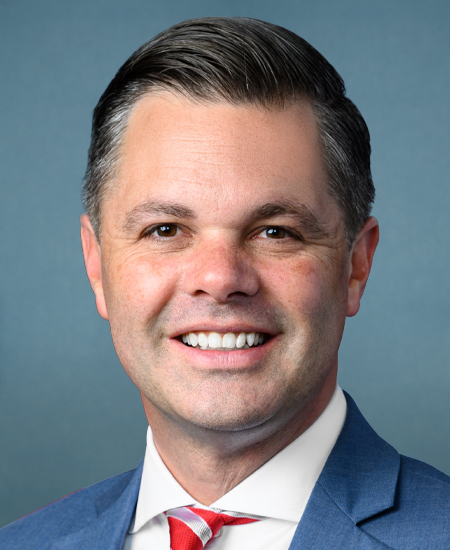
Rep. Zachary Nunn
Sponsored bills
Combating Rural Inflation Act This bill requires the the Bureau of Labor Statistics of the Department of Labor to publish a monthly index of changes in consumer prices for individuals residing in rural communities.
Maddy summaryHR 942, the "Banning SPR Oil Exports to Foreign Adversaries Act," prohibits the export of petroleum products drawn from the U.S. Strategic Petroleum Reserve to China, North Korea, Russia, Iran, and any entity owned or controlled by these countries or the Chinese Communist Party. The Secretary of Energy may grant a waiver for such exports if certified as serving U.S. national security interests, but must issue implementing rules within 60 days of enactment. This policy directly affects U.S. energy exports and entities seeking to purchase SPR oil from the listed adversaries.
Maddy summaryHR 958, the Train More Primary Care Doctors Act of 2025, increases annual funding for primary care training programs under the Public Health Service Act. It raises the annual appropriation from $48,924,000 (for fiscal years 2021-2025) to $49,924,000 (for fiscal years 2025-2030). This funding supports medical training programs focused on preparing primary care physicians, directly benefiting medical schools and residency programs. The bill makes a specific budgetary adjustment without creating new requirements or altering program eligibility.
Maddy summaryThis bill reauthorizes the Dr. Lorna Breen Health Care Provider Protection Act, extending mental health support programs for healthcare professionals through 2030 (previously ending in 2024). It requires funded programs to specifically address reducing administrative burdens on healthcare workers while continuing to promote access to mental health and substance use disorder services. The legislation directly affects healthcare providers across the U.S. who may access these federally supported resources. Key provisions include extending funding periods and mandating that grant recipients focus on easing workplace administrative tasks, alongside maintaining existing awareness initiatives. The bill does not create new programs but continues and refines existing mental health support for the healthcare workforce.
Maddy summaryThe Fighting Budget Waste Act requires the President and the Office of Management and Budget (OMB) to consider the most recent Government Accountability Office (GAO) report on reducing government waste when preparing the annual federal budget. Specifically, it mandates review of the GAO's findings about cutting fragmentation, duplication, and overlap in federal programs - such as the report titled *Additional Opportunities to Reduce Fragmentation, Overlap, and Duplication and Achieve Billions of Dollars in Financial Benefits* - to identify potential savings. The OMB must also submit a separate report to Congress detailing how it incorporated the GAO's recommendations into the budget submission. This law aims to make the budget process more transparent by formally integrating the GAO's waste-reduction analysis into federal fiscal planning.
Maddy summaryHCONRES 4 is a symbolic resolution expressing Congress's support for tax-exempt fraternal benefit societies (like mutual aid organizations). It recognizes these groups, which have over 7 million members nationwide, as historically and currently providing critical community benefits - including life/health insurance, charitable work, and volunteer services - valued at over $3.8 billion annually. The resolution affirms that their tax-exempt status under Section 501(c)(8) of the Internal Revenue Code remains beneficial and should continue to be promoted. This is a non-binding expression of congressional sentiment, not a policy change.
Maddy summaryHCONRES 7 establishes a 12-member bipartisan Task Force to analyze ways to expedite consideration of bills that have already passed one chamber with broad support (unanimous consent, voice vote, or 2/3 approval). The Task Force, appointed with balanced representation from both parties and leadership in each chamber, will study mechanisms for "bicameral legislation expedition" and produce a report with recommendations within one year. This report will be posted publicly by the House and Senate Rules Committees. The bill itself creates no new laws but directs Congress to examine procedural improvements for faster legislative action on widely supported bills.
Maddy summaryHR 807, the Public and Private Sector Ransomware Response Coordination Act of 2025, requires the Treasury Secretary to submit a report to Congress within one year of enactment. The report will examine current coordination between government agencies and financial institutions during ransomware attacks, assess whether financial institutions timely share attack information with authorities, and evaluate if better reporting mechanisms are needed. This bill directly affects financial institutions by focusing on how they report ransomware incidents and how government agencies use that information, without creating new laws or funding.
Maddy summaryHR 737, the *Extraordinary Measures Transparency Act*, requires the U.S. Treasury Secretary to provide detailed reports to Congress when the federal debt approaches the statutory limit. Specifically, it mandates a 30-day report before hitting the limit (describing planned actions, costs, and funding duration), daily updates during the use of "extraordinary measures" (like suspending certain investments or selling securities), and a final summary after such measures end. These reports must detail the specific financial actions taken, their costs, and administrative expenses. The bill directly affects Congress by increasing transparency around the Treasury’s temporary financial strategies to avoid breaching the debt ceiling, without changing debt limit rules or funding.