

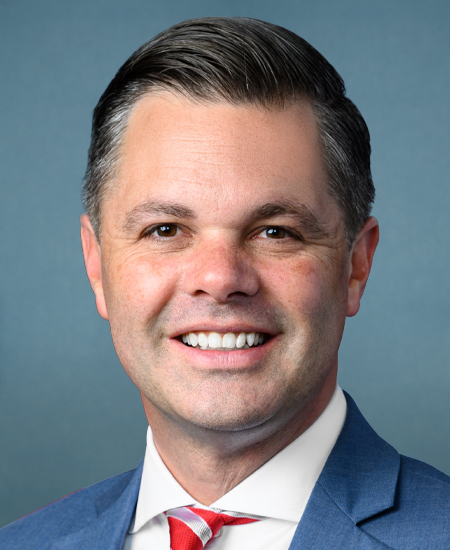
Photo of Zachary Nunn
R United States House · District 3 · Iowa On the 2026 ballot

Rep. Zachary Nunn

Compare
Total votes
1,879
all sessions
Attendance
96%
66 missed
Lower than 79% of chamber peers
With party
90%
of cast votes
Near the chamber average
Bipartisan score
5%
crosses aisle rarely
Near the chamber average
Sponsored
996
bills & resolutions
Higher than 80% of chamber peers
Committees
7
assignments
996 bills and resolutions

Sponsored bills

Total
996
Primary
115
Co-sponsor
881
This page
996
matching current filters
Co-sponsor HR 2839
In committee · United States House · Co-sponsor
AG2PI Act of 2025

Maddy summaryThis bill reauthorizes the Genome to Phenome Initiative through 2030, extending its current authorization period. It directly affects farmers, ranchers, and agricultural researchers by funding continued research into how plant and animal genetic traits (phenomes) relate to genes, disease resistance, and environmental factors. The key mechanism is updating the program's expiration date in federal law from 2023 to 2030, allowing ongoing support for projects that connect genetic data to practical farming improvements. The goal is to help agricultural producers make better decisions about breeding and management to boost resilience and profitability under changing climate conditions.

In committee Apr 10, 2025 1 co-sponsor
Co-sponsor HR 2890
In committee · United States House · Co-sponsor
Financial Inclusion in Banking Act of 2025

Maddy summaryHR 2890, the Financial Inclusion in Banking Act of 2025, creates a new "Office of Community Affairs" within the Consumer Financial Protection Bureau (CFPB). This office must research why individuals and households avoid or leave traditional banks (particularly low- and moderate-income people, minorities, and rural communities), consult with relevant groups like community advocates and minority banks, and develop strategies to improve financial education and access. The office is required to report to Congress every two years on barriers to banking access and recommend solutions. The bill directly affects under-banked, un-banked, and underserved consumers by mandating federal action to address systemic barriers in banking relationships.

In committee Apr 10, 2025 1 co-sponsor
Co-sponsor HR 2819
In committee · United States House · Co-sponsor
DRIVE Act

Maddy summaryHR 2819, the DRIVE Act, prohibits the Federal Motor Carrier Safety Administration from requiring speed limiting devices on trucks weighing over 26,000 pounds operating in interstate commerce. This directly affects commercial truck drivers and carriers that operate large vehicles across state lines. The bill blocks the agency from implementing any rule mandating speed limiters that would cap these trucks' maximum speed. It prevents a potential new federal requirement for trucking companies without altering existing safety standards.

In committee Apr 10, 2025 1 co-sponsor
Co-sponsor HR 2897
In committee · United States House · Co-sponsor
To amend the Small Business Act to make disaster loans available for damages caused by prolonged power outages, and for other purposes.

Maddy summaryHR 2897 expands eligibility for Small Business Administration disaster loans to cover damages from prolonged power outages. It defines a "prolonged power outage" as affecting at least 25 homes or businesses in a county (with 40% property damage) or requiring 48+ hours of power loss. Borrowers can use loan funds to purchase energy resilience systems (like solar panels or generators) or replace lost food/drinks due to the outage. This directly affects small businesses in areas impacted by extended power disruptions meeting the specified criteria.

In committee Apr 10, 2025 1 co-sponsor
Co-sponsor HR 2777
In committee · United States House · Co-sponsor
S-CAP Act of 2025

Maddy summaryHR 2777, the S-CAP Act of 2025, amends the Internal Revenue Code to increase the maximum number of shareholders allowed for a business to qualify as an S corporation from 100 to 250. This change directly affects small businesses that currently exceed the 100-shareholder limit, allowing them to maintain S-corporation tax status. The key provision modifies Section 1361(b)(1)(A) of the tax code, with the new limit applying to taxable years beginning after December 31, 2025. The bill makes no other changes to S-corporation rules and focuses solely on expanding the shareholder cap.

In committee Apr 9, 2025 1 co-sponsor
Co-sponsor HR 1423
In committee · United States House · Co-sponsor
Guard and Reserve GI Bill Parity Act of 2025

Maddy summaryHR 1423, the Guard and Reserve GI Bill Parity Act of 2025, expands GI Bill benefits to National Guard members who serve on full-time National Guard duty or active duty under Title 32. It removes previous exclusions by counting this service toward eligibility for Post-9/11 educational benefits, just like active-duty service. The change applies retroactively to service performed since September 11, 2001, allowing affected veterans to access benefits they were previously denied. This policy adjustment directly affects National Guard members who completed qualifying full-time duty since 2001.

In committee Apr 9, 2025 1 co-sponsor
Co-sponsor HR 2725
In committee · United States House · Co-sponsor
Affordable Housing Credit Improvement Act of 2025

Maddy summaryThe Affordable Housing Credit Improvement Act of 2025 would reform the Low-Income Housing Credit program, which provides tax credits to developers of affordable housing. It would increase state allocations based on population with annual cost-of-living adjustments, modify tenant eligibility rules to allow higher income limits for some residents, and add protections for domestic violence victims in housing. The bill would simplify rules for rural and Native American housing projects, clarify credit eligibility requirements, and require greater transparency in program administration. These changes would directly affect developers, property owners, and low-income tenants in housing projects that receive LIHC tax credits.

In committee Apr 8, 2025 1 co-sponsor
Co-sponsor HR 2729
In committee · United States House · Co-sponsor
Carnivals are Real Entertainment Act

Maddy summaryHR 2729, the "Carnivals are Real Entertainment Act," creates a new temporary work visa category for carnival and circus workers. It directly affects mobile entertainment providers (like traveling carnivals, circuses, and affiliated food/game concession services) and their workers who perform essential tasks such as transporting, assembling, operating, and maintaining rides and equipment at seasonal fairs and festivals. The bill amends immigration law to define "mobile entertainment workers" as those entering temporarily for functions integral to these operations, subject to labor program requirements similar to other temporary work visas. It requires the Departments of Homeland Security and Labor to issue implementing rules within one year of enactment.

In committee Apr 8, 2025 1 co-sponsor
Co-sponsor HR 2711
In committee · United States House · Co-sponsor
Invest to Protect Act of 2025

Maddy summaryThe Invest to Protect Act of 2025 establishes a $50 million annual grant program (2027-2031) for local governments employing fewer than 175 law enforcement officers, including counties, municipalities, and Tribal governments. Grants fund de-escalation training, victim-centered domestic violence response training, evidence-based safety training for scenarios like mental health crises or active shooters, recruitment/retention bonuses (capped at 20% of salary), and mental health resources for officers. Recipients must report on program use, disclose bonus amounts publicly, and comply with audits to prevent misuse of funds. The bill aims to improve officer safety and community relations through targeted support for smaller law enforcement agencies.

In committee Apr 8, 2025 1 co-sponsor
Co-sponsor HR 2695
In committee · United States House · Co-sponsor
Communities of Recovery Reauthorization Act of 2025

Maddy summaryThis bill increases annual funding for community recovery programs under the Public Health Service Act from $5 million to $17 million per year, effective for fiscal years 2026 through 2030. It directly affects communities receiving federal support for substance use disorder and mental health services through existing grant programs. The key provision replaces previous funding levels (set for 2019-2023) with higher, extended funding for the next five years. This change provides greater financial support for local organizations addressing recovery needs without altering program requirements or eligibility.

In committee Apr 7, 2025 1 co-sponsor
Showing 331 to 340 of 996 bills
Previous 1 … 33 34 35 … 100 Next