

Maddy summaryThe Agricultural Biorefinery Innovation and Opportunity Act of 2025 expands federal support for developing advanced biofuels (including ultra-low-carbon and zero-carbon bioethanol), renewable chemicals, and biobased products. It creates a new grant program for pilot and demonstration-scale biorefineries, requiring projects to meet specific criteria like environmental benefits, rural economic development, innovation, and market potential. Grants cover up to 60% of project costs, with the remaining 40% coming from non-federal sources, and will receive $100 million annually from 2026 through 2030. This program directly supports eligible entities such as companies, cooperatives, and associations working to commercialize sustainable biorefinery technologies.
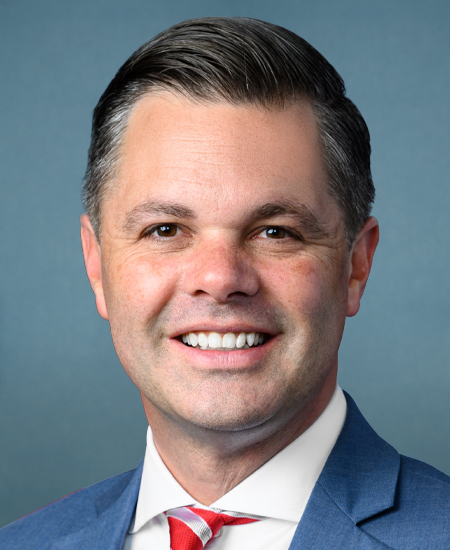
Rep. Zachary Nunn
Sponsored bills
Maddy summaryHRES 390 is a resolution recognizing May as National Foster Care Month. It raises awareness about challenges faced by children in foster care, such as instability, educational disruptions, and the 20,000 youth aging out annually without permanent connections. The resolution encourages Congress to implement policies improving outcomes for these children, including supporting prevention services, kinship caregivers, and transitions to adulthood. It does not create new laws or funding but formally acknowledges systemic issues and urges legislative action. The resolution is purely symbolic, aiming to highlight existing challenges and promote continued policy efforts under existing frameworks like the Family First Prevention Services Act.
Maddy summaryHR 3220 establishes a "quantum sandbox" program to accelerate near-term quantum technology applications. The bill requires the Commerce Secretary, working with NIST, to create a public-private partnership focused on developing and testing quantum computing, communication, and sensing solutions that can be deployed within 24 months. This program will engage industry groups, national labs, and research centers to break down barriers to accessing quantum hardware for practical uses. The goal is to deliver tangible benefits to U.S. businesses and consumers through faster innovation in quantum applications.
Maddy summaryThis bill clarifies liability for payroll tax errors when third-party payroll services (like professional employer organizations) rely on employer certifications. It allows these services to depend on employer-provided information unless they knew or should have known of an error. If an error is discovered, the employer bears full liability unless the third party had "constructive knowledge" of the error, in which case liability is shared based on the portion of the error the third party knew about. The bill also prevents the IRS from delaying payroll tax credits or auditing employers solely because a third party relied on an erroneous certification from that employer. It directly affects third-party payroll services and the businesses that use their services for tax filings.
Maddy summaryHR 3184, the PFAS Alternatives Act, funds research to develop turnout gear (firefighter safety clothing) without harmful PFAS chemicals, directly affecting firefighters who wear this gear. It authorizes $25 million annually (2025-2029) for grants to eligible organizations to research and test PFAS-free gear, requiring partnerships with firefighting groups to translate findings into practice. The bill also allocates $2 million yearly (2027-2031) for training programs on safe gear use and decontamination. Its goal is to reduce firefighters' exposure to chemicals linked to occupational illnesses during operations.
Maddy summaryThis bill creates a new system for recognizing and regulating individuals who help veterans file benefit claims. It requires the VA to provide veterans with information about free assistance options and maintain a public list of accredited representatives. The bill sets a maximum fee limit of $12,500 or 5 times the monthly benefit increase for representatives, and establishes penalties for unaccredited representatives who charge improper fees. The law aims to protect veterans from unscrupulous representatives while ensuring they have access to quality assistance with their benefit claims.
Maddy summaryThe STABLE Act of 2025 establishes a regulatory framework for stablecoins, which are digital assets designed to maintain a stable value relative to a national currency. It restricts stablecoin issuance to "permitted payment stablecoin issuers," including bank subsidiaries, federally-approved nonbank entities, and state-qualified issuers. These issuers must maintain 1:1 reserves backed by specific assets (like U.S. currency, Treasury securities, or demand deposits), publish monthly reserve reports, and cannot pay interest to stablecoin holders. The Act also includes transparency requirements, restrictions on leadership (prohibiting those with certain felony convictions), and preempts conflicting state laws for federally-approved issuers.
Maddy summaryHR 976, the "1071 Repeal to Protect Small Business Lending Act," would repeal data collection and reporting requirements for small business loans under Section 704B of the Equal Credit Opportunity Act. This specifically removes the mandate for financial institutions - especially community banks and credit unions - to track and submit loan data by business characteristics like race or gender. The bill aims to reduce compliance costs for lenders, which its findings argue limit small business access to credit. The repeal would eliminate these reporting obligations and remove references to the requirement from related federal laws.
Maddy summaryHRES 382 creates a procedural rule in the House of Representatives during the 119th Congress (2025-2026) to block budget reconciliation bills that cut Medicaid or SNAP benefits for specific vulnerable groups. It prohibits consideration of any reconciliation measure reducing benefits for children under 19, seniors 65+, pregnant women, or people with disabilities (as defined by Social Security law). The rule does not apply to provisions targeting fraud, improper payments, or improving eligibility verification. This resolution is a procedural tool, not a law, and would prevent such benefit cuts from advancing through the budget process.
Maddy summaryThis bill creates an Advisory Committee under the Financial Stability Oversight Council to study how Chinese military actions toward Taiwan could impact U.S. financial markets. The committee, composed of market experts and participants, will annually assess vulnerabilities like banking risks, market volatility, and potential losses from such scenarios, then recommend resilience strategies. It requires an annual public report detailing these findings and actionable steps for regulators - such as improving circuit breakers or coordinating responses - to strengthen market preparedness. The bill does not enact new regulations but mandates ongoing analysis and reporting on this specific geopolitical risk.