

Maddy summaryThe FORCE Act establishes a National Defense Executive Reserve, creating temporary teams of private sector professionals who can be activated during national defense emergencies to support federal agencies like Defense, Homeland Security, and Commerce. It requires these agencies to form reserve units within 180 days, with the President activating them only during declared emergencies under specific conditions. The bill mandates the Office of Personnel Management to issue rules within 270 days covering volunteer selection, training, compensation, security clearances, and employment protections modeled after FEMA's reemployment rules. This aims to expand government emergency capacity without permanently increasing full-time staff.
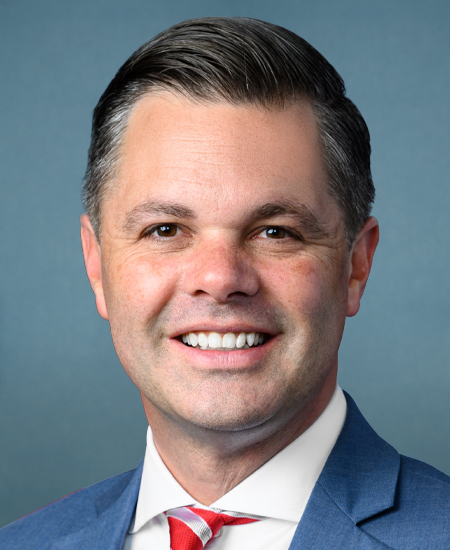
Rep. Zachary Nunn
Sponsored bills
Maddy summaryHR 3557 would temporarily ease financial pressure for small business owners who received disaster loans after the bill passes. Specifically, it requires the Small Business Administration (SBA) to waive all interest and defer principal payments for one year on qualifying disaster loans. This applies to loans made under the Small Business Act for disasters declared on or after the law's effective date. The key change is setting interest to 0% and pausing principal payments during the 12-month period following loan disbursement. This directly affects small businesses in disaster-impacted areas that rely on these SBA loans.
Maddy summaryHCONRES 30 is a symbolic resolution expressing congressional support for local law enforcement officers. It does not create new laws or policies but formally recognizes their work through four non-binding actions: thanking officers and families for service, honoring those who died in the line of duty, and encouraging community-law enforcement collaboration. The resolution directly addresses Congress's acknowledgment of law enforcement efforts, not any specific group affected by a policy change. It has no legal effect or funding implications, serving solely as a statement of appreciation. This is a procedural resolution, not a legislative bill with concrete policy changes.
Maddy summaryThis bill removes the statute of limitations for certain survivor benefit claims against the U.S. Government. It specifically applies to survivors of military members who died in the line of duty on or after September 11, 2001. The key change amends federal law to state that no time limit applies when filing for survivor benefits under this provision. The bill takes effect for claims filed after its enactment date.
Maddy summaryHR 3505, the Barriers to Suicide Act of 2025, creates a federal grant program administered by the Department of Transportation to fund the installation of proven safety barriers and nets on specific high-risk structures. The program provides competitive grants (up to 80% federal funding) to states, local governments, or other eligible entities for projects installing suicide deterrents on bridges, buildings, parking garages, highway-rail crossings, or rail stations. It prioritizes areas with high suicide rates and mandates a study by the Comptroller General to evaluate effective deterrents for non-bridge structures and their costs, with a report due within one year of enactment. The bill authorizes $10 million annually from 2026-2030 for this initiative.
Maddy summaryThis bill requires the VA to notify veterans filing claims without representation about free help from recognized veterans service organizations and trained representatives. It mandates an online tool listing accredited representatives (updated quarterly) and adds fee warnings to VA websites, including links to the tool and a site for reporting unauthorized fees. The VA must also review its processes for recognizing representatives within 180 days and report findings to Congress. The bill directly affects veterans navigating VA claims by improving access to verified assistance and transparency around fees. It focuses on concrete procedural changes to enhance claimant awareness, not on outcome predictions.
Maddy summaryHR 3500 increases annual funding for the COPS ON THE BEAT grant program to $1.16 billion per year for fiscal years 2026 through 2030, replacing a prior funding level. This bill directly affects local law enforcement agencies that receive COPS grants to hire community policing officers. The key provision amends the funding amount in the 1968 crime control law, ensuring higher annual support for community policing initiatives. The change provides stable, increased funding for these programs over the next five fiscal years.
Maddy summaryHR 2240 requires federal agencies to analyze data gaps related to law enforcement safety and wellness. Specifically, it mandates three reports within 270 days of enactment: one on attacks against officers (including ambushes), another on unreported aggressive incidents not meeting crime thresholds, and a third on officer mental health impacts and existing wellness resources. The reports will examine current data collection limitations, training effectiveness, and potential improvements to reporting systems like the Law Enforcement Officers Killed and Assaulted Data Collection. This bill focuses on gathering information to inform future policy decisions, not on creating new programs or funding. It directly affects federal agencies (Attorney General, FBI, National Institute of Justice) and aims to improve understanding of officer safety challenges.
Maddy summaryThis bill restores a tax deduction for personal losses caused by disasters, crimes, or scams (like stolen property or damage from hurricanes). It directly affects taxpayers who filed returns before 2025 but couldn’t claim this deduction due to a prior suspension. The bill reinstates the deduction and extends the deadline to file refund claims for these losses until the tax filing deadline for the year the bill becomes law. This allows eligible individuals to claim refunds they were previously barred from receiving.
Maddy summaryHR 3437, the Insurance Data Protection Act, prevents duplicate data collection from insurance companies by requiring federal financial regulators to coordinate with state insurance regulators before gathering data already available through other channels. It reinforces confidentiality by ensuring that sharing nonpublic data with federal regulators does not waive privacy protections under federal or state law, and maintains existing confidentiality agreements. The bill also establishes that data shared with regulators can only be provided to state regulators through new agreements that comply with privacy laws. This directly affects insurance companies (as "covered entities"), federal financial regulators, and state insurance regulators. The key change is creating a formal process to avoid redundant data requests while strengthening data privacy for the insurance industry.