

Maddy summaryHR 3301, the ELEVATE Act of 2025, modifies securities registration rules for companies preparing to go public. It allows companies (including emerging growth companies) to confidentially submit draft registration statements to the SEC for staff review before public filing, with the draft needing to be made public 10 days prior to listing on a national exchange. The bill explicitly protects this confidential review process from public disclosure under the Freedom of Information Act (FOIA), treating the submitted information as confidential. This directly affects companies seeking to list shares on major stock exchanges by providing a pre-filing feedback mechanism. The key change is creating a formal, legally protected channel for confidential SEC staff review of registration documents.
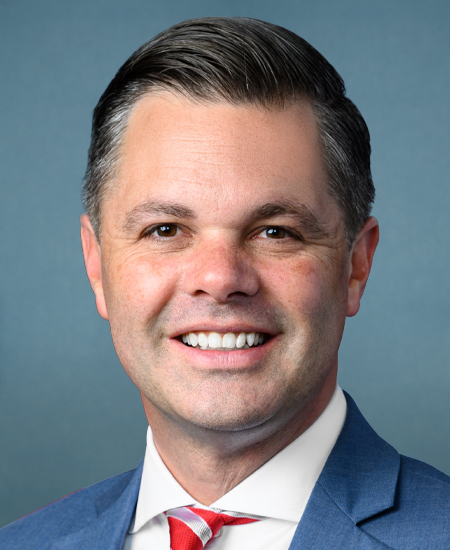
Rep. Zachary Nunn
Sponsored bills
Maddy summaryHR 2225, the Access to Small Business Investor Capital Act, modifies how investment companies report fees related to business development companies (BDCs). It allows registered investment companies to exclude fees paid indirectly to BDCs (which primarily invest in small businesses) from their "Acquired Fund Fees and Expenses" calculation on SEC registration statements. This change simplifies reporting for investment companies holding BDC shares by removing those specific fees from expense calculations. The bill directly affects investment companies filing SEC forms (N-1A, N-2, N-3) that hold BDC investments, potentially reducing their reported expense ratios. It does not create new funding for small businesses but aims to streamline investment in BDCs by easing reporting burdens.
Maddy summaryHR 1713, the Agricultural Risk Review Act of 2025, requires the Secretary of Agriculture to join the Committee on Foreign Investment in the U.S. (CFIUS) when reviewing transactions involving U.S. agricultural land, biotechnology, or agriculture-related infrastructure (like transportation or processing). It specifically targets acquisitions of agricultural land by foreign entities from China, North Korea, Russia, or Iran, mandating that the Secretary of Agriculture first assesses these transactions before CFIUS decides whether to proceed with a full review. The law includes a sunset provision, ending these requirements for a specific country once it is removed from the federal list of foreign adversaries.
Maddy summaryThis bill amends the Securities Exchange Act of 1934 to expand eligibility for certain capital access provisions. It directly affects rural-area small businesses by adding them to existing categories that qualify for streamlined capital-raising mechanisms previously limited to women-owned small businesses. The key change inserts "rural-area small businesses" into two specific sections of the law (paragraphs 4(j)(4)(C) and 4(j)(6)(B)(iii)), updating the rules for who can access these capital channels. This provides a concrete policy change by formally including rural small businesses in current regulatory frameworks designed to help small business owners raise capital. The bill does not create new funding programs but adjusts existing eligibility criteria under federal securities law.
Maddy summaryHR 4079, the Safer Response Act of 2025, updates federal training for first responders to address evolving substance use challenges. It amends the Public Health Service Act to expand training content beyond opioids to include heroin and other drugs, and modifies requirements for medical devices used in response training. The bill increases annual funding for this program from $36 million (2019-2023) to $57 million (2026-2030). These changes directly affect first responders receiving federally funded training, ensuring their protocols cover a broader range of substances and use approved medical devices.
Maddy summaryHR 4074, the Optimizing Postpartum Outcomes Act of 2025, requires the Health and Human Services Secretary to issue guidance within one year on improving Medicaid and CHIP coverage for pelvic health services during pregnancy and the postpartum period (defined as up to 6 months after birth or during lactation). The bill directs the GAO to study coverage gaps for these services and mandates a new CDC-led education campaign to train healthcare providers and inform postpartum women about pelvic floor exams and physical therapy. Key provisions include standardizing terminology for pelvic health conditions, sharing state best practices for payment models, and authorizing $2 million annually for the education program through 2030. This bill directly affects postpartum women covered by Medicaid or CHIP by aiming to increase access to evidence-based pelvic health care.
Maddy summaryThis bill adds glioblastoma multiforme (an aggressive brain cancer) to the list of conditions presumed connected to Agent Orange exposure for veterans. It directly affects veterans who developed this cancer after serving in Vietnam during the Vietnam era (1961-1971). The key mechanism amends VA law to automatically presume service connection for this cancer, eliminating the need for veterans to prove a direct link to exposure. This change would streamline access to disability benefits for affected veterans without altering existing benefit amounts.
Maddy summaryGio’s Law (HR 4019) creates a federal grant program to help state and local law enforcement agencies purchase epinephrine auto-injectors and other emergency epinephrine products, and to train officers on recognizing symptoms of severe allergic reactions (anaphylaxis) and correctly administering the medication. The bill requires the Attorney General to develop standardized training within 180 days of enactment and mandates that states certify officers are protected from civil liability when using epinephrine in good faith. It authorizes $25 million annually for fiscal years 2026-2030 to fund these grants and training. Additionally, the law requires an annual report tracking how often law enforcement officers administer epinephrine during emergencies.
Maddy summaryHR 4024, the Filling Public Safety Vacancies Act, allocates $162 million in federal funds for law enforcement agencies to hire or rehire additional officers under the Safe Streets Act. This funding directly affects state and local law enforcement agencies that receive grants under the program. Key provisions require agencies using these funds to conduct mandatory background checks and psychological evaluations for new officers, with the grant money covering these costs. The bill focuses on providing resources for officer recruitment while establishing specific hiring requirements for agencies utilizing the funds.
Maddy summaryThe Occupational Therapy Mental Health Parity Act requires the U.S. Department of Health and Human Services to provide education and outreach about Medicare coverage for occupational therapy services treating mental health and substance use disorders. Specifically, it directs the Secretary to clarify how these services are covered under the Medicare Benefit Policy Manual using standard medical billing codes (HCPCS). This education must be completed within one year of the bill's enactment. The goal is to improve understanding of existing Medicare coverage for occupational therapy in mental health and substance use treatment, without changing current benefit rules.