

Maddy summaryHR 5596, the FARMS Act, freezes the current wage rate for H-2B visa workers for two years after enactment. It directly affects H-2B nonimmigrant workers and their employers by preventing increases to the required wage rate during this period. The bill allows the Secretary of Labor to retain the existing wage rate if they determine a valid calculation method for the new rate is unavailable. This provides temporary stability to employers hiring H-2B workers without requiring immediate changes to wage payments.
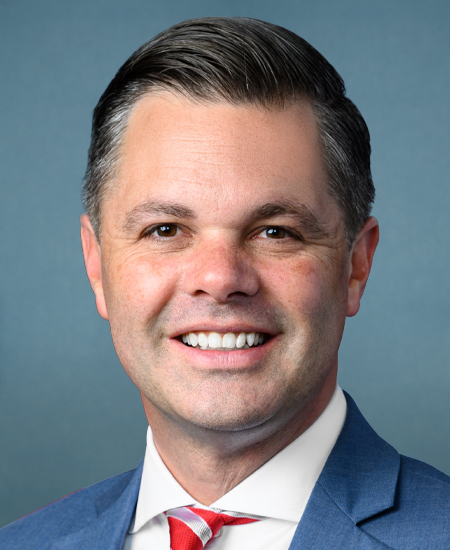
Rep. Zachary Nunn
Sponsored bills
Maddy summaryHR 4057, the CBP Canine Home Kenneling Pilot Act, creates a two-year pilot program to test housing U.S. Customs and Border Protection (CBP) canine teams at their handlers' homes instead of centralized kennels. The program requires at least 10 ports of entry (including urban and rural locations) to participate voluntarily, with handlers responsible for the dogs' daily care, exercise, and medical needs. CBP must provide training for handlers and report to Congress on findings, including cost-benefit analysis, performance, and health impacts compared to current centralized kenneling. The bill directly affects CBP canine handlers and their working dogs, aiming to assess if home housing improves welfare or operational outcomes before deciding on permanent adoption.
Maddy summaryThe SAVES Act (HR 2605) creates a 5-year pilot program where the Department of Veterans Affairs (VA) awards competitive grants to nonprofit organizations to provide service dogs to veterans with specific disabilities. It directly affects veterans with covered conditions like blindness, mobility impairments, PTSD, traumatic brain injury, or other disabilities deemed appropriate for service dog assistance by the VA. Key provisions include: grants capped at $2 million per nonprofit (with $10 million annually authorized), no fees charged to veterans, VA-provided lifetime veterinary insurance for the dogs, and requirements for nonprofits to train veterans and maintain humane animal standards. The program aims to expand access to service dogs as a support tool for veterans managing qualifying disabilities.
Maddy summaryHR 5552, the "Eliminate Shutdowns Act," would automatically continue federal funding for most government programs during a funding gap. If Congress fails to pass annual appropriations bills by the start of a fiscal year, the bill would automatically provide funding at the previous year's level for 14 days, extending in 14-day increments until a new funding bill is enacted. This applies to all federal programs except those specifically prohibited or covered by other laws, including maintaining current funding for entitlement programs like food assistance under the Food and Nutrition Act. The bill aims to prevent shutdowns by ensuring continuous operations without requiring new congressional action during the funding gap. It would take effect on September 30, 2025.
Maddy summaryHRES 719 is a House resolution honoring Charles "Charlie" James Kirk, the founder of Turning Point USA who was assassinated on September 10, 2025. The resolution condemns his assassination and all political violence, extends condolences to his family, and calls on Americans to reject violence while promoting civil discourse. It specifically recognizes Kirk's legacy as a defender of constitutional principles and his role in inspiring youth through free speech and faith-based civic engagement. As a commemorative resolution, it does not enact policy changes but formally expresses the House's stance on honoring his life and legacy.
Maddy summaryThis bill creates a pathway to permanent residency for certain college graduates who entered the U.S. as children under specific nonimmigrant visa categories (excluding H-1B, L-1, etc.). To qualify, applicants must have been lawfully present for 10 years total (including 8 years as a dependent child), graduated from a U.S. college, and not be inadmissible. It also changes how "child status" is determined for immigration purposes - using specific dates instead of age to prevent "age-outs" for dependents of long-term visa holders - and preserves priority dates for family members. These changes apply to individuals who entered the U.S. before age 21 and maintained lawful status under qualifying visas.
Maddy summaryHRES 744 is a non-binding House resolution supporting the designation of September 21-27, 2025, as "Gold Star Families Remembrance Week." It honors families who lost members in military service (Gold Star Families) and families of veterans, recognizing their sacrifices. The resolution encourages Americans to observe the week through community service and by celebrating the lives of those who died defending the U.S. It does not create new laws or policies but formally recognizes these families annually. This is a commemorative measure, not a legislative change.
Maddy summaryHR 5482, the Prevent Youth Suicide Act, requires schools serving grades 6-12 that receive federal education funds to implement evidence-based suicide prevention and postvention protocols within 210 days of the law's enactment. Specifically, schools must develop staff training to identify suicide risks and connect students to mental health resources, establish referral systems, conduct anti-stigma awareness campaigns, and create postvention plans for after a suicide occurs. The bill mandates biennial staff training on trauma-informed care and requires the Secretary of Education to provide technical assistance and monitor compliance. These requirements directly affect all public and private K-12 schools participating in federal education programs under applicable law.
Maddy summaryThis bill allocates $5 million annually (2026-2030) to states for collecting de-identified stillbirth data through existing health systems, including risk factor analysis. It also provides $1 million yearly to develop standardized guidelines for healthcare providers and public educational materials about stillbirths, requiring consultation with medical professionals, bereavement organizations, and affected families. The bill mandates that all data collection complies with privacy laws and requires the Department of Health and Human Services to publish a public report on stillbirth guidelines within five years. It directly affects state health departments, healthcare providers, and families experiencing stillbirth by improving data quality and access to resources.
Maddy summaryHR 5401, the Pay Our Troops Act of 2026, ensures military personnel, civilian Defense workers, and supporting contractors receive pay during government funding gaps in fiscal year 2026. It appropriates emergency funds for active-duty service members, reserves, and their supporting personnel (including Coast Guard staff under DHS) if regular appropriations aren't enacted by the end of the fiscal year. The bill provides necessary pay and allowances during any period when full-year funding is unavailable, covering both active service and support roles. Funding expires when regular appropriations are passed, a funding resolution is enacted, or January 1, 2027, whichever comes first. This is a procedural measure to prevent pay delays for military and support staff during fiscal year 2026 funding lapses.