

Maddy summaryThe REPAIR Act requires motor vehicle manufacturers to provide car owners and independent repair shops with full access to vehicle data and repair information, prohibiting technological or legal barriers that restrict this access. It mandates that manufacturers share vehicle-generated data, critical repair information, and tools on equal terms with dealers and authorized service providers, without requiring consumers to use specific brands of parts or tools. The law establishes an advisory committee to monitor implementation and ensure fair competition in vehicle repair, while giving the Federal Trade Commission authority to enforce these requirements as unfair or deceptive practices. This legislation directly affects car owners, independent repair facilities, aftermarket parts manufacturers, and motor vehicle manufacturers by shifting control of repair information and data from manufacturers to consumers.
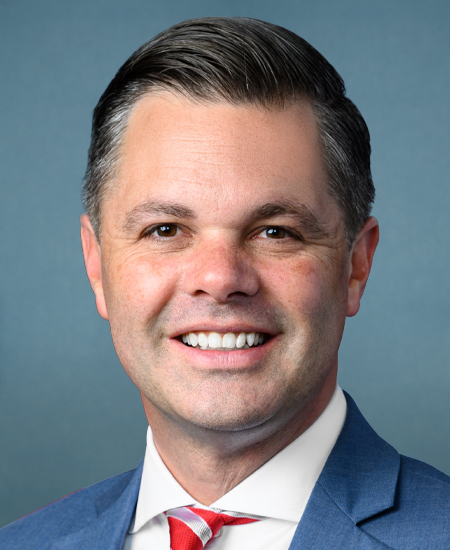
Rep. Zachary Nunn
Sponsored bills
Maddy summaryHRES 1047 designates January 2026 as "National Mentoring Month" to highlight the importance of mentoring relationships for youth development. The resolution does not create new laws or allocate funding but encourages public awareness and support for existing mentoring programs that help young people build skills, confidence, and educational opportunities. It emphasizes mentoring's role in improving academic performance, career readiness, and mental health outcomes without imposing any new obligations on individuals or organizations.
Maddy summaryHR 7419, the Foster Care Stabilization Act of 2026, provides $1 million demonstration grants to 3 foster care stabilization agencies to improve emergency relief and pre-placement services for foster youth under age 26. Agencies can use funds for hiring staff, providing up to $250 yearly in clothing/personal items per youth, preparing food, preventing abuse/neglect, and other emergency support. Grants must be spent within 3 years, with agencies required to report on how funds were used for youth needs and outcomes. The bill aims to stabilize placements by addressing immediate needs before and during foster care, targeting agencies serving youth under 26 in state or tribal care.
Maddy summaryThe HARM Act 2.0 requires the U.S. government to identify and designate successor groups of the Wagner mercenary force (such as Africa Corps, Redut PMC, and Patriot PMC) as terrorist organizations under existing law. It mandates the Secretary of State to submit a report listing these groups, their leaders, and related entities, followed by a review by the Comptroller General. If designated, these groups and individuals would face sanctions including asset freezes and transaction bans under Executive Order 13224. The bill also requires annual reports for five years detailing the groups' activities, human rights abuses, financial networks, and the effectiveness of sanctions.
Maddy summaryThis bill expands Medicare telehealth access for rural and underserved communities by removing geographic restrictions on where telehealth services can originate and allowing more services to be provided from patients' homes. It enables critical access hospitals, federally qualified health centers, and rural health clinics to receive full reimbursement for telehealth services and permits audio-only technology for certain appointments starting in 2027. The legislation also establishes permanent payment rates for telehealth services provided by these facilities and requires a review of audio-only technology use within five years to assess its impact on access and clinical appropriateness.
Weatherization Enhancement and Readiness Act of 2025 This bill reauthorizes through FY2030 and modifies the Weatherization Assistance Program. Under the program, the Department of Energy (DOE) provides grants for low-income households to improve the energy efficiency of their homes. The bill increases the cap on the average assistance provided per home from $6,500 to $12,000. The bill also directs DOE to include in its annual report to Congress a description of the impacts of enhancement and innovation readiness efforts on eligibility for assistance under the program.
Maddy summaryHRES 375 is a symbolic resolution designating May 2025 as "Renewable Fuels Month" to recognize renewable fuels' role in reducing carbon emissions, lowering consumer fuel prices, supporting rural economies, and decreasing reliance on foreign energy sources. The resolution expresses the House's support for this designation without creating new laws or funding. It highlights renewable fuels' economic contributions (e.g., jobs, GDP impact) and environmental benefits as context for the recognition, but does not alter existing policies. As a non-binding resolution, it has no direct legal effect on consumers, industries, or government programs.
Maddy summaryThe AI OVERWATCH Act requires U.S. exporters to obtain a license for sending certain high-performance integrated circuits (defined by specific technical specifications like processing power or bandwidth) to countries designated as "concerns," including China, Russia, Iran, and North Korea. Before approving such licenses, the Commerce Department must submit detailed certifications to Congress, including assurances the export won’t support military/intelligence capabilities of the recipient country and won’t harm U.S. semiconductor availability or AI leadership. The bill also creates an exemption for U.S. companies meeting strict security and ownership standards ("trusted United States persons") to export these chips to non-target countries without a license. Additionally, it mandates a national security strategy assessing how such exports affect U.S. AI competitiveness, particularly regarding China’s semiconductor production and capabilities.
Maddy summaryHR 3307, the Eastern Mediterranean Gateway Act, directs the U.S. government to prioritize diplomatic and security cooperation with Egypt, Greece, Cyprus, and Israel to support their role as a strategic gateway for the India-Middle East-Europe Economic Corridor (IMEC). The bill requires the Secretary of State to institutionalize strategic dialogues with these countries, prioritize energy and defense cooperation in the region, and submit annual reports on implementation and multilateral initiatives. It also mandates studies on expanding U.S. bilateral programs (like those with Israel) to include Eastern Mediterranean partners and analyzing the Cyprus security center as a model. The bill does not create new funding but guides existing U.S. policy and coordination efforts.
Maddy summaryThis bill amends the Department of Defense's Transition Assistance Program (TAP) and the Department of Veterans Affairs' Solid Start Program to enhance mental health support during military-to-civilian transitions. It requires TAP to provide specific information on suicide risk factors (including depression, homelessness, and relationship strain), treatment options for conditions like PTSD and substance abuse, and the impact of losing social support systems. The Solid Start Program must now assist veterans in enrolling in VA healthcare and educate them about available mental health resources. The Secretaries of Defense and Veterans Affairs must jointly report to Congress within one year on the materials developed under these changes.