

TCJA Permanency Act This bill makes permanent provisions affecting individual and business taxpayers that were enacted in 2017 by the Tax Cuts and Jobs Act and are scheduled to expire at the end of 2025. The bill makes permanent reductions in individual and capital gain tax rates. The bill increases the standard tax deduction for individual taxpayers. It also increases and modifies the child tax credit and raises the contribution base for the tax deduction for charitable contributions. The bill allows additional contributions to ABLE accounts (tax-exempt accounts designed to enable individuals with disabilities to save and pay for disability-related expenses). It exempts from taxation combat zone benefits of members of the Armed Forces serving in the Sinai Peninsula of Egypt and limits the deduction for moving expenses to active duty members of the Armed Forces. Additionally, the bill expands the types of elementary and secondary school expenses eligible for payment from qualified tuition programs (529 programs); lowers to $750,000 the amount of mortgage debt eligible for an interest expense tax deduction; reinstates after 2023 the exclusion of income from the gross income of student loan borrowers for loan debt discharged due to death or total and permanent disability; makes permanent the limitation on the tax deduction for state and local taxes and denies a deduction for foreign real property taxes; makes permanent the tax deduction of the income of certain pass-through business entities; repeals the tax deduction for personal tax exemptions and the exclusion of employer-provided bicycle commuter fringe benefits; terminates certain miscellaneous itemized tax deductions; doubles the estate and gift tax exemption amount; and makes permanent the increase of the alternative minimum tax exemption amount for individual taxpayers.
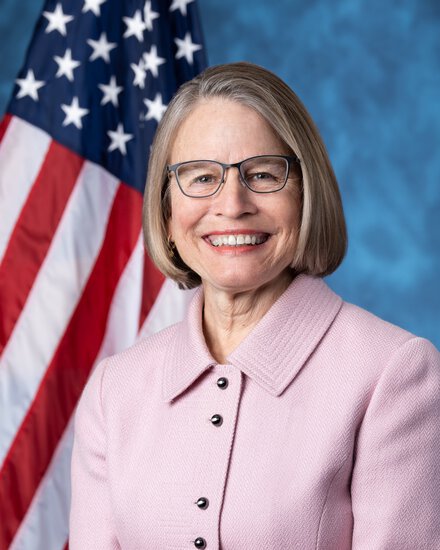
Rep. Mariannette Miller-Meeks
Sponsored bills
Biologics Competition Act of 2022 This bill requires the Food and Drug Administration (FDA) to evaluate (1) the differences between the requirements that apply to interchangeable biologics and the requirements that apply to therapeutically equivalent ratings for generic drugs, and (2) the effects of these differences on the approval of interchangeable biologics. The FDA must update the Purple Book with changes that better align the ways these requirements are communicated while still maintaining each distinct approval pathway. The Purple Book is an FDA publication that lists approved biological products, including biosimilars and interchangeable biologics. Interchangeable biologics are biologics that may be substituted for the original product without consulting the prescriber, similar to how generic drugs may be substituted for brand-name drugs based on therapeutic equivalence.
This resolution requests the President and directs the Department of Homeland Security (DHS) to transmit to the House of Representatives, no later than 14 days after the date of the adoption of this resolution, copies of certain documents and other materials, both classified and unclassified, in the possession of the President or DHS as of the date of adoption of this resolution that refer or relate to certain aspects on border policy, particularly along the southwestern border.
Patient Advocate Tracker Act This act requires the Office of Patient Advocacy within the Veterans Health Administration to establish an information technology system that allows veterans or their representatives to electronically file a complaint with a patient advocate and review the status of a filed complaint.
Improving Seniors' Timely Access to Care Act of 2022 This bill establishes several requirements and standards relating to prior authorization processes under Medicare Advantage (MA) plans. Specifically, MA plans must (1) establish an electronic prior authorization program that meets specified standards, including the ability to provide real-time decisions in response to requests for items and services that are routinely approved; (2) annually publish specified prior authorization information, including the percentage of requests approved and the average response time; and (3) meet other standards, as set by the Centers for Medicare & Medicaid Services, relating to the quality and timeliness of prior authorization determinations.
Peace and Tolerance in Palestinian Education Act This bill requires the Department of State to report on the curriculum used in schools in areas controlled by the Palestinian Authority or located in Gaza and controlled by any other entity. Among other topics, the report must address (1) whether the materials used encourage violence or intolerance toward other nations or ethnic groups, (2) the steps the Palestinian Authority is taking to reform such materials, and (3) whether U.S. foreign assistance is used to fund the dissemination of the offending materials. The State Department must make such reports publicly available.
Supporting Medicare Providers Act of 2022 This bill extends a payment increase under Medicare's physician fee schedule through the end of 2023 (currently set to expire at the end of 2022).
Protecting Our Homeland from Chinese Espionage Act This bill requires Department of Homeland Security (DHS) contractors to disclose relevant commercial ties with covered Chinese entities. DHS must terminate a contract with a contractor if, based on a disclosure required by this bill, DHS determines that continuation of the contract violates federal law or is not in the public's interest. The bill defines covered entity to include the Chinese government, the Chinese Communist Party, the Chinese military, and entities that have certain connections to China.
IRS Reduction Act This bill rescinds all unobligated amounts appropriated by the Inflation Reduction Act of 2022 for the improvement of the Internal Revenue Service (IRS). The Department of the Treasury must report on how the IRS plans to improve the efficiency of its services, including the processing of tax returns.
Biochar Research Network Act of 2022 This bill directs the Department of Agriculture to establish a biochar research network of not more than 20 research stations or facilities to test the impact of biochar across various soil types, application methods, and climates to learn more about its potential to benefit farmers and the environment.