Maddy summaryHR 130, the Thin Blue Line Act, amends federal death penalty law to add a new consideration for sentencing. It specifies that killing or targeting a law enforcement officer (including firefighters and other first responders) while they are performing official duties, because of their duties, or due to their status as a public official qualifies as an aggravating factor. This change directly affects defendants convicted of such killings, making the death penalty a potential sentence in these specific cases. The bill does not alter sentencing ranges but adds this circumstance as a factor judges must weigh during sentencing.
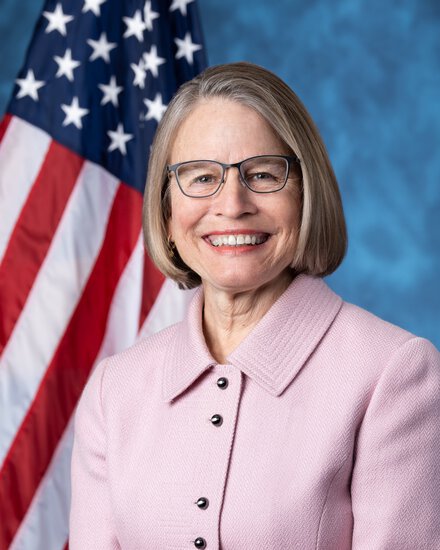
Rep. Mariannette Miller-Meeks
Sponsored bills
Maddy summaryHRES 641 is a ceremonial resolution recognizing the 75th anniversary of the National Association of Conservation Districts (NACD). It celebrates NACD's history as a locally led conservation organization with 3,000 districts across all 50 states and territories, which works with landowners and governments to manage natural resources. The resolution describes NACD's mission of promoting voluntary, incentive-driven conservation programs at the local level. As a non-binding resolution, it does not create new laws or funding, but formally honors NACD's role in conservation efforts.
MST Claims Coordination Act This act modifies the Department of Veterans Affairs (VA) claims process for claims related to military sexual trauma (MST). During or immediately after a medical examination, hearing before the Board of Veterans' Appeals, or other relevant event, the Veterans Benefits Administration (VBA) must coordinate with the Veterans Health Administration (VHA) to provide veterans who elect to receive materials with outreach letters, information on the Veterans Crisis Line, information on how to make an appointment with a mental health provider, and other information on available resources relating to MST. Additionally, the VHA and the VBA must provide such materials with the determination the VA provides to the claimant in connection with a claim for compensation. In a claim for compensation arising from MST experienced by a veteran who is enrolled in the VA health care system and consents to the notification system, the VBA must automatically notify the VHA before the veteran (1) participates in a medical examination, hearing, or other relevant event; or (2) receives a determination from the VA in connection with the claim for compensation.
This act requires the Department of Veterans Affairs (VA) to seek to enter into an agreement with the National Academies of Sciences, Engineering, and Medicine (NASEM) to conduct a comprehensive review of VA medical examinations provided to individuals who submit claims for compensation for a service-connected disability related to military sexual trauma. Specifically, NASEM must review VA examinations that are provided for mental and physical conditions linked to military sexual trauma and are conducted to assess the impairments of individuals arising from such trauma. NASEM must report on its review, and the VA must report on its plans to implement actions based on NASEM's findings and recommendations.
This resolution promotes increased public awareness of motorcyclist profiling. The resolution also encourages the motorcyclist community and law enforcement to collaborate and communicate on efforts to end motorcyclist profiling.
Uyghur Forced Labor Prevention Act This bill imposes various restrictions related to China's Xinjiang Uyghur Autonomous Region, including by prohibiting certain imports from Xinjiang and imposing sanctions on those responsible for human rights violations there. Goods manufactured or produced in Xinjiang shall not be entitled to entry into the United States unless U.S. Customs and Border Protection (1) determines that the goods were not manufactured by convict labor, forced labor, or indentured labor under penal sanctions; and (2) reports such a determination to Congress and to the public. The President shall periodically report to Congress a list of foreign entities and individuals knowingly facilitating (1) the forced labor of Uyghurs, Kazakhs, Kyrgyz, and members of other Muslim minority groups in Xinjiang; and (2) efforts to contravene U.S. laws regarding the importation of forced labor goods from Xinjiang. The President shall impose property-blocking sanctions on the listed individuals and entities and impose visa-blocking sanctions on the listed individuals. Securities issuers required to file annual or quarterly reports with the Securities Exchange Commission shall disclose in such reports instances in which the issuer knowingly engaged in certain activities related to Xinjiang, such as working with an entity building detention facilities or surveillance systems there. After such a disclosure, the President shall determine whether to investigate if sanctions or criminal charges are warranted. The Forced Labor Enforcement Task Force and the Department of State shall report to Congress strategies to address forced labor in Xinjiang or any other part of China. The State Department shall also report to Congress a determination of whether the treatment of Muslim groups in Xinjiang constitutes crimes against humanity or genocide under U.S. law.

American Choice and Innovation Online Act This bill prohibits certain large online platforms from engaging in specified acts, including giving preference to their own products on the platform, excluding or disadvantaging competing products from another business on the platform, or discriminating among similarly situated users. Further, a platform may not materially restrict or impede the capacity of a competing business user to access or interoperate with the same platform, operating system, or hardware or software features. The bill also restricts the platform's use of nonpublic data obtained from or generated on the platform and prohibits the platform from restricting access to platform data generated by the activity of a competing business user. The bill also provides additional restrictions related to installing or uninstalling software, search or ranking functionality, and retaliation for contact with law enforcement regarding actual or potential violations of law. The bill establishes affirmative defenses for the prohibited conduct. The Federal Trade Commission or the Department of Justice must designate whether an entity is a platform covered by the bill, and both must carry out enforcement activities. The bill also provides for civil penalties, injunctions, conflicts of interest, a private right of action, and the forfeit of profits for repeat offenders.
This act directs the Speaker of the House of Representatives and the President pro tempore of the Senate to arrange for the posthumous award of a Congressional Gold Medal to commemorate Glen Doherty, Tyrone Woods, J. Christopher Stevens, and Sean Smith, four Americans killed in the September 11, 2012, attack on the U.S. consulate in Benghazi, Libya. (Stevens was the U.S. Ambassador to Libya at the time, Smith was an officer in the Foreign Service, and Doherty and Woods were both government contractors and former Navy SEALs.) After the medal has been awarded, it shall be given to the Central Intelligence Agency Museum.
Health Security and Countering Weapons of Mass Destruction Act This bill makes changes to the Countering Weapons of Mass Destruction (CWMD) office of the Department of Homeland Security (DHS) and provides statutory authority for and expands DHS's Office of Health Security (OHS). Specifically, the bill establishes the new OHS to advise DHS on medical, public health, and workforce safety matters; sets forth the responsibilities of the Chief Medical Officer and a Privacy Officer in OHS; repeals the terminating date for the CWMD office and sets forth the responsibilities of that office, including efforts to counter chemical, biological, radiological, and nuclear (CBRN) threats, as well as other emerging terrorism threats; requires DHS to report to Congress regarding the Securing the Cities program (which seeks to reduce the risk of a successful deployment of radiological or nuclear weapons against major metropolitan areas in the United States); establishes a CWMD Advisory Council; and requires a biodefense review and issuance of a DHS biodefense strategy. The Government Accountability Office must report to Congress on efforts of the CWMD office to prioritize its programs and activities to safeguard against CBRN threats and on other activities of that office.
Fair and Open Skies Act This bill prohibits the Department of Transportation (DOT) from issuing a foreign air carrier permit or an exemption from certain air carrier certificate requirements under the United States-European Union Air Transport Agreement of April 2007, unless DOT finds that issuing the permit or exemption would be consistent with Article 17 bis of the agreement, which provides that opportunities created by the agreement do not undermine labor standards or the labor-related rights and principles contained in the laws of the respective parties to the agreement; and imposes conditions on the permit or exemption necessary to ensure compliance with Article 17 bis . The bill modifies policy considerations relating to air carrier certificates to require DOT to consider preventing entry into U.S. markets by flag of convenience carriers (i.e., foreign air carriers established in a country other the home country of their majority owner in order to avoid regulations of the home country) and preventing the undermining of labor standards. In carrying out such air carrier certificate requirements, DOT must consider preventing entry of flag of convenience carriers into U.S. markets as being in the public interest and consistent with public convenience and necessity for safety in air transportation and air commerce. In formulating U.S. international air transportation policy relating to the elimination of discrimination and unfair competition, the Department of State and DOT must include in their considerations the undermining of labor standards.