

Maddy summaryThis bill prohibits providing, facilitating, or possessing wireless devices (like cell phones) in U.S. detention facilities (e.g., prisons, jails) if such actions violate existing federal or state laws. It imposes civil fines up to $50,000 per violation (capped at $1 million total) or criminal fines up to $50,000 for intentional violations. The law explicitly excludes lawful law enforcement activities and state enforcement powers, and defines "detention facility" broadly to include all correctional and penal institutions. It applies to conduct occurring after enactment.
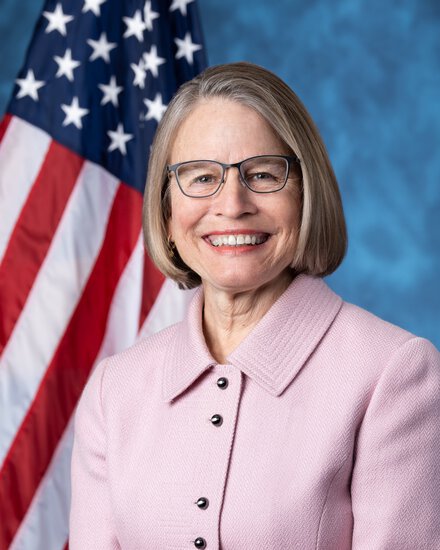
Rep. Mariannette Miller-Meeks
Sponsored bills
Maddy summaryHR 1640, the Save Our Gas Stoves Act, prevents the Department of Energy from implementing energy efficiency standards for gas stoves that would make them unavailable in the U.S. market. It amends federal law to require that any new standard for gas stoves must not result in the unavailability of gas stove types, directly affecting gas stove manufacturers and consumers who rely on these appliances. The bill specifically blocks the implementation of the 2023 proposed rule (Energy Conservation Program: Energy Conservation Standards for Consumer Conventional Cooking Products) and any similar rule. This is a policy change focused on maintaining the availability of gas stoves by altering the criteria for energy standard approval.
Maddy summaryHR 4124, the Flag Standardization Act of 2023, would establish a new rule requiring that only specific flags be displayed on federal buildings or grounds. The bill defines "specified flags" as the U.S. flag, any state flag, any Indian Tribal government flag, the U.S. Armed Forces flag, or the National League of Families POW/MIA flag. This rule does not apply to military housing. The bill directly affects the display of flags on federal properties nationwide, clarifying which flags are permitted under federal law.
Maddy summaryThe Telehealth Expansion Act of 2023 modifies the Internal Revenue Code to require health insurance plans to cover telehealth services without applying deductibles. It directly affects high deductible health plans (HDHPs) and their enrollees, ensuring telehealth visits aren’t counted toward annual deductibles. The key provision creates a "safe harbor" (Section 223(c)(2)(E)) so plans won’t lose HDHP status for excluding telehealth deductibles. This change applies immediately upon enactment and affects all plans offering telehealth services. It does not create new funding or services but adjusts tax code requirements for existing coverage.
Maddy summaryHRES 499 is a symbolic House resolution expressing support for designating June 12, 2023, as "Women Veterans Appreciation Day." It honors women veterans' service throughout U.S. military history, highlighting their current representation in the armed forces (17% active duty as of 2021) and their growing numbers in the veteran population. The resolution does not create new policies or funding but formally recognizes women veterans' contributions through a commemorative designation. This is a procedural resolution with no binding legal effect, solely serving to acknowledge their service.
Maddy summaryHR 4035, the Protecting Small Business Information Act of 2023, requires the Treasury Secretary to coordinate the effective dates of all rules under the Corporate Transparency Act. It mandates that all final rules related to beneficial ownership reporting must take effect on the same date, delaying implementation until the Secretary certifies to Congress that all rules are issued and will align on a single effective date. This directly affects small businesses required to report beneficial ownership information under the Corporate Transparency Act. The bill’s key mechanism is creating a unified implementation timeline, preventing staggered rule deadlines that could complicate compliance for small entities. It does not change reporting requirements but ensures a synchronized rollout of the regulations.
Maddy summaryHR 3837, the Improving Public Health Preparedness Act, transfers full management of the Strategic National Stockpile (SNS) - the federal medical supply reserve - from shared oversight to the Assistant Secretary for Preparedness and Response (ASPR) within the Department of Health and Human Services. This change streamlines operations by removing coordination requirements with other agencies (like the CDC and Homeland Security) for SNS maintenance and procurement. The bill also establishes a pilot program to support state medical stockpiles through ASPR coordination and mandates full implementation within 180 days of enactment. These changes directly affect federal public health agencies and state health departments managing emergency medical resources.
Maddy summaryHR 3216, the Rural Internet Improvement Act of 2023, updates the USDA's ReConnect Program to expand rural broadband access. It raises minimum speed requirements to 25 Mbps download and 3 Mbps upload for funded projects, simplifies application processes by reducing required data and allowing bond ratings instead of full financial documentation, and requires using FCC broadband maps to identify unserved areas. The bill affects rural broadband providers applying for grants, loans, or loan guarantees under the program by streamlining eligibility and reducing administrative burdens. It also mandates annual reports tracking funded locations, service speeds, and usage to ensure transparency.
Maddy summaryHR 3036, the Increased TSP Access Act of 2023, amends conservation program rules to expand access to third-party providers (TSPs) who offer technical assistance to farmers on conservation practices. It creates new pathways for non-Federal entities like agricultural cooperatives or professional associations to certify TSPs, streamlines certification processes (requiring Secretary review within 10 business days), and sets payment rates for TSPs equivalent to government-provided technical assistance. The bill mandates public reporting on certification numbers, payment details, and a target utilization rate for TSPs to improve conservation program delivery. It directly affects farmers participating in USDA conservation programs by increasing options for technical support and requiring transparency in how TSPs are certified and compensated.
Maddy summaryThe WING Act of 2023 creates a research program within the National Weather Service to address how physical obstructions like wind turbines and buildings interfere with weather radar systems. The program requires the agency to partner with industry and researchers to test technologies such as phased array radar, data-sharing from commercial sources, and improved signal processing to maintain accurate weather forecasting. It mandates annual reports to Congress on progress and a final recommendation within five years on whether continued research is needed. The program is scheduled to end by September 30, 2028, or one year after the final report, whichever comes first.