

Maddy summaryHR 5376, the Share the Savings with Seniors Act, changes Medicare Part D drug cost-sharing rules for specific chronic medications starting in 2025. It limits what seniors pay for certain chronic care drugs (like anticoagulants, blood glucose regulators, and respiratory medications) by capping pre-deductible costs at the drug's net price and requiring coinsurance after the deductible to be based on that net price. This directly affects Medicare Part D beneficiaries taking these defined chronic medications. The bill aims to reduce out-of-pocket costs by tying payment limits to the negotiated drug price rather than list price or other benchmarks.
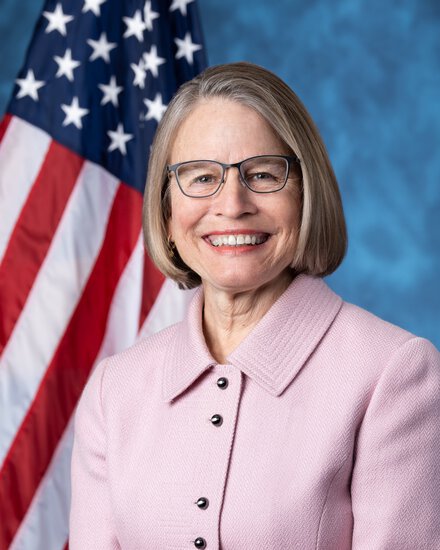
Rep. Mariannette Miller-Meeks
Sponsored bills
Maddy summaryThe Preserving Access to Home Health Act of 2023 repeals a 2018 payment adjustment for Medicare home health agencies, restoring prior payment rates for 2024 and subsequent years. It requires the Medicare Payment Advisory Commission (MedPAC) to analyze how home health agencies' financial performance affects access to care, including reviewing spending and utilization data across Medicare, Medicaid, and other payers. Starting in 2025, the bill mandates home health agencies to report detailed data on visit volumes and payments by payer source (Medicare, Medicaid, private insurers) through updated cost reports. This data will help MedPAC assess payment policy impacts on access to home health services for Medicare beneficiaries.
Maddy summaryThe Breast Cancer Patient Equity Act would require Medicare to cover custom-made breast prostheses for women who have undergone mastectomies, directly affecting Medicare beneficiaries and influencing private insurance coverage practices. Currently, Medicare denies coverage for these prostheses as "not medically necessary" while covering surgical breast reconstruction, creating a gap that disproportionately impacts older and minority women. The bill amends Medicare’s coverage rules to explicitly include custom breast prostheses under the same category as other body part prostheses. This change would address the lack of access to a common, less invasive alternative to surgery for over 100,000 women undergoing mastectomies annually.
Maddy summaryThis bill prohibits Medicare from paying for certain custom-fitted or custom-fabricated orthotic and prosthetic devices delivered via "drop shipment" (direct shipping without in-person training from a qualified provider). It directly affects Medicare beneficiaries who need these devices, ensuring they receive necessary in-person fitting and training. The bill also expands which healthcare professionals (including physical therapists, occupational therapists, orthotists, and prosthetists) can prescribe these devices and updates definitions to clarify terms like "orthoses" and "prostheses." Final regulations implementing these changes must be issued within one year of the bill's enactment.
Maddy summaryThe Leveling the Playing Field 2.0 Act (HR 3882) updates U.S. trade law to better address international trade practices that disadvantage American businesses. It establishes special rules for handling multiple investigations of the same merchandise (called "successive investigations"), requiring the Commerce Department to consider previous injury determinations when making new findings. The bill also creates mechanisms to address market distortions from foreign government subsidies, including currency undervaluation, and strengthens procedures to prevent duty evasion through certification requirements for importers. These changes primarily affect foreign exporters of goods subject to U.S. antidumping and countervailing duty investigations, as well as U.S. importers of those goods.
Maddy summaryHR 3748, the SAFE Act of 2023, requires U.S. agricultural agencies to proactively negotiate trade agreements with foreign governments to minimize export disruptions caused by animal disease outbreaks. It directs the Secretary of Agriculture, in coordination with the U.S. Trade Representative, to establish regionalization, zoning, or compartmentalization agreements with key export markets for U.S. livestock and animal products. The bill also mandates that the Food Safety and Inspection Service notify state agricultural departments and producer groups within three days if export-related information is removed from official libraries. This directly affects livestock producers and exporters by aiming to stabilize access to international markets during disease events. The law amends the Animal Health Protection Act to formalize these negotiation and notification requirements.
Maddy summaryHR 3674 increases Medicare payments for specific physician services that rely heavily on equipment and supplies (defined as services where 65%+ of costs are for equipment/supplies). It raises payment rates by 10% in 2024 and 15% in 2025 for these services in non-hospital settings like doctor's offices. The bill funds these increases through federal appropriations to the Medicare Trust Fund. It directly affects physicians and clinics providing those defined services, aiming to stabilize reimbursement for providers of high-cost equipment-dependent care.
Maddy summaryHR 3561, the PATIENT Act of 2023, requires hospitals, health insurance plans, and pharmacy benefit managers to publicly disclose detailed pricing information for healthcare services and drugs. Hospitals must publish standard charges for 300+ shoppable services, including gross charges, payer-specific negotiated rates, and discounted cash prices, with updates required annually. Health plans must provide real-time information on in-network rates, cost sharing, deductibles, and prior authorization requirements for covered services. The bill establishes enforcement mechanisms, including civil monetary penalties for non-compliance, with fines ranging from $300 per day for small hospitals to $5 million for large hospitals that fail to comply with the transparency requirements.
Maddy summaryThis bill allows Medicare-only PACE program enrollees (those not on Medicaid) to choose a standalone Medicare Part D prescription drug plan starting in 2025, instead of being limited to their PACE provider's plan. It requires PACE programs to inform members about this option and help them select a "qualified standalone" plan that meets cost criteria (equal or lower out-of-pocket costs and subsidies compared to the PACE plan). PACE programs must monitor drug use and share claims data with the chosen drug plan to coordinate care, and they will no longer receive payment for drug coverage when members enroll in an outside plan. The change applies to PACE enrollees who qualify under Medicare Part D, not Medicaid.
Maddy summaryHR 3285, the Fairness for Patient Medications Act, requires health insurance plans and pharmacy benefit managers to limit patient cost-sharing for "highly rebated drugs" (drugs where manufacturers rebate over 50% of annual spending). Starting January 2025, plans must cap out-of-pocket costs per 30-day supply at 1/12 of the drug’s net price (after rebates), calculated annually. The bill also prohibits hidden discounts from drug manufacturers when plans add previously excluded drugs to coverage, requiring price reductions to be visible at checkout or limited to flat service fees. This directly affects health insurance plans, insurers, and pharmacy benefit managers managing prescription drug coverage.