

Comprehensive Care for Alzheimer's Act This bill allows the Center for Medicare and Medicaid Innovation (CMMI) to test a Dementia Care Management Model that provides comprehensive care to Medicare beneficiaries with Alzheimer's disease or a related dementia. Under the model, participating health care providers receive payment under Medicare for comprehensive care management services that are provided to individuals with diagnosed dementia, excluding Medicare Advantage enrollees, hospice care recipients, and nursing home residents. Required services include medication management, care coordination, and health, financial, and environmental monitoring, as well as trainings and other support services for unpaid caregivers. Providers must furnish services through interdisciplinary teams and must ensure access to a team member or primary care provider 24-7. The CMMI must set payments and determine quality measures for the model in accordance with specified requirements. The bill also allows the CMMI to design a similar model under Medicaid.
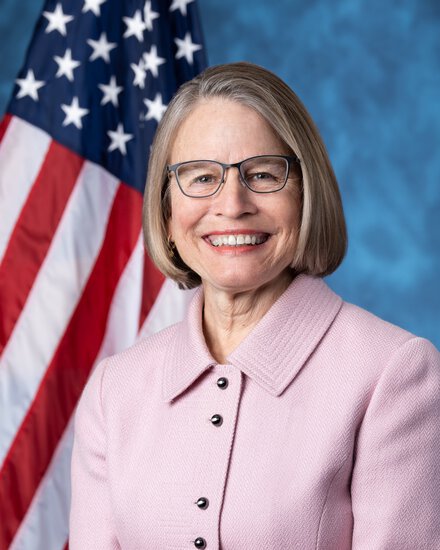
Rep. Mariannette Miller-Meeks
Sponsored bills
Equal Pay for Servicewomen Act This bill requires the Department of Defense (DOD) to address out-of-pocket cost inequities for military service uniforms. Specifically, the bill requires DOD to implement the four recommendations made by the Government Accountability Office in its report titled Military Service Uniforms DOD Could Better Identify and Address Out-of-Pocket Cost Inequities (GAO-21-120). The recommendations made in the report are related to reducing differences in out-of-pocket costs incurred by enlisted service members across the services and by gender. The bill requires DOD to prescribe regulations to ensure that out-of-pocket uniform costs to officers or enlisted members may not exceed costs to other officers or members in their branch solely based on gender; and if a change to a uniform affects only officers or enlisted members of one gender, the officers or members must be entitled to an allowance equal to the out-of-pocket cost related to the change. DOD must provide a one-time allowance to female officers and enlisted members in an amount based on gender disparities in out-of-pocket uniform costs during the past 10 years and proportional to the length of service of the officer or member.
BUILDER Act of 2021 or the Building United States Infrastructure through Limited Delays and Efficient Reviews Act of 2021 This bill places limits on the environmental review of proposed major federal actions under the National Environmental Policy Act of 1969 (NEPA) and establishes deadlines and other requirements to expedite the environmental review of such actions. Specifically, the bill limits the scope of the environmental review of major federal actions significantly affecting the quality of the human environment as specified by the bill. The bill also specifies the thresholds that trigger when agencies must issue environmental assessments and environmental impact statements for proposed agency actions, outlines when agencies are not required to prepare environmental documents for such actions, and establishes deadlines to complete such documents. The bill also establishes a process for designating a lead federal agency as well as a joint lead agency, such as a state government, to supervise the environmental review under NEPA. A lead agency may allow a project sponsor to prepare environmental documents under specified circumstances. Additionally, the bill revises requirements concerning the judicial review of NEPA cases, including by establishing deadlines to file lawsuits under NEPA.
Selective Service Repeal Act This bill repeals the requirement for males between the ages of 18 and 26 to register with the Selective Service. The bill also specifies that an individual shall not be penalized for prior failure to register with the Selective Service.
Wage Equity Act of 2021 This bill addresses workplace wage discrimination based on sex. Specifically, it limits the acceptable reasons for wage disparities based on sex to legitimate business-related factors unrelated to sex. Italso protects from liability for such discrimination those employers who conduct a job and wage analysis audit to identify wage disparities and take reasonable steps to remedy any such disparities. Further, the bill prohibits employers from relying on, or requesting, the wage history of a prospective employee for hiring and wage determination purposes unless it is voluntarily provided by the prospective employee. Employers generally may not prohibit employees from inquiring about, or discussing, wage information concerning another employee or from requesting information from an employer about wage differentials. Finally, the bill permits the Department of Labor to establish a grant program for negotiation skills education for women and girls. It also requires the Government Accountability Office to study and report on the causes and effects of sex-based wage disparities.
Veterans 2nd Amendment Protection Act This bill prohibits the Department of Veterans Affairs (VA) from transmitting certain information to the National Instant Criminal Background Check System (NICS) utilized by licensed importers or dealers of firearms. Specifically, the bill prohibits the VA from transmitting personally identifying information of a veteran or a beneficiary to the NICS solely on the basis that such veteran or beneficiary has an appointed fiduciary to manage their benefits, unless there is an order or finding of a judicial authority that such veteran or beneficiary is a danger to themselves or others.
Flood Level Observation, Operations, and Decision Support Act or the FLOODS Act This bill addresses forecasting and the communication of flood, tornado, and hurricane events by the National Oceanic and Atmospheric Administration (NOAA). Among other provisions, the bill directs NOAA to establish a National Integrated Flood Information System to better inform and provide for more timely decision-making to reduce flood-related effects and costs; establishes partnerships with institutions of higher education and federal agencies to improve total water predictions; designates a service coordination hydrologist at each National Weather Service River Forecast Center to increase impact-based decision support services at the state and local level; requires NOAA to evaluate and improve flood watches and warnings and communication of information to support preparation and responses to floods; ensures that the tornado warning improvement and extension program periodically examines the value of incorporating innovative observations, such as acoustic or infrasonic measurements, observations from phased array radars, and observations from mesonets; requires NOAA to estimate and communicate the frequency of precipitation; establishes an Interagency Coordinating Committee on Water Management to ensure that federal agencies that engage in water-related matters, including water storage and supplies, water quality and restoration activities, water infrastructure, transportation on rivers and inland waterways, and water forecasting, work together where such agencies have joint or overlapping responsibilities; and directs NOAA to conduct an analysis of gaps in the availability of snow-related data to assess and predict floods and flood impacts.
This resolution condemns Iranian state-sponsored terrorist attacks against U.S. citizens and officials and Iranian dissidents and expresses support for the people of Iran who are engaged in legitimate and peaceful protests against the Iranian regime.
This resolution condemns the Chinese government's decision to hide the emergence and spread of COVID-19 (i.e., coronavirus disease 2019) within China. It also calls for an investigation by public health officials from the United States and other affected countries into how China's actions contributed to the global COVID-19 pandemic.
Border Surge Response and Resilience Act This bill requires the Department of Homeland Security (DHS) to develop a plan for responding to irregular increases in migration at the border that present risks to border security. The plan shall include various elements including (1) a list of each agency, component, and office involved; (2) a process for quickly expanding capacity to temporarily process and hold individuals; and (3) a strategy for coordinating with local governments and other entities when DHS releases detained individuals. DHS must also identify metric thresholds for determining when to activate the plan and must activate the plan when such thresholds are satisfied. Furthermore, DHS must notify Congress no later than 14 days after activating the plan.