Helping Ensure Life- and Limb-Saving Access to Podiatric Physicians Act or the HELLPP Act This bill adds podiatrists as covered physicians under the Medicaid program. Additionally, the bill revises certain documentation requirements related to Medicare coverage of therapeutic shoes for individuals with diabetes. Finally, the bill subjects payments made to a Medicaid provider or supplier to a continuing levy for federal taxes owed by the provider or supplier.
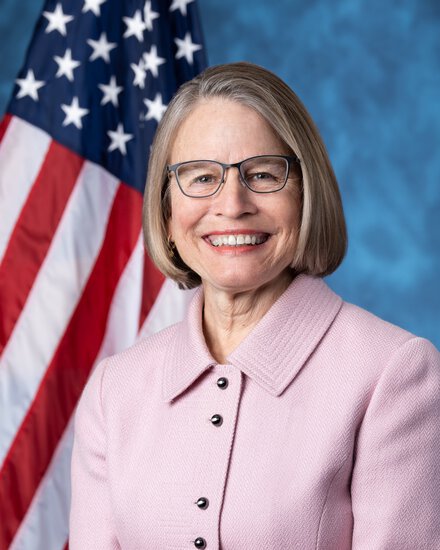
Rep. Mariannette Miller-Meeks
Sponsored bills
Assuring that Robust, Thorough, and Informed Congressional Leadership is Exercised Over National Emergencies Act or the ARTICLE ONE Act This bill terminates a declaration of national emergency made by the President after 30 days unless Congress votes to extend the declaration. (Currently, Congress can cancel an emergency declaration only by passing a resolution that can withstand a presidential veto.) The bill establishes procedures for congressional review of declarations of national emergencies. The President shall (1) transmit specified information to Congress with any proclamation declaring or renewing a national emergency, including a description of the circumstances necessitating the declaration or renewal of a national emergency declaration and its estimated duration; and (2) report periodically on the status of the emergency.
Creating Opportunities Now for Necessary and Effective Care Technologies (CONNECT) for Health Act of 2021 or the CONNECT for Health Act of 2021 This bill expands coverage of telehealth services under Medicare. Among other provisions, the bill allows the Centers for Medicare & Medicaid Services (CMS) to waive certain restrictions, such as restrictions on the types of technology that may be used; permanently removes geographic restrictions on originating sites (i.e., the location of the beneficiary) and allows the home of the beneficiary to serve as the originating site for all services; permanently allows federally qualified health centers and rural health clinics to serve as the distant site (i.e., the location of the health care practitioner); and allows the CMS to generally waive coverage restrictions during any public health emergency. Additionally, the CMS must report on the effects of expanded telehealth services during the COVID-19 public health emergency, including with respect to the utilization, quality, and outcomes of services. The Center for Medicare and Medicaid Innovation may also test alternative payment models relating to expanded telehealth services.

VET TEC Enhancement Act of 2021 This bill increases the amount authorized to be appropriated for the Department of Veterans Affairs (VA) High Technology Pilot Program from $45 million to $125 million for FY2022 and each succeeding year. The High Technology Pilot Program provides eligible veterans with the opportunity to enroll in high technology programs of education that the VA determines provide training or skills sought by employers in a relevant field or industry.
Defending Veterans' Second Amendment Rights Act This bill prohibits the Department of Veterans Affairs from transmitting personally identifiable information of veterans or their beneficiaries to the national instant criminal background check system utilized by licensed importers or dealers of firearms solely on the basis that a veteran has a service-connected disability.
Renewable Fuel Infrastructure Investment and Market Expansion Act of 2021 This bill establishes programs and requirements to expand access to renewable fuel. Specifically, the U.S. Department of Agriculture must establish a program to award grants for the deployment of renewable fuel infrastructure as specified by this bill. In addition, the Environmental Protection Agency (EPA) must finalize a 2021 proposed rule titled E 15 Fuel Dispenser Labeling and Compatibility With Underground Storage Tanks . When finalizing the rule, the EPA must eliminate the labeling requirements for fuel pumps that dispense E 15 fuel (i.e., gasoline that contains 15% ethanol).
Mainstreaming Addiction Treatment Act of 2021 This bill removes the requirement that a health care practitioner apply for a separate waiver through the Drug Enforcement Administration (DEA) to dispense certain narcotic drugs (e.g., buprenorphine) for maintenance or detoxification treatment (i.e., substance use disorder treatment). Further, a community health aide or community health practitioner may dispense certain narcotic drugs for maintenance or detoxification treatment without registering with the DEA if the drug is prescribed by a health care practitioner through telemedicine. It preempts state laws related to licensure for this activity. The bill also directs the Substance Abuse and Mental Health Services Administration to conduct a national campaign to educate health care practitioners and encourage them to integrate substance use disorder treatment into their practices.
EAGLES Act of 2021 This bill reauthorizes the National Threat Assessment Center (NTAC) within the U.S. Secret Service. It reauthorizes the functions of NTAC through FY2025 and expands them to include the establishment of a national program on targeted school violence prevention.
Return Excessive Migrants and Asylees to International Neighbors in Mexico Act of 2021 or the REMAIN in Mexico Act of 2021 This bill requires the Department of Homeland Security (DHS) to implement the Migrant Protection Protocols as outlined in the January 25, 2019, memo titled Policy Guidance for Implementation of the Migrant Protection Protocols . (The protocols generally required aliens who are not clearly admissible, including those seeking asylum, arriving by land along the U.S.-Mexico border to be returned to Mexico while their immigration proceedings are pending, rather than remain in the United States. On January 21, 2021, DHS stopped applying the protocols to newly-arrived individuals.)
Abortion Providers Loan Elimination Act This bill makes abortion providers ineligible to receive a loan under the Paycheck Protection Program, which was established to support small businesses in response to COVID-19. This prohibition shall not apply to hospitals or entities that exclusively provide abortions (1) where the pregnancy is the result of rape or incest, or (2) where the pregnancy endangers the life of the mother. The Inspector General of the Small Business Administration must report on the number of paycheck protection loans made to the Planned Parenthood Federation of America and to other abortion providers.