

Fly Vets Act This bill adjusts requirements related to utilizing Department of Veterans Affairs educational assistance for flight training purposes, including by removing the requirement that an individual must possess a valid private pilot certificate and meet certain medical requirements to utilize such assistance. Individuals enrolled in a program of education at an institution of higher learning in which flight training is required may elect to receive accelerated payments of tuition and fees if they also elect to receive educational counseling. The bill also specifies the calculation and determination of such fees, as well as the calculation of available entitlement in cases of accelerated payments.
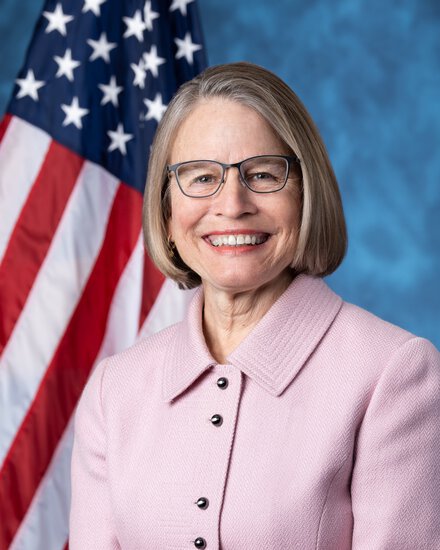
Rep. Mariannette Miller-Meeks
Sponsored bills
Greater Accountability from Lawmakers for Americans Resolution or the GALA Resolution This resolution amends the House Rules to prohibit a Member of Congress, Delegate, Resident Commissioner, officer, or employee of the House from accepting free attendance at a charity event if the value of free attendance exceeds $1,000 unless attendance is appropriate to the performance of the official duties or representative function of the person attending. A Member, Delegate, Resident Commissioner, officer, or employee of the House who accepts free attendance that is appropriate to the performance of official duties must submit a statement to the House Ethics Committee prior to attending that explains why attendance is appropriate.
2020 WHIP+ Reauthorization Act This bill expands disaster indemnity programs through which the Department of Agriculture provides payments to agricultural producers for crop and milk losses resulting from hurricanes, wildfires, and other qualifying natural disasters. In particular, the bill extends the Wildfire and Hurricane Indemnity Program Plus (WHIP+), the On-Farm Storage Loss Program, and the Milk Loss Program to make losses that occurred in the 2021 and 2022 calendar years eligible for payments. Under current law, these programs provide disaster payments to agricultural producers with crop and milk losses resulting from qualifying natural disasters that occurred in the 2018 and 2019 calendar years.
This concurrent resolution expresses the sense of Congress that the men and women who undertook efforts in Afghanistan over the years have provided heroic service to the country and the peace experienced by our country is a direct result of the actions of our service members, diplomats, and humanitarians. The concurrent resolution also expresses that veterans who feel stress, anger, or disappointment over the end of operations in Afghanistan should seek resources and reach out to friends, mentors, and caregivers.
Working Dog Commemorative Coin Act This bill directs the Department of the Treasury to mint and issue 50,000 $5 gold coins, 500,000 $1 silver coins, and 750,000 half-dollar clad coins in commemoration of the service that working dogs provide to society. The designs of the coins minted under this bill shall be emblematic of the contributions of working dogs to society, including in detection, military service, therapy and assistance. Treasury may issue coins only during the one-year period beginning on January 1, 2023. All sales of coins shall include a surcharge, which shall be paid to America's VetDogs for general expenses associated with the fulfillment of its mission.
Veterans' Prostate Cancer Treatment and Research Act This bill requires the Department of Veterans Affairs (VA) to establish in its National Surgery Office an interdisciplinary clinical pathway for all stages of prostate cancer. Clinical pathways are health care management tools designed around research and evidence-based practices that provide direction for the care and treatment of a specific condition. The clinical pathway must include specified elements, such as a diagnosis pathway and a treatment pathway. The VA must consult with and incorporate feedback from (1) veterans who have received prostate cancer care at its medical facilities, and (2) experts in multidisciplinary cancer care and clinical research. Additionally, the VA must publish the clinical pathway on a public VA website and annually update the pathway as needed based on medical literature and evidence-based guidelines. The bill also requires the VA to submit a plan to establish a prostate cancer program using the comprehensive prostate cancer clinical pathway.
Guaranteeing Healthcare Access to Personnel Who Served Act This bill addresses the administration and provision of health care to veterans through the Department of Veterans Affairs (VA) and non-VA providers. First, the bill provides statutory authority for the eligibility thresholds for when a veteran must receive non-VA care under the Veterans Community Care Program (VCCP) for primary care, mental health care, noninstitutional extended care services, specialty care, or specialty services. Additionally, the bill establishes access to care standards for non-VA care under the VCCP, meaning a veteran's appointment must be within specified distances and time frames. Among other requirements, the VA must also implement an 18-month pilot program to allow certain veterans to use a website or mobile application to request, schedule, and confirm medical appointments with VCCP providers; ensure that VCCP third party administrators and credentials verification organizations comply with specified requirements to help ensure that certain health care providers are excluded from providing non-VA health care services; develop a strategic plan to ensure the effectiveness of the telehealth technologies and modalities delivered by the VA; and establish an online health care education portal for veterans. The bill requires the Government Accountability Office to report on (1) the VA program under which third parties provide transportation for veterans who are seeking VA services or benefits, (2) VA telehealth services, and (3) the VA's Foreign Medical Program. Finally, the Paperwork Reduction Act does not apply to the voluntary collection of information during research conducted by the Veterans Health Administration.
Supporting Expanded Review for Veterans In Combat Environments Act of 2021 or the SERVICE Act of 2021 This bill expands eligibility for Veterans Health Administration mammography screenings to veterans who served in certain locations during specified periods, including those who were exposed to toxic substances at such locations. The specified locations and corresponding time periods include Iraq between August 2, 1990, and February 28, 1991, and from March 19, 2003, until burn pits (areas used for burning solid waste in open air without equipment) are no longer used in Iraq; the Southwest Asia theater of operations, including Kuwait, Saudi Arabia, Oman, and Qatar, from August 2, 1990, until burn pits are no longer used in such locations; and Afghanistan, Djibouti, Syria, Jordan, Egypt, Lebanon, and Yemen from September 11, 2001, until burn pits are no longer used in such locations; and other locations and time periods as determined by the Airborne Hazards and Open Burn Pit Registry. The bill specifies that the listed locations do not include bodies of water around or airspace above such locations.
Improving Veterans Access to Congressional Services Act of 2021 This bill requires the Department of Veterans Affairs (VA) to permit a Member of Congress (upon request) to use a VA facility to meet with constituents. The VA and the General Services Administration must jointly identify available spaces in VA facilities for such purposes. The VA must prescribe regulations regarding such use of a VA facility by a Member of Congress.
Communities Helping Invest through Property and Improvements Needed for Veterans Act or the CHIP IN for Veterans Act This bill extends from 5 to 10 years the Department of Veterans Affairs (VA) pilot program under which the VA may accept donations of property or facilities from specified entities (e.g., state or local authorities).