

Maddy summaryHRES 754 is a non-binding resolution expressing the House of Representatives' opposition to proposed "punitive natural gas taxes" on U.S. businesses, families, and workers. It cites claims that such taxes would raise average energy bills by 17%, reduce GDP by $9 billion, and eliminate 90,000 jobs, while disproportionately harming low-income households. The resolution argues that opposing these taxes supports U.S. energy security, national security, and continued leadership in reducing emissions through domestic natural gas production. As a procedural resolution, it does not create law but formally states the House's position against this policy approach.
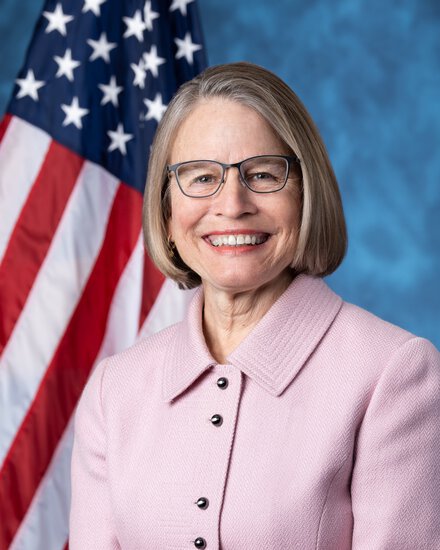
Rep. Mariannette Miller-Meeks
Sponsored bills
This bill prohibits the use of federal funds to require a member of the Armed Forces to receive a COVID-19 vaccination. The bill also prohibits adverse action (e.g., punishment) being taken against a member of the Armed Forces because the member refuses to receive a COVID-19 vaccination.
Cold War Service Medal Act This bill authorizes the military department concerned to issue Cold War Service Medals to eligible persons who served during the Cold War (September 2, 1945, to December 26, 1991) and meet other requirements. Specifically, eligible persons are those who (1) served on active duty for at least 24 consecutive months during the Cold War, (2) were deployed as members of the armed forces outside of the United States for at least 30 days during the Cold War, (3) were members of a reserve component and called or ordered to active duty related to the Cold War, or (4) performed other service in the armed forces during the Cold War. The military department concerned may issue the medal to the next-of-kin if the eligible recipient is deceased.
Original National Domestic Violence Awareness Month Resolution of 2021 This resolution supports the goals and ideals of National Domestic Violence Awareness Month. Further, it expresses the sense of the House of Representatives that Congress should continue to raise awareness of and support programs to end domestic violence.
Ensuring Workers Get PAID Act of 2021 This bill reestablishes the Payroll Audit Independent Determination program, which is administered by the Department of Labor and allows employers to self-report federal minimum wage and overtime violations as an alternative to litigation. Employers may apply to the program by submitting certain information from a self-audit that includes calculations of any unpaid minimum or overtime wages. Labor must verify the calculations and, if the application is approved, supervise a settlement with affected employees that provides payment of any unpaid wages. Employees who accept a settlement under the program waive their private right of action to recover the unpaid wages provided under the settlement.
State, Local, Tribal, and Territorial Fiscal Recovery, Infrastructure, and Disaster Relief Flexibility Act This bill allows states, tribes, territories, and localities to use certain COVID-19 relief funds for new categories of spending, including for natural disasters and infrastructure projects. It also makes changes to expenditure deadlines and other aspects of this funding. Specifically, recipients may use funds for emergency relief from natural disasters and associated negative economic impacts of natural disasters. In addition, recipients may use a portion of their COVID-19 relief funds for designated infrastructure projects, such as nationally significant freight and highway projects. Furthermore, the bill allows recipients to expend COVID-19 relief funds on these types of infrastructure projects until September 30, 2026. Under current law, recipients must expend the funds by December 31, 2024. Other changes in the bill include (1) modifying eligibility and allocation requirements for funding set aside for counties and Indian tribes that are near public lands, (2) allowing Indian tribes an additional year to expend their COVID-19 relief funds, and (3) establishing a process for government entities to decline COVID-19 relief funds and requiring any declined funds to be used to reduce the federal deficit.
Student Veteran COVID-19 Protection Act of 2021 This bill addresses the administration of certain Department of Veterans Affairs (VA) educational assistance benefits and home loans, including by authorizing the VA to waive certain enrollment verifications, exempting foreign educational institutions from certain requirements, extending the time limitations on the use of educational assistance benefits, and adjusting certain home loan fees.
Treatment Restoration for Emergency Antibody Therapeutics Act or the TREAT Act This bill prohibits the Department of Health and Human Services (HHS) from implementing any policy that restricts health care facilities from ordering and receiving COVID-19 monoclonal antibody therapies directly from manufacturers and distributors. In addition, the bill expressly nullifies a policy announced on September 13, 2021, under which HHS allocated supplies of these therapies through state or territorial governments.
Fairness for Rural Medicare Beneficiaries Act of 2021 This bill modifies the payment methodology and coinsurance amount for outpatient critical access hospital services under Medicare. Currently, the payment rate for such services is 101% of reasonable costs; the coinsurance amount for such services is 20% of the applicable charges. The bill modifies this methodology so as to base the 20% coinsurance amount on the fee schedule under the Medicare outpatient prospective payment system.
Simon Crosier Act This bill requires hospitals and other health care providers, as a condition of Medicare and Medicaid participation, to have certain written policies and procedures in place that limit the implementation of do-not-resuscitate (DNR) orders for unemancipated minors in accordance with specified criteria. Among other provisions, such policies and procedures must (1) require the informed consent of at least one parent and a reasonable attempt to contact the other parent before instituting a DNR order, (2) allow either parent to refuse to consent to a DNR order, and (3) allow a parent to transfer a minor to another facility after being informed of an intent to institute a DNR order.