

Maddy summaryThis bill removes a temporary expiration date for telehealth coverage in health insurance plans. It amends two sections of the Internal Revenue Code to permanently allow health plans to cover telehealth services without the prior deadline of December 31, 2021. The key change makes existing telehealth coverage rules permanent for health insurance plans under federal tax law. This directly affects health insurance plans that provide telehealth benefits, ensuring they can continue covering these services without needing to renew temporary provisions. The bill does not change what telehealth services are covered, only makes the coverage rules permanent.
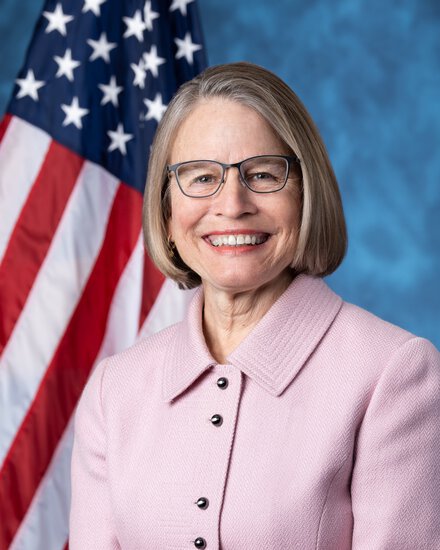
Rep. Mariannette Miller-Meeks
Sponsored bills
Provider Relief Fund Improvement Act This bill extends deadlines, expands the uses of, and makes other changes pertaining to the Provider Relief Fund. The fund reimburses health care providers for increased expenses or lost revenue attributable to COVID-19. Specifically, the bill extends the deadline by which providers must use any reimbursements they received in 2020 from the fund to the end of the COVID-19 emergency. Providers must use reimbursements received in the first half of 2021 by the end of the emergency or June 30, 2022, whichever is later. Additionally, the Department of Health and Human Services must distribute the remaining provider relief funds by March 31, 2022. Providers must use these funds by June 30, 2023. The bill also allows the use of the funds for workplace safety activities, such as hiring additional security personnel.
Creating Hope and Opportunity for Individuals and Communities through Education Act or the CHOICE Act This bill expands school choice programs for elementary and secondary school students. Specifically, the bill authorizes the Department of Education (ED) to award grants to support the design and implementation of state programs that allow the parent of a child with a disability to choose the appropriate public or private school for their child. It also outlines the requirements for program eligibility. Further, if the state has established a program that allows parents to use public or private funds to assist with the cost of their child attending a private school, then the state may supplement those funds with federal special education funds. Additionally, the Department of Defense must carry out a five-year pilot program to award scholarships to enable military dependent students who live on military installations to attend the public or private elementary or secondary schools their parents choose. The bill also requires ED to return to the Treasury specified amounts made available for salaries and expenses.
Partner with Korea Act This bill creates an E-4 treaty trader visa category for up to 15,000 nationals of South Korea each fiscal year who are coming to the United States solely to perform specialty occupation services, subject to various requirements. The 15,000 limit shall only apply to principal aliens and not the spouses or children of such aliens. (A specialty occupation is one that requires the theoretical and practical application of highly specialized knowledge and a bachelor's degree or higher.)
Honoring Our Promises through Expedition for Afghan SIVs Act of 2021 or the HOPE for Afghan SIVs Act of 2021 This bill authorizes the Department of State and the Department of Homeland Security (DHS) to postpone the medical exam requirement for qualifying citizens or nationals of Afghanistan seeking entry into the United States as special immigrants. Specifically, this bill applies to an existing program that provides special immigrant status to an individual (or the spouse or child of such an individual) who (1) faithfully performed sensitive and trusted duties for the U.S. government or the International Security Assistance Force in Afghanistan on or after October 7, 2001, and (2) has experienced or is experiencing an ongoing serious threat due to the performance of those duties. Under this bill, the State Department and DHS may jointly issue a blanket waiver of any requirement for such individuals to undergo a medical exam before admission into the United States. DHS shall ensure, to the greatest extent practicable, that individuals admitted under such a waiver undergo medical exams no later than 30 days after admission into the United States. Such an individual shall be admitted as a conditional permanent resident. DHS shall remove the conditions once the individual receives and passes a medical examination.
Federal Initiative to Guarantee Health by Targeting Fentanyl Act This bill places fentanyl-related substances as a class into schedule I of the Controlled Substances Act. A schedule I controlled substance is a drug, substance, or chemical that has a high potential for abuse; has no currently accepted medical value; and is subject to regulatory controls and administrative, civil, and criminal penalties under the Controlled Substances Act. Additionally, the bill prohibits the application of a mandatory minimum prison term for certain drug offenses involving fentanyl-related substances.
Temporary Family Visitation Act This bill establishes a new nonimmigrant visa classification for an alien temporarily entering the United States to visit a relative who is a U.S. citizen or lawful permanent resident. The maximum period of stay for a family visitor visa shall be 90 days. An alien seeking such a visa must have health insurance for the duration of the stay. An alien who holds such a visa may not change to another nonimmigrant visa classification except in certain limited instances. If an alien has been approved for a family-based immigrant visa and is waiting for one to become available, the alien may obtain a family visitor visa if the alien meets the eligibility requirements.
Protect and Serve Act of 2021 This bill establishes a new criminal offense for knowingly assaulting a law enforcement officer and causing serious bodily injury (or attempting to do so) in circumstances that affect interstate commerce. It imposes criminal penalties—a prison term, a fine, or both—on a violator.
Rural Area Opioid Prevention Pilot Program Act This bill expands the allowable uses of grant funds under the Comprehensive Opioid Abuse Grant Program administered by the Department of Justice. Specifically, the bill allows grants to be used for pilot programs for rural areas to implement community response programs that focus on alternatives to incarceration and reducing opioid overdose deaths. The bill also requires at least 10% of grants under the program to be awarded to rural areas.
Biomass and Biogas for Electric Vehicles Act This bill requires the Environmental Protection Agency to, with respect to electricity from renewable biomass used as a transportation fuel, (1) provide for the generation of Renewable Identification Numbers under the renewable fuel program (in accordance with certain maximum quotas), and (2) allow only the operator of a registered facility to generate Renewable Identification Numbers with respect to such electricity.