

Maddy summaryThe School Hunger Elimination Act of 2024 automatically certifies children for free or reduced-price school meals if they are already receiving Medicaid benefits (with household income at or below 133% of the federal poverty line for free meals) or Supplemental Security Income (SSI). It requires states to establish data-sharing agreements with Medicaid agencies by the 2025 school year, eliminating the need for families to submit separate applications for meal eligibility. This change directly affects children in low-income households already enrolled in Medicaid or SSI, streamlining access to school meals without additional paperwork.
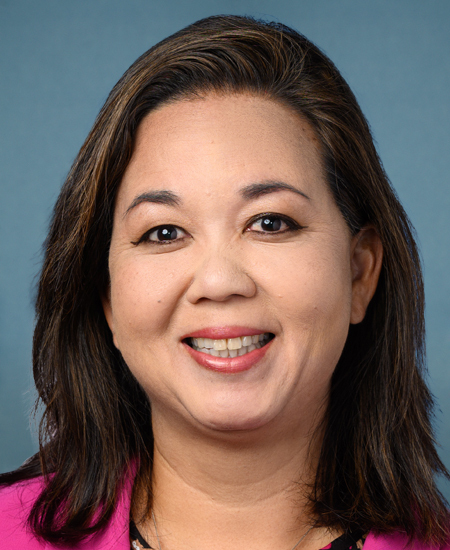
Rep. Jill N. Tokuda
Sponsored bills
Maddy summaryHR 8611, the Save Our Small Farms Act of 2024, amends crop insurance and assistance programs to better support small-scale and diversified farms. The bill creates a voluntary transition program from noninsured crop disaster assistance to whole farm revenue insurance with tiered premium discounts (25% for the first year, 50% for subsequent years) and streamlines application processes for urban, small-scale, and direct-to-consumer farming operations. It allows use of IRS Schedule F for revenue history, establishes remote appraisal options for crop loss assessments, and creates a new single index insurance policy to protect against weather-related income losses. These changes directly affect limited resource, beginning, veteran, and socially disadvantaged farmers, as well as producers of hand-harvested or rapidly-deteriorating crops.
Maddy summaryThis bill amends a section of the Food Security Act of 1985 to explicitly include "the use of native vegetation" as a protected practice under agricultural programs. It updates the legal language by adding this phrase as a new point (3) in Section 1244(h), clarifying that using native vegetation is encouraged alongside existing protections. The change directly affects agricultural programs administered under the Food Security Act, ensuring native vegetation use is formally recognized in policy. It is a procedural update with no new funding or requirements, simply adding native vegetation to the list of supported practices.
Maddy summaryHR 8488, the Farmer to Farmer Education Act of 2024, establishes a new program to support farmer-led networks that share agricultural knowledge and technical assistance. It amends the Food Security Act to create cooperative agreements with eligible entities - such as nonprofits, tribes, local governments, and institutions - to build farmer-to-farmer networks, prioritizing beginning, veteran, socially disadvantaged, and limited-resource farmers, ranchers, and forest owners. Key mechanisms include funding for mentor matching, skill-building training, and language access for non-English speakers, while requiring grantees to facilitate network access and develop community-specific conservation practices. The bill directly affects rural agricultural communities by connecting them with peer-based support systems to adopt science-based conservation methods.
Maddy summaryThe Protecting Communities from Plastics Act of 2024 establishes new environmental standards for plastic production facilities, including a temporary moratorium on new permits for covered facilities during a "temporary pause period." It requires environmental justice assessments for permits affecting fenceline communities (low-income communities and communities of color near plastic facilities) and sets specific targets to reduce single-use plastics by 25% and increase reusable/refillable packaging by 30% by 2034. The bill mandates comprehensive reporting on plastic production and distribution, including a national inventory of plastic manufacturing, and requires continuous air and water quality monitoring near plastic facilities. This legislation directly affects plastic producers, manufacturers, and communities located near plastic production facilities, particularly those disproportionately impacted by plastic pollution.
Maddy summaryHR 7850, the *Eliminating Access Barriers to Conservation Act*, modifies payment rules in a federal conservation program to better serve farmers and landowners in high-cost areas. It amends the Food Security Act to allow the Secretary to waive payment limits for contracts in Alaska, Hawaii, American Samoa, Guam, the Northern Mariana Islands, Puerto Rico, and the U.S. Virgin Islands. This waiver authority directly affects agricultural producers in these territories and high-cost regions who previously faced payment restrictions under the program. The key provision removes a barrier by enabling tailored financial support for conservation efforts in geographically or economically challenging locations.
Maddy summaryHR 7362, the SPACE Act of 2024, requires the U.S. Department of Agriculture to establish cooperative agreements with land-grant universities for research using satellite and remote sensing data to improve wildland fire management. The bill directs the Secretary to provide these institutions with existing satellite data (including real-time images and infrared capabilities) and mandates they share research findings on fire behavior, smoke patterns, and data gaps. It also requires two reports: one within one year detailing opportunities to expand research partnerships, and another within 180 days outlining plans to integrate satellite technology for fire forecasting, containment strategies, and resource deployment. The law directly affects land-grant universities, USDA agencies, and federal fire management entities like the National Interagency Fire Center.
Maddy summaryThis bill would require the federal government to cover 100% of state agencies' costs for SNAP program staff salaries, hiring, and training. It sets minimum wage standards for SNAP workers at the same rate as federal employees, with annual updates tied to federal pay increases. States must submit detailed wage plans for federal approval. The policy aims to improve staffing stability and retention for SNAP operations.
Maddy summaryHR 3507, the "Yes In My Backyard Act," requires local governments receiving certain federal Community Development Block Grants (CDBG) to report on their progress toward adopting specific housing-friendly land use policies. It directly affects cities and counties that administer CDBG funds by mandating they submit plans tracking 22+ policy changes, such as allowing duplexes in single-family zones, reducing parking requirements, or streamlining permits. The bill does not require local governments to adopt these policies but requires them to document their current status and plans for implementation. This reporting mechanism aims to identify barriers to affordable housing without binding local governments to specific actions. The requirement applies to CDBG recipients starting one year after the bill's enactment.
This resolution supports the designation of National FFA Week. It also (1) recognizes the important role of the National FFA Organization (Future Farmers of America) in developing the next generation of globally conscious leaders who will change the world; and (2) celebrates the 10th anniversary of the Give the Gift of Blue program, which has donated more than 17,000 FFA blue jackets to FFA members in need.