

Maddy summaryThis bill establishes procedures for handling requests to dismiss criminal prosecutions against the President. It requires the Attorney General to submit a sworn statement confirming whether a dismissal request came from the President or their direction, and mandates that courts consider evidence of bad faith before granting such dismissals. A three-judge court must hear these cases, and the Justice Department's Inspector General must report to Congress if they find a dismissal was requested by the President. The bill directly affects the President, Attorney General, courts, and Justice Department oversight mechanisms during presidential criminal cases.
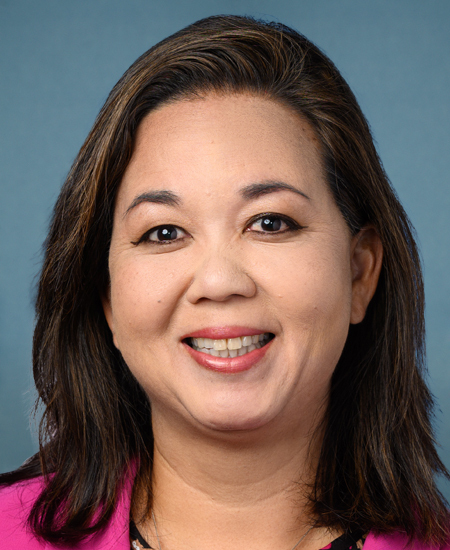
Rep. Jill N. Tokuda
Sponsored bills
Maddy summaryThis bill eliminates out-of-pocket costs for all FDA-approved contraceptives under TRICARE for military dependents (spouses and children) and extends full coverage to include counseling, insertion, removal, and follow-up care. It requires TRICARE Select, Prime, and pharmacy benefits to cover all contraceptive methods without cost-sharing, addressing current gaps where dependents face copays. The law also mandates family planning education for all service members and ensures sexual assault survivors can access emergency contraception without barriers at military medical facilities. This applies to all individuals with reproductive capacity, including transgender and non-binary dependents.
Maddy summaryHR 9878, the No Shame at School Act of 2024, requires schools to automatically certify students from households with unpaid meal fees for free or reduced-price meals (instead of allowing discretion), and mandates retroactive reimbursement for past unpaid meals. It directly affects school districts and students in households owing meal fees by prohibiting stigmatizing practices like special tokens, public lists of names, or withholding grades due to unpaid fees. Key provisions ban schools from physically segregating students, using debt collectors, or taking food away from students who owe fees, while requiring clear communication to households about meal applications. The bill defines "covered child" as any student enrolled in a participating school meal program whose household owes fees or is eligible for free/reduced meals.
Maddy summaryHR 9864, the Keep Food Containers Safe from PFAS Act of 2024, prohibits the sale of food packaging containing intentionally added PFAS chemicals (like those used in non-stick coatings) in interstate commerce. It directly affects food manufacturers and packaging producers who currently use these chemicals. The bill amends federal food safety law to ban such packaging starting January 1, 2025, defining PFAS as man-made chemicals with at least one fully fluorinated carbon atom. This is a concrete policy change to remove specific chemicals from food contact materials.
Maddy summaryHRES 1517 is a symbolic resolution expressing the U.S. House of Representatives' support for designating October 7-12, 2024, as "National 4-H Week." It does not create new laws or policies but formally recognizes 4-H, the nation’s largest youth development program, which engages nearly 6 million young people through hands-on learning in health, science, and leadership. The resolution highlights 4-H’s role in developing youth leadership via its network of volunteers, land-grant universities, and the Department of Agriculture. It has no direct impact on any specific group or program, as it only serves as a formal acknowledgment of the organization’s work.
Maddy summaryHRES 1504 designates October 2024 as Filipino American History Month to celebrate the history, culture, and contributions of Filipino Americans to the United States. The resolution urges the American public to observe the month through educational programs and activities highlighting the community's early settlements, military service (including World War II veterans' contributions), and roles in healthcare, labor movements, and other fields. As a non-binding congressional resolution, it formally recognizes Filipino American heritage without creating new legal obligations or policy changes.
Maddy summaryHR 9849, the Medical Laboratory Personnel Shortage Relief Act of 2024, addresses critical shortages in medical laboratory staff by expanding federal workforce programs. It adds medical laboratory personnel - including phlebotomists, technicians, and genetic counselors - to the National Health Service Corps, allowing them to work in underserved areas, and includes them in loan repayment programs. The bill also creates a new $25 million education grant program to fund accredited training for lab professionals, prioritizing rural, underrepresented, and disadvantaged communities. These changes directly affect medical laboratory workers and communities facing staffing shortages in diagnostic testing.
Maddy summaryThe Toxic Free Food Act of 2024 requires the FDA to revise its "Generally Recognized As Safe" (GRAS) rule within 180 days of enactment. It mandates that food manufacturers must submit detailed safety data - including cumulative effects, safety factors, and protections for vulnerable groups - before marketing a substance as GRAS or using it in food. The bill also prohibits carcinogens and novel chemicals from being classified as GRAS, requires public posting of all GRAS submissions with a 90-day review period, and bans the use of experts with conflicts of interest in safety assessments. This directly affects food manufacturers, the FDA, and consumers by increasing transparency and safety standards for food additives.
Maddy summaryThis bill creates two programs to support early childhood educators. The first provides loan repayment assistance (up to $6,000 annually) for educators who work 5 years at qualifying childcare providers (like centers receiving federal child care vouchers). The second offers grants ($4,000 per academic year) to students in early childhood education programs, requiring them to work in licensed early learning settings for at least one year per grant year. Both programs require service commitments, with failure to comply treated as a loan requiring repayment under specific income-based terms. The programs directly affect early childhood educators, students pursuing relevant degrees, and childcare providers participating in federal child care programs.
Maddy summaryThis bill authorizes $5 million annually from 2024 to 2034 to continue efforts against Rapid Ohia Death (ROD), a fungus killing over 1 million native ohia trees in Hawaii. It requires collaboration between the Interior and Agriculture Departments, the State of Hawaii, and local stakeholders to conduct research on ROD transmission, manage invasive animals affecting forests, and propagate disease-resistant trees for restoration. The funding supports ongoing activities like preventing ROD spread, restoring native forests, and maintaining research infrastructure at the Institute of Pacific Islands Forestry. This directly affects Hawaii's native ecosystems and forest management, with no changes to existing laws or new regulations for residents.