

Maddy summaryThis bill modifies tax law to exclude certain health professional education payments from taxable income. It makes loan repayments under specific federal programs (like Public Health Service Act sections 338B(g), 846(a), and 738(a)) and qualifying state programs for underserved areas tax-free. It also expands tax exclusions for scholarships from programs including the Public Health Service Act's section 846 and the Native Hawaiian Health Care Improvement Act. The bill directly affects health professionals receiving these payments or scholarships, increasing their net compensation by removing tax liability on these funds. This is a concrete tax policy change with no advocacy or speculation about outcomes.
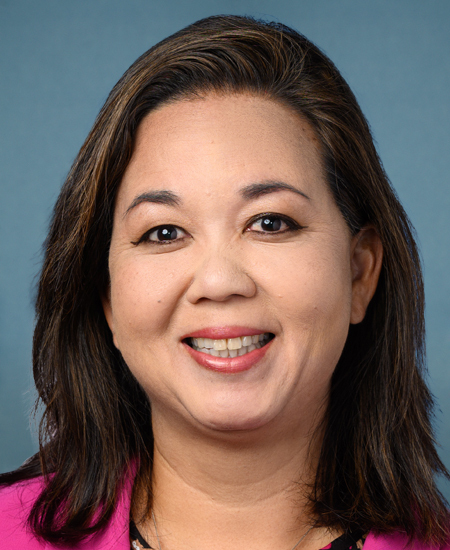
Rep. Jill N. Tokuda
Sponsored bills
Maddy summaryHR 10273 directs the Secretary of Defense to study the health effects of indoor mold in military housing, specifically focusing on risks to service members, their families, and children living in covered housing (including unaccompanied and family housing). The study must examine harmful mold types, detection methods, health impacts like respiratory illnesses, and the effect on military readiness. Based on the study, the Department of Defense must develop model standards for preventing, detecting, and remediating mold, including new construction requirements to control moisture and ventilation. The bill also requires training military health professionals on mold-related illnesses and mandates public review of proposed standards.
Maddy summaryThe Working Dog Commemorative Coin Act (HR 807) directs the U.S. Treasury to mint three types of commemorative coins honoring working dogs' service: $5 gold coins, $1 silver coins, and half-dollar coins with specific weight and composition requirements. Each coin will carry a surcharge ($35 for $5 coins, $10 for $1 coins, $5 for half-dollars) that will be paid directly to America's VetDogs to support their programs providing service dogs for veterans, the disabled, and others. The coins will be issued in 2027 with designs reflecting working dogs' roles in military, detection, therapy, and assistance work. The legislation specifies that all surcharge revenue must fund America's VetDogs' operations without creating new government programs. This is a commemorative measure focused on honoring working dogs' contributions through coin sales, with all surcharge funds going to a specific nonprofit organization.
Maddy summaryHR 10124 establishes a 5-year pilot program (2025-2029) authorizing $20 million to fund community-based "Food is Medicine" programs through competitive grants. These programs directly support individuals with diet-related diseases like diabetes, obesity, or heart conditions by providing medically tailored meals, grocery delivery, nutrition education, and transportation. The grants prioritize projects using local foods, involving dietitians, and serving urban, rural, tribal, and territorial communities equitably. The program requires annual reports to Congress analyzing participant outcomes, program efficiency, and impacts on health costs and patient health.
Maddy summaryThis bill establishes a Truth and Healing Commission to investigate the history and impacts of U.S. Indian Boarding School policies on Native American communities, including cultural, emotional, and physical effects on survivors, descendants, and tribal communities. The Commission will document these impacts through research, public meetings, and testimony, working with two advisory committees focused on Native American perspectives and Federal agency coordination. The Commission will operate for six years, with annual reports to Congress and a final report containing recommendations for Federal action. The bill also includes provisions for managing burial sites related to boarding schools and ensures the Native American Graves Protection and Repatriation Act applies to remains found on Federal lands related to these schools.
Maddy summaryHRES 1594 is a symbolic House resolution supporting the designation of "National Rural Health Day," observed annually on the third Thursday of November. It recognizes rural health care providers and the communities they serve, highlighting challenges like hospital closures, workforce shortages, and access barriers in rural areas. The resolution expresses the House's commitment to improving rural health care accessibility and affordability but does not create new laws or allocate funding. It is a non-binding gesture aligning with an existing observance since 2011, organized by the National Rural Health Association.
Maddy summaryThis bill protects donors (including individuals, manufacturers, and distributors) and nonprofits from legal liability when providing menstrual products - such as pads, tampons, cups, or liners - in good faith to people in need. It shields them from lawsuits related to the product's condition, age, or packaging, as long as the items meet all federal, state, and local safety standards (even if not commercially sellable). The protection does not apply if gross negligence or intentional harm causes injury. The law directly supports access to essential menstrual products for vulnerable individuals through nonprofit distribution networks.
Maddy summaryThe Engage the Pacific Act establishes a new U.S. government committee to coordinate engagement with civil society organizations (like community groups, media, and environmental groups) across Pacific Island nations (including Fiji, Samoa, and Palau). It creates two key programs: the Indo-Pacific Media Advancement Program ($4 million annually) to strengthen independent journalism and counter disinformation, and the Pacific Islands TRADES Program ($10 million annually) to fund workforce training in sectors like tourism and fisheries. The bill requires reports from the State Department and USAID on American Spaces facilities, strategic communications, and how U.S. efforts align with Pacific priorities. These provisions directly affect U.S. agencies, Pacific Island civil society groups, and the delivery of U.S. foreign assistance in the region.
Maddy summaryThe Our Homes, Our Votes Act requires landlords and public housing agencies managing federally assisted housing (including public housing, Section 8, and supportive housing programs) to include voter registration forms in lease agreements. When tenants sign their lease, it automatically serves as a voter registration application for federal elections, unless they opt out. Landlords must ensure forms include basic eligibility information, provide language access for limited-English speakers, and submit completed forms to election officials within 10 days. This applies to all tenants in covered housing units, streamlining registration without requiring separate action.
Maddy summaryHRES 1588 is a House resolution supporting Transgender Day of Remembrance (TDoR) by recognizing the epidemic of violence against transgender people and memorializing those killed between October 1, 2023, and September 30, 2024. It specifically honors 38 transgender or gender-nonconforming individuals whose lives were lost to violence during that period, highlighting that transgender women of color face disproportionate risks. The resolution acknowledges systemic issues like underreporting, barriers to healthcare, and higher rates of homelessness and suicide within the community. It calls for the U.S. government to prioritize solutions to this violence while affirming transgender people's right to dignity and safety. As a symbolic resolution, it does not create new laws or policies but formally recognizes these issues for congressional record.