

Maddy summaryThe Green New Deal for Health Act establishes a federal Office of Climate Change and Health Equity within the Department of Health and Human Services to coordinate climate and health efforts across government agencies. It requires health care facilities to become more climate-resilient through infrastructure upgrades, mandates climate risk disclosure for medical products, and creates new training programs for health professionals on climate-related health risks. The bill expands Medicare coverage for home resiliency services like heat pumps and solar batteries for individuals medically vulnerable during climate disasters, and provides funding for community mental health programs focused on climate resilience. It prioritizes support for environmental justice communities and individuals disproportionately affected by climate change, including those with certain health conditions, ages, or social vulnerabilities.
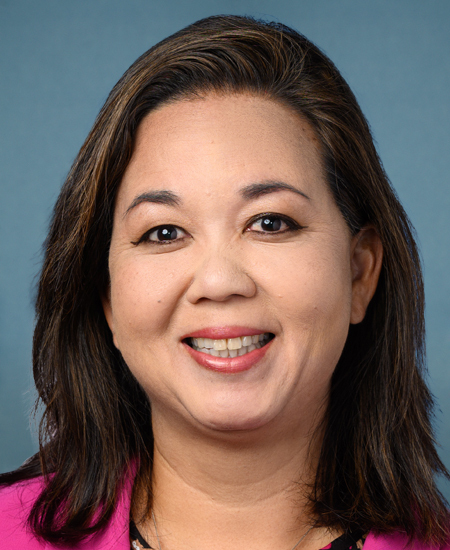
Rep. Jill N. Tokuda
Sponsored bills
Maddy summaryThe Tribal Family Fairness Act (HR 2762) increases federal funding and streamlines support for tribal child welfare programs. It sets a minimum $10,000 grant per tribe (up from $5,000), raises the tribal set-aside for child welfare funding from 3% to 4.5%, and boosts total mandatory funding from $345 million to $356 million annually. The bill also allows tribes to use funds for "tribal customary adoptions" and simplifies application/reporting for tribes receiving under $50,000, while permitting in-kind contributions to meet matching requirements. These changes directly affect federally recognized tribes operating child welfare programs under the Social Security Act.
Maddy summaryThe I CAN Act (Improving Care and Access to Nurses Act) expands healthcare access by removing barriers for nurse practitioners, clinical nurse specialists, physician assistants, certified registered nurse anesthetists, and certified nurse-midwives within Medicare and Medicaid programs. Key provisions include allowing these professionals to provide cardiac and pulmonary rehabilitation services, prescribe certain diabetic shoes, and deliver hospice care without unnecessary physician supervision. The bill also clarifies reimbursement for services provided by certified nurse anesthetists and improves access to home health services through certified nurse-midwives. These changes directly affect Medicare and Medicaid beneficiaries by potentially increasing access to care and healthcare providers by expanding their scope of practice. The bill aims to improve healthcare delivery by leveraging the skills of advanced practice nurses across multiple care settings.
Maddy summaryThis bill establishes a new workplace violence prevention standard for healthcare and social service workers. It requires employers in covered facilities - including hospitals, nursing homes, mental health clinics, and social service settings - to develop and implement comprehensive prevention plans with specific requirements. These plans must include risk assessments, hazard prevention measures, employee training on violence prevention, and procedures for reporting and investigating violent incidents. The bill also amends Medicare regulations to require compliance with these standards for hospitals and skilled nursing facilities receiving Medicare funds.
Maddy summaryThe Working Families Task Force Act of 2023 establishes a federal task force led by the Secretary of Labor, including representatives from eight departments (including Health, Education, Housing, and Treasury), to examine challenges facing working families. The task force will identify key issues like affordable childcare, housing access, livable wages, and tax credit effectiveness, then develop policy recommendations to improve their standard of living. It must meet quarterly, submit an initial report within 180 days, and provide annual updates to relevant congressional committees. The bill directly affects working families by creating a coordinated federal effort to address their economic challenges through agency collaboration. It does not create new programs but mandates a review of existing policies to inform future legislative action.
Maddy summaryThis bill expands Medicare coverage for cardiac and pulmonary rehabilitation programs by updating who can prescribe these services. It allows physician assistants, nurse practitioners, and clinical nurse specialists (in addition to physicians) to authorize these programs under Medicare, broadening access for patients. The changes apply to services starting January 1, 2024, and directly affect Medicare beneficiaries needing cardiac or lung rehabilitation care. The policy simplifies provider eligibility without creating new funding or altering program structure.
Maddy summaryHR 2474, the "Strengthening Medicare for Patients and Providers Act," changes how Medicare pays physicians for services. It replaces the previous two-part payment system (used through 2025) with a single annual payment rate update starting in 2024. This update will be based on the Medicare Economic Index (MEI), which tracks costs for medical providers. The change directly affects Medicare-certified doctors and clinics who receive payments under the physician fee schedule.
Maddy summaryThis bill would require Medicare to cover FDA-approved blood tests that screen for multiple cancers simultaneously (like breast, lung, or colorectal cancer) for beneficiaries. It directly affects Medicare recipients aged 65+ who could access these new screenings once per year, without prior authorization. The key provision adds "multi-cancer early detection screening tests" to Medicare's covered services under Part B, defining them as blood tests analyzing cell-free DNA, while maintaining existing coverage for standard screenings like mammograms. The bill does not change current coverage for individual cancer screenings but ensures Medicare keeps pace with new medical technology.
Maddy summaryHR 1754, the Healthcare Ownership Transparency Act, requires Medicare-participating healthcare providers (called "covered firms") to disclose detailed financial and ownership information to the Centers for Medicare & Medicaid Services (CMS). Specifically, it mandates that firms owned by private equity funds submit 28 types of data - including debt structure, fees paid to private equity, political spending, vendor relationships, and leadership details - for each of the previous 10 years. Non-private equity-owned firms must also report core financial metrics like debt levels and political spending. The bill creates a new task force to study healthcare consolidation and private equity’s impact, and requires the GAO to analyze disclosed data to assess effects on costs, staffing, and quality. This aims to increase transparency around ownership structures influencing healthcare costs and operations.
Maddy summaryThis bill expands Medicare Part B coverage to include specific pharmacist services, directly affecting Medicare beneficiaries and pharmacists who provide these services. It adds new coverage for pharmacist evaluations and treatments related to certain illnesses (like COVID-19, flu, or strep throat) and public health emergencies, requiring payment at 80% of the lesser of actual charge or 85% of physician payment rates (100% during emergencies). The bill also prohibits balance billing for these services, ensuring beneficiaries pay only the standard Medicare copayment. These changes aim to improve access to pharmacist care during health crises while aligning payment with existing physician service frameworks.