

Maddy summaryThe Keep Public Funds in Public Schools Act of 2026 eliminates a federal tax credit that allowed parents to deduct contributions to scholarship granting organizations from their income. By removing these specific tax breaks, the bill prevents the use of public tax dollars to support private school vouchers and scholarship programs. This change directly affects families who currently rely on these tax incentives to fund education outside the public school system. The provisions take effect for taxable years beginning after December 31, 2026.
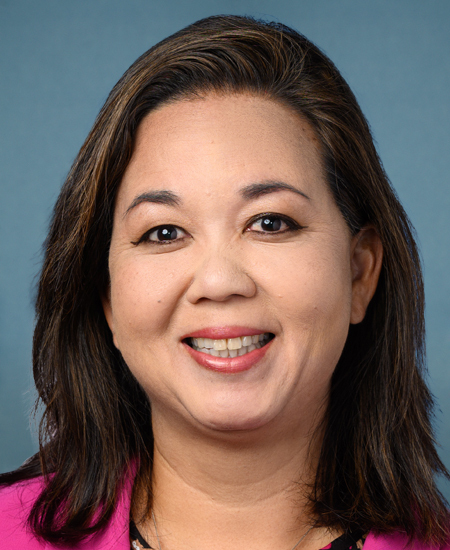
Rep. Jill N. Tokuda
Sponsored bills
Maddy summaryThis bill creates a new tax incentive to encourage the construction and renovation of affordable housing near public transportation hubs. It directly affects developers and investors by increasing the Low-Income Housing Tax Credit for buildings located within half a mile of rail, bus, harbor, or waterway stations in high-density zones. The credit amount is boosted to 150% of the standard value, rising to 155% for projects in Hawaii, Alaska, or U.S. territories, with limits on how many areas can be designated in each region. Additionally, the bill requires the Department of Housing and Urban Development to study geographic cost-of-living differences and propose changes to how tax credit funds are distributed among states.
Maddy summaryThe TSP Modernization Act allows individuals to electronically transfer money from their Thrift Savings Fund accounts to qualified retirement plans at brokerage firms, a change that takes effect one year after the law is passed. To initiate this transfer, account holders must provide the necessary information to the Federal Retirement Thrith Investment Board. Additionally, the bill requires the board to submit a report to Congress one year after enactment detailing how the electronic transfer process was implemented.
Maddy summaryHR 7086 creates a federal grant program to help states improve charter schools' access to facilities. It provides competitive grants to state education agencies that submit detailed plans showing how they will increase charter schools' access to funding, public buildings, and adequate facilities - particularly in low-income and rural communities. States receiving grants must use federal funds (capped at 60% of costs) to support facility acquisition, leasing, renovation, or financing mechanisms, while ensuring these funds supplement - rather than replace - existing state resources. The bill directly affects charter schools and state education agencies, focusing on closing facility access gaps between charter schools and traditional public schools.
Maddy summaryThis resolution commemorates the 120th anniversary of the 1906 arrival of Filipino plantation workers, known as Sakadas, in Hawai'i. It honors their historical contributions to the state's economy and culture while acknowledging the difficult working conditions they faced and their role in organizing labor movements. The text highlights how these immigrants and their descendants became a major part of Hawai'i's population and left a lasting impact on the islands' social and cultural fabric. By formally recognizing this milestone, the House of Representatives aims to preserve the legacy of these pioneering workers in the official record.
Maddy summaryThis resolution expresses support for designating May 2026 as Mental Health Awareness Month to highlight the importance of mental well-being and reduce stigma. It does not create new laws or allocate funding but serves as a formal statement acknowledging the rising rates of mental illness, suicide, and disparities in care across the United States. The text cites various statistics regarding anxiety, depression, and access to treatment to underscore the need for public awareness and continued efforts by medical and community organizations. Ultimately, the bill encourages citizens and institutions to use this month to promote mental health resources and support for individuals and families affected by mental illness.
Maddy summaryThis resolution honors the 80th anniversary of diplomatic relations between the United States and the Philippines, which began on July 4, 1946. It formally recognizes the historical contributions of Filipino Americans and Filipino servicemembers, including their roles during World War II and in modern healthcare and business sectors. The document reaffirms the mutual defense treaty between the two nations and expresses support for strengthening economic and security cooperation in the Indo-Pacific region. As a non-binding statement of intent, it does not create new laws or funding but encourages the public and government to celebrate this milestone through appropriate programs.
Maddy summaryThis bill, known as the Arlington National Cemetery Viewshed Protection Act, restricts the construction of large triumphal arches in the Washington, D.C. area to preserve visual sightlines. It specifically bans the building of any such arches within Lady Bird Johnson Park and prohibits the use of federal funds for these structures there. Additionally, the law prevents the erection of triumphal arches taller than 50 feet on any land managed by the National Park Service unless Congress explicitly approves them. These measures aim to limit new monumental structures that could obstruct views of the Arlington National Cemetery from the capital region.
Maddy summaryThis bill directs the Secretary of Defense to study whether the military justice system needs a specific law against hazing. The Department must examine how to add a new section to the Uniform Code of Military Justice and create a clear definition for what counts as hazing. Within 180 days of passing, the Secretary must submit a report with their findings and recommendations to Congress. This action directly impacts the Department of Defense and the legislative committees overseeing military affairs.
Maddy summaryThis bill, titled the Fireworks Trafficking and Money Laundering Prevention Act, aims to combat illegal interstate fireworks trafficking by treating it as a serious financial crime. It directly affects individuals and organizations involved in the unauthorized transport and sale of fireworks across state lines. The key provision designates the illegal movement of fireworks as a "specified unlawful activity," which allows law enforcement to apply federal money laundering laws to the profits generated from these sales. This change increases the maximum possible prison sentence for related offenses from one year to twenty years and provides authorities with additional tools to seize illicit assets.