

Pay Our Coast Guard Parity Act of 2025 This bill provides continuing appropriations to the Coast Guard for pay and benefits when there is a Coast Guard-specific funding lapse. Under the bill, a Coast Guard-specific funding lapse occurs when (1) a bill providing appropriations for the Coast Guard for a fiscal year has not been enacted before the beginning of that fiscal year, and no joint resolution providing continuing appropriations for the Coast Guard is in effect; and (2) a bill providing appropriations for the Department of Defense (DOD) for the fiscal year has been enacted before the beginning of the fiscal year, or a joint resolution providing continuing appropriation for DOD is in effect. If a Coast Guard-specific funding lapse occurs, the bill provides appropriations to the Coast Guard for pay and allowances for military members of the Coast Guard who perform active service or inactive-duty training; pay and benefits for certain civilian employees and contract employees; the payment of a death gratuity; payments for travel related to funerals, the dignified transfer of remains, and unit memorial services; and the temporary continuation of the basic allowance for housing for dependents of members of the Coast Guard dying on active duty. The bill generally provides the appropriations to the Coast Guard until the earlier of the enactment of specified Coast Guard appropriations legislation, the termination of the availability of appropriations for DOD, or two weeks after the beginning of the Coast Guard-specific funding lapse.
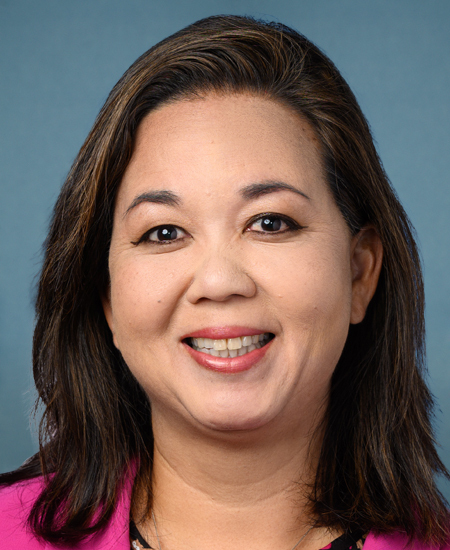
Rep. Jill N. Tokuda
Sponsored bills
Maddy summaryHR 1524, the ALYSSA Act, requires all public elementary and secondary schools receiving federal education funds to install silent panic alarms. The bill amends the Elementary and Secondary Education Act to mandate that each school must have at least one silent alarm system for security emergencies like active shooters or lockdowns. These alarms must generate a silent signal to law enforcement without alerting the threat, defined as a device manually activated for life-threatening situations. The requirement applies to all schools served by local educational agencies as a condition for receiving federal funds under the ESEA.
More Options to Develop and Enhance Remote Nutrition in WIC Act of 2025 or the MODERN WIC Act of 2025 This bill permanently allows individuals to remotely certify their eligibility for, and receive benefits through, the Special Supplemental Nutrition Program for Women, Infants, and Children (WIC). Specifically, the bill requires that a state agency allow an individual seeking a WIC certification, recertification, or a nutritional risk evaluation to do so by phone or through video teleconference, in addition to the in-person option. A state agency has 90 days to collect data for a nutritional risk evaluation for a remotely certified individual. Further, a state agency may consider an applicant who meets the income eligibility standards to be temporarily eligible on an interim basis to participate in the program and may certify the individual for immediate participation without waiting for a nutritional risk evaluation. The bill also allows states to provide benefits on WIC electronic benefit transfer cards through mail or remote issuance instead of requiring participants to pick up or reload benefits in person at a WIC office. Further, the Department of Agriculture must report to Congress about the use of remote technologies and other digital tools in the WIC program. Currently, individuals are generally required to be physically present to certify their WIC eligibility and receive benefits, with exceptions. The Food and Nutrition Service has temporarily waived these requirements and allowed remote certification and benefits using authorities that were provided by laws that were enacted to address COVID-19.
Maddy summaryHR 1449, the Energy Resilient Communities Act, creates a federal grant program to fund clean energy microgrids that support critical community infrastructure like hospitals, schools, and emergency facilities. Eligible entities - including states, local governments, nonprofits, and tribal agencies - can apply for grants covering up to 90% of costs for technical assistance, community outreach, or microgrid projects in environmental justice communities. Key provisions prioritize projects that reduce emissions, lower energy costs for low-income residents, minimize land use impacts, and ensure 40% of construction labor comes from local residents meeting specific criteria (e.g., displaced workers, environmental justice community members). The program authorizes $1.5 billion over 10 years, with at least 10% reserved for community-owned microgrid projects, and requires annual reporting on project outcomes and labor practices.
Maddy summaryHR 1410 expands access to mental health care for 9/11 responders and survivors by allowing licensed mental health providers (not just physicians) to conduct initial health evaluations and certifications under the World Trade Center Health Program. It adjusts the program’s funding formula to account for changing enrollment numbers by linking annual funding to the previous year’s enrollment ratio, and clarifies that deceased individuals are excluded from enrollment counts. The bill also extends the timeframe for adding new health conditions to the program’s list and requires a 2028 report assessing long-term funding needs through 2090. These changes aim to streamline eligibility, improve care access, and ensure sustainable funding for the program.
Maddy summaryHR 1439, the Korematsu-Takai Civil Liberties Protection Act of 2025, prohibits the U.S. government from detaining individuals solely based on protected characteristics. It amends federal law to ban imprisonment or detention due to race, ethnicity, national origin, religion, sex, gender identity, sexual orientation, disability, or any characteristic the Attorney General later adds. The bill directly affects anyone subject to federal detention, ensuring government actions cannot target people based on these specific traits. Key provisions include a clear definition of protected characteristics and a rule preventing the Attorney General from removing existing categories from the list. This creates a concrete legal barrier against discriminatory detention practices.
Maddy summaryThe Food Deserts Act (HR 484) creates a federal grant program to help establish grocery stores in underserved communities by providing capitalization grants to states. States would use these grants to build revolving funds that make low-interest loans to grocery stores meeting specific criteria, such as offering unprocessed foods, affordable pricing, and local hiring. The program prioritizes stores that source from local farms, provide nutrition education, and commit to keeping healthy foods in stock, while requiring applicants to contribute 20% of loan costs from non-federal funds. It authorizes $150 million for fiscal year 2026 to support these loans, which must be repaid over up to 30 years to replenish the revolving fund for future use.
Creating Access to Rural Employment and Education for Resilience and Success Act or the CAREERS Act This bill reauthorizes the Rural Innovation Stronger Economy (RISE) Grant Program and expands the program to include support for career pathway programs or industry or sector partnerships in industries in rural communities. As background, this Department of Agriculture (USDA) program offers grant assistance to create and augment high-wage jobs, accelerate the formation of new businesses, support industry clusters, and maximize the use of local productive assets in eligible low-income rural areas. Under the bill, RISE grant program funds may be used to support career pathway programs (i.e., a combination of rigorous and high-quality education, training, and other services) or industry or sector partnerships in industries in rural communities. These industries may include public utilities (i.e., telecommunications, broadband, water, wastewater, disposal, and electric supply services), conservation practices and management, health care, child care, manufacturing, and agribusiness. The bill removes the current requirement that the program provide grants (to the maximum extent practicable) for job accelerators in at least 25 states. Instead, USDA must ensure the regional diversity of grant recipients or participants in providing for job accelerators, career pathway programs, and industry or sector partnerships. The bill also includes additional reporting requirements for career pathway programs and industry or sector partnership grant recipients.
Maddy summaryThis resolution expresses the U.S. House of Representatives' support for designating February 2025 as "Hawaiian Language Month" or "Ōlelo Hawai‘i Month." It does not create new laws or funding but aligns with existing federal and state efforts to preserve the Hawaiian language, referencing the 1978 state constitutional recognition and the 2022 Native American Language Resource Center Act. The resolution urges the public and organizations to celebrate the month through activities promoting the language’s use and revitalization. As a non-binding resolution, it directly affects no specific group but symbolically supports ongoing cultural preservation efforts.
Maddy summaryHRES 133 is a symbolic House resolution supporting the designation of February 15-22, 2025, as "National FFA Week." It recognizes the National FFA Organization’s role in developing student leadership through agricultural education and celebrates two milestones: the 90th anniversary of the New Farmers of America (which served Black students until merging with FFA in 1965) and the 75th anniversary of FFA’s federal charter (granted by Congress in 1950). The resolution has no policy impact or funding provisions - it simply expresses congressional support for these observances. It directly affects no individuals or entities, as it is a non-binding gesture honoring an educational organization.