

Maddy summaryThis bill would expand Medicare to cover dental, vision, and hearing services for beneficiaries 65 and older (and some younger people with disabilities), effective January 1, 2026. It would provide 100% coverage for preventative dental services in 2026, with basic and major dental services gradually increasing to 80% coverage by 2029. Vision benefits would include 80% coverage for annual eye exams and specific limits on eyeglasses, frames, and contact lenses ($100 per year for lenses, $100 every two years for frames, $200 every two years for contacts). Hearing services would include 80% coverage for hearing exams and hearing aids, with a limit of one hearing aid per ear every 48 months. The bill also adds oral health professionals to the United States Preventive Services Task Force to help guide coverage decisions.
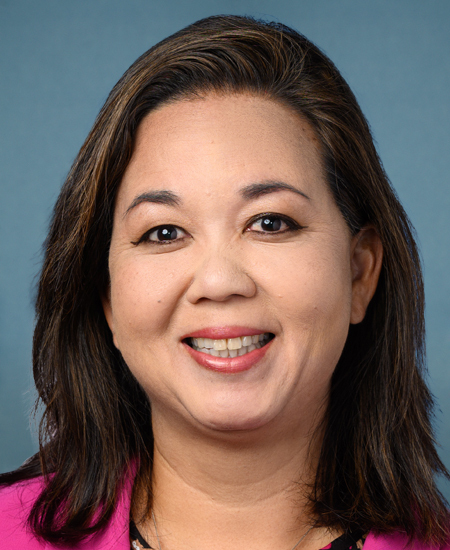
Rep. Jill N. Tokuda
Sponsored bills
Maddy summaryHR 2033, the Military Spouse Hiring Act, expands the Work Opportunity Tax Credit to include spouses of active-duty military personnel. It adds "qualified military spouse" as an eligible category for the tax credit, meaning employers who hire such spouses can claim the credit. A "qualified military spouse" is defined as someone certified by a local agency as married to an active-duty service member at the time of hire. The credit applies to hires occurring after the bill's enactment date. This directly affects military spouses seeking employment and employers hiring them, providing a tax incentive to encourage their hiring.
Maddy summaryHCONRES 18 is a symbolic resolution designating March 10, 2025, as "Abortion Provider Appreciation Day." It expresses congressional support for abortion providers and clinic staff who deliver care amid heightened challenges following the Dobbs decision. The resolution acknowledges the risks providers face, including harassment and violence, and celebrates their role in ensuring patient access to abortion care. It does not create new laws, funding, or policy changes - it solely serves as a formal expression of appreciation for providers' work.
Maddy summaryThis bill adjusts probationary periods for certain federal employees who were involuntarily separated between January 20, 2025, and January 20, 2029. It allows eligible employees (those separated while on probation in an Executive agency) to count their prior service time toward a new probationary period when rehired into a similar position with their former agency. Specifically, the new probation period equals the original required duration minus the time already served in their previous federal role. The law expires on January 20, 2029, and applies only to appointments matching the employee’s prior position.
American Teacher Act This bill establishes grants to increase the minimum salary of public elementary and secondary school teachers. It also authorizes a national campaign regarding the value of the teaching profession. First, the bill directs the Department of Education (ED) to award four-year grants to state educational agencies (SEAs) and, through them, subgrants to local educational agencies to establish a minimum annual salary of $60,000 (to be adjusted annually for inflation) for these teachers. Second, the bill directs ED to award grants to eligible SEAs to provide cost-of-living adjustments to the annual base salary of teachers. Finally, the bill authorizes ED to carry out a national campaign to (1) increase awareness about the importance of teachers and the value of the teaching profession, (2) encourage secondary school and college students to consider teaching as a professional career, and (3) diversify the pool of individuals who enter the teaching profession.
Maddy summaryHR 1973, the "No Pay for Congress During Default or Shutdown Act," would withhold pay from members of Congress during periods when the U.S. government reaches the public debt limit or experiences a shutdown. Specifically, for each 24-hour period the debt limit is reached or a shutdown occurs during the 119th Congress (2025-2027), members' pay would be reduced daily and placed into an escrow account. The withheld funds would be released to members on the last day of the 119th Congress, with no effect after the November 2026 general election. This bill directly affects current House and Senate members serving in the 119th Congress during these fiscal crises.
Maddy summaryThe Feed Our Families Act of 2025 ensures SNAP (Supplemental Nutrition Assistance Program) benefits continue for 90 days during the first government funding lapse in a fiscal year. It appropriates emergency funds from the Treasury to cover SNAP operations for the initial 90 days of a lapse in discretionary appropriations for the program. These funds are held in reserve and can only be used to maintain SNAP program services during that period. The bill directly affects millions of low-income households relying on SNAP benefits by preventing immediate disruptions during early government shutdowns.
Maddy summaryThis bill (HR 1988) provides unemployment benefits eligibility for certain federal workers and military members during government shutdowns. It deems eligible employees - such as military personnel, NOAA Commissioned Corps members, and excepted civilian workers performing emergency duties - as "totally separated from federal service" during funding gaps. This allows them to access unemployment benefits immediately, without waiting periods, for weeks of unemployment starting March 14, 2025. The bill directly affects federal employees who remain on duty but are unpaid due to shutdowns.
Maddy summaryThis bill amends the calculation method for the Basic Allowance for Housing (BAH) for uniformed service members living off-base in the United States. It requires the Secretary of Defense to set BAH amounts based directly on the actual monthly cost of adequate housing in each area, matching the member's pay grade and dependency status. This change ensures BAH rates more accurately reflect local housing expenses rather than using a previous formula. The bill directly affects all service members receiving BAH for off-base housing across the U.S., particularly those in high-cost areas where current rates may not cover actual rent.
Maddy summaryHR 1950, the Protect Social Security and Medicare Act, requires a two-thirds vote in both the House and Senate to consider any bill or amendment that would reduce Social Security or Medicare benefits administered by the Social Security Administration (SSA) or Centers for Medicare & Medicaid Services (CMS). This rule applies directly to lawmakers who would need supermajority support to advance proposals affecting these programs. An exception allows changes to Medicare Advantage plan payments if offset by increased payments elsewhere in Medicare. Determinations about whether a provision reduces benefits are made solely by the SSA's Office of the Chief Actuary during legislative consideration.