

Precision Agriculture Loan Program Act of 202 3 This bill establishes a loan program within the Farm Service Agency to assist agricultural producers in purchasing precision agriculture equipment and technology, such as geospatial mapping, data management and analytics software, and network connectivity products and solutions. Precision agriculture refers to managing, tracking, or reducing crop or livestock production inputs, including seed, feed, fertilizer, chemicals, water, and time, at a heightened level of spatial and temporal granularity to improve efficiencies, reduce waste, and maintain environmental quality.
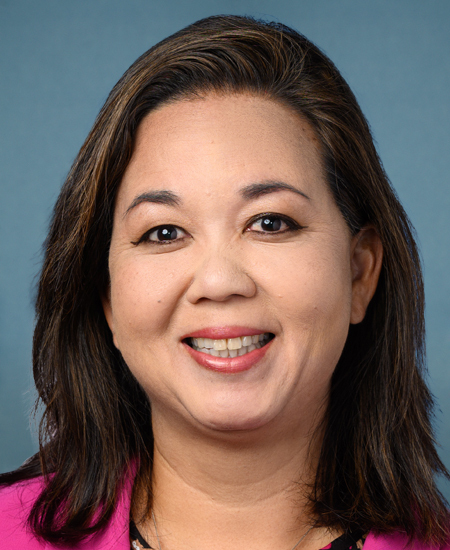
Rep. Jill N. Tokuda
Sponsored bills
Plantain and Banana Plant Health Initiative Act This bill establishes a research and extension grant program for a plantain and banana plant health initiative. Specifically, the bill authorizes the Department of Agriculture to provide competitive grants for studying potential resistance and tolerance to nonnative diseases and insect pests; increasing research for treatment of pests that affect plantains and bananas; conducting field studies to evaluate plantain and banana cultivars with enhanced resistance to diseases and pests, and adaptability to tropical soils; educating growers on best practices to promote safe production of plantains and bananas; and establishing area-wide integrated pest management programs in areas affected by, or at risk of being affected by, specified pests.
Cacao Tree Health Initiative Act of 202 3 This bill establishes a research and extension grant program for a cacao tree health initiative. Specifically, the bill authorizes the Department of Agriculture to provide competitive grants for developing and disseminating science-based tools and treatments to combat plant pests that affect cacao trees; establishing an integrated pest management programs for cacao trees in areas affected by or at risk of being affected by such pests; surveying and collecting data on cacao tree production, health, and markets; investigating cacao tree biology, ecology, genomics, and production systems; conducting research on factors that may contribute to, or be associated with, resilient cacao production systems; and conducting research on factors that may contribute to, or be associated with, serious threats to cacao trees, including the sublethal effects of insecticides, herbicides, and fungicides on beneficial insects and cacao tree growth.
Maddy summaryHR 1465, "Violet’s Law," requires federal research facilities to establish standards for placing eligible animals (dogs, cats, primates, guinea pigs, hamsters, rabbits) no longer needed for research with animal rescue organizations, sanctuaries, shelters, or individuals. Federal departments and agencies operating such facilities must create these placement standards within one year of the law's enactment. The law mandates that animals must be vet-certified as healthy (free of infectious disease or physical issues) before placement and prohibits facilities from using animals for commercial trade, breeding, or public exhibitions. This policy directly affects federal research facilities and aims to provide permanent homes for research animals through defined, safe pathways.
Floriculture and Nursery Plant Health Initiative Act of 202 3 This bill establishes a research and extension grant program for a floriculture and nursery plant health initiative. Specifically, the bill authorizes the Department of Agriculture to provide competitive grants for developing and disseminating science-based tools and treatments to combat plant pests and pathogens that impact floriculture and nursery crops; establishing area-wide integrated pest management programs in areas affected by, or areas at risk of being affected by, invasive plant pests or pathogens; surveying and collecting data on the production of, health of, and markets for floriculture and nursery crops; investigating the biology, genomics, and production systems of floriculture and nursery crops; and conducting research on various factors that may contribute to (or be associated with) resilient floriculture and nursery crop systems, and combatting other serious threats to floriculture and nursery crops.
Minorities in Aviation Education Act of 2023 This bill establishes grants for increasing the exposure and access of students to the aviation industry, with a particular focus on women and minorities. Specifically, the Department of Transportation (DOT) must establish the Bessie Coleman Aviation Education Program to award the grants to state and local governments or educational agencies for activities that increase exposure and access to aviation-related education and jobs, such as programs to increase the recruitment and retention of underrepresented minorities in aviation degree programs. DOT must prioritize grant applicants that propose to use the funds to encourage the participation of women, minorities, and individuals in rural and urban areas in the aviation industry.
Supporting Our First Responders Act This bill establishes a competitive grant program to support medical transport and emergency medical services (EMS). The Department of Health and Human Services (HHS) must award the grants to EMS organizations (including for-profit organizations) or state, tribal, territorial, or local governments. Grant-funded activities include (1) providing salaries and stipends for EMS workers; (2) purchasing vehicles, personal protective equipment, and other resources; and (3) establishing community paramedicine or mobile integrated health care initiatives. HHS must also report to Congress about health insurance reimbursement for medical transport and EMS and the feasibility of establishing a federal EMS office.
Maddy summaryHR 1711, the Rural America Health Corps Act, creates a new loan repayment program for health professionals working in rural areas. It provides up to $200,000 in repayment for eligible loans (covering principal and interest) in exchange for five years of full-time service in a rural health professional shortage area (HPSA). Participants must meet existing Loan Repayment Program requirements but serve in rural HPSAs instead of the standard locations, with the program not affecting HPSA designations through 2028. The program requires $50 million annually from 2024-2028 and mandates a final report evaluating its impact on rural healthcare access.
Maddy summaryHCONRES 32 is a symbolic resolution supporting International Transgender Day of Visibility, introduced in the U.S. House of Representatives on March 30, 2023. It encourages Americans to observe the day through ceremonies and activities, celebrates transgender achievements, and recognizes the community's fight for dignity amid ongoing discrimination and anti-trans legislation. The resolution does not create new laws or policies - it is a non-binding statement of support, referencing over 700 anti-trans bills introduced in 2021-2023 that target education, healthcare, and identity documents. It directly acknowledges transgender individuals and their contributions without altering any legal rights or obligations.
Maddy summaryHR 2403, the Enhanced Background Checks Act of 2023, modifies federal firearm background check procedures to address delays. It requires firearm licensees to wait at least 10 business days after a prospective buyer submits a petition verifying they are not prohibited from owning firearms before completing a sale, if the background check system hasn't cleared the transaction. The bill also mandates the Attorney General to create an electronic petition form, provide timely responses to petitions, and track delays. Additionally, it requires multiple reports analyzing implementation, transaction delays, denial reasons by state, and potential impacts on domestic violence victim safety, with the first report due within 150 days of enactment.