

Maddy summaryThis bill requires the Department of Defense to establish wellness check procedures for military members who have sustained significant injuries or illnesses or are on sick call. If a member does not respond to electronic or phone contact attempts during a wellness check, the person conducting the check must follow up with an in-person visit. If the member cannot be located after these efforts, the bill outlines how to report the situation using existing Department of Defense procedures for missing or unaccounted personnel. Unit commanders must coordinate with legal advisors to implement these checks and regularly review safety requirements while holding confidential meetings with medical officers to discuss significant health issues within their units. The bill also mandates training for all military members and civilian employees on the importance of accountability and the procedures for conducting wellness checks.
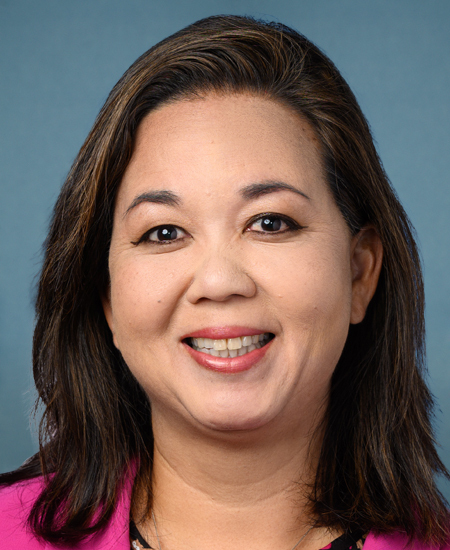
Rep. Jill N. Tokuda
Sponsored bills
Maddy summaryThis symbolic resolution expresses congressional support for designating February 2026 as "Hawaiian Language Month" or "'Ōlelo Hawai'i Month." It urges the public to celebrate the language and commits to preserving Hawaiian language use in alignment with the Native American Languages Act. The resolution does not create new laws or funding but serves as a formal statement of support for ongoing revitalization efforts. It follows decades of grassroots work to restore the Hawaiian language, which saw over 20,000 speakers and expanded immersion education by 2026.
Maddy summaryHR 7736, the RELIEF Act, requires U.S. Customs and Border Protection to refund tariffs collected under the International Emergency Economic Powers Act (IEEPA) on imports entered on or after January 1, 2025. It directly affects importers of record by mandating automatic refunds within 90 days of the bill's enactment, without requiring them to submit applications or protests. The bill directs Customs to use existing data to calculate and disburse refunds for all affected tariff collections, including entries involving goods withdrawn from warehouse for consumption. This policy change eliminates the need for importers to seek refunds through separate processes, streamlining the recovery of overpaid duties.
Maddy summaryHR 7727, the Sustaining Rural Healthcare Act, creates a new "Critical Access in Character" designation to help rural hospitals facing closure risk maintain Medicare reimbursement rates. It allows the Secretary of Health and Human Services to designate qualifying hospitals (located in rural areas, serving underserved communities, with high Medicare use, and at risk of reduced services) as eligible for payment rates equivalent to Critical Access Hospitals (CAHs). Hospitals receive this designation for up to three years to stabilize financially and operationally, with renewal possible only for good cause. The bill directly affects rural hospitals at risk of closing, ensuring continued access to essential health services for patients in those communities. This policy change modifies Medicare reimbursement rules without altering existing CAH status.
Maddy summaryThis bill, known as the Tariff Free Farming Act, prevents the U.S. government from adding new tariffs on specific farm supplies coming from countries with which the U.S. maintains normal trade relations. It directly affects American farmers and agricultural businesses by capping tariff rates on essential items like seeds, fertilizers, crop protection chemicals, livestock feed, fuel, farm machinery, and building materials at the levels in effect as of January 19, 2025. The legislation applies to all countries that have received normal trade relations status from the United States, ensuring these agricultural inputs are not subject to additional duties beyond the established rates.
Maddy summaryThe Ceasefire Compliance Act of 2026 establishes requirements for Israel to comply with the October 10, 2025, ceasefire agreement, including allowing sufficient humanitarian aid into Gaza, halting military operations in Gaza, preventing settler violence, and supporting Palestinian governance. The bill requires the US government to submit quarterly reports certifying Israel's compliance with these conditions, with potential restrictions on US defense sales to Israel if violations occur. If Israel fails to meet the requirements, the US would prohibit the sale, export, or transfer of US-origin defense articles for use in the West Bank or Gaza. The bill also creates an end-use monitoring group to track if US defense articles are being used in those areas, with a 5-year sunset provision. This legislation directly affects US-Israel defense relations and the flow of military assistance.
Maddy summaryHR 3340, the Modernizing Access to Our Public Oceans Act, requires the U.S. Commerce Department to create a public online map system showing fishing restrictions and recreational access rules in federal ocean waters. The system will display areas open or closed to fishing, vessel restrictions (like motorized propulsion limits), and rules for marine protected areas, updated at least twice yearly. It prohibits sharing sensitive information, such as tribal cultural sites or private commercial fishing data, and explicitly excludes Tribal fishing areas from its requirements. This bill directly affects recreational boaters, divers, and the public by making ocean access information clearer and more accessible through a single online resource. The data will be developed with input from states, tribes, and the public to ensure usability and compliance with existing laws.
Maddy summaryThe Head Start for America's Children Act amends the Head Start Act to enhance early childhood education services for low-income children, with specific provisions to improve culturally responsive programming for Native American and Native Hawaiian communities. It increases funding for Head Start programs, including $91.575 million for transportation, $37.5 million for workforce development, and $863 million for extended operations to provide full calendar year services. The bill updates definitions throughout the law to use more inclusive language, replacing "limited English proficient" with "children who are developing English proficiency," and establishes new requirements for staff compensation and benefits to improve recruitment and retention. Native American Head Start programs and migrant/seasonal programs are exempt from certain requirements, such as the full calendar year service requirement.
Maddy summaryHR 7610 creates a new $2,000 annual tax credit for adult children who provide care to elderly relatives living in the same household. To qualify, the caregiver must be 18+ (or 16+ emancipated), live with the relative for at least 6 months, and provide 10+ hours weekly of assistance with daily living tasks (like meal prep, managing money, or mobility). The elderly relative must be 55+, unable to perform key activities independently (such as bathing or shopping), and require care for at least 180 days. The credit phases out for single filers earning over $75,000 (or $150,000 for joint filers) and applies only to tax years beginning after December 31, 2026.
Maddy summaryHR 7599 creates a federal framework for extreme risk protection orders (ERPOs), allowing family members or law enforcement to petition courts to temporarily prohibit individuals from possessing firearms when they pose a risk of harm to themselves or others. The bill establishes a process for issuing ex parte orders (up to 14 days) followed by a hearing within 72 hours to determine if a longer-term order (up to 180 days) should be issued, requiring respondents to surrender firearms to U.S. Marshals or designated law enforcement. Courts must consider specific factors like recent threats, violence, substance abuse, or cruelty to animals before issuing orders, with no fees for petitioners. The law requires law enforcement training to address bias, includes annual reporting requirements, and ensures firearms are returned once the order expires and the individual is eligible to own firearms under federal law.