

Maddy summaryThis bill requires federal agencies collecting demographic survey data to begin including questions on sexual orientation, gender identity, and variations in sex characteristics (intersex traits) within 360 days of enactment. Agencies must review existing surveys to identify gaps, develop privacy-protective methods for collecting this data (including anonymization and data destruction protocols), and incorporate it into relevant reports within three years. The law applies to all federal surveys that collect standard demographic data (like race, ethnicity, and age), such as the census or health surveys, but does not compel individuals to disclose their status. It emphasizes maintaining confidentiality, allows limited agency waivers if standards can't be met, and mandates a congressional report on implementation within two years.
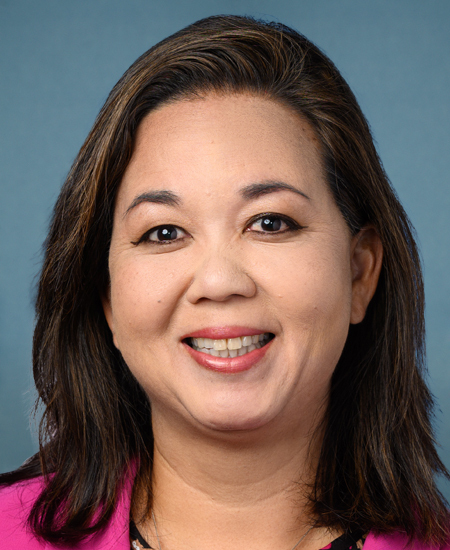
Rep. Jill N. Tokuda
Sponsored bills
Maddy summaryHR 3953, the Debt Ceiling Reform Act, changes how Congress can block the Treasury from borrowing more money. It requires the Treasury to notify Congress when debt approaches a $1 trillion increment, giving Congress 30 days to pass a resolution disapproving further borrowing. The bill mandates strict timelines: the House must act within 6 days of introduction (with committees required to report bills within 5 days), and the Senate must consider the resolution within 6 days with limited debate. This process directly affects the Treasury’s ability to issue debt and Congress’s procedural control over debt ceiling decisions. The bill does not eliminate the debt ceiling but streamlines the disapproval process.
Maddy summaryHR 3973, the Judicial Ethics and Anti-Corruption Act of 2023, establishes new ethics rules for federal judges and justices. The bill prohibits judges from owning stocks, commercial real estate, business interests, and certain trusts, while creating a Federal Employee Investment Account for permitted investments. It requires judges to disclose potential conflicts of interest, restricts privately funded judicial education events, and creates a Supreme Court Complaints Review Committee to handle complaints against justices. The bill aims to increase transparency and reduce conflicts of interest for federal judges and justices.
Pets Belong With Families Act This bill prohibits public housing agencies from imposing breed restrictions on pets owned by residents of public housing units. The bill continues to allow public housing agencies to prohibit ownership of dangerous animals in public housing, but prohibits classification as dangerous by breed and requires that any such classification be based on specific behaviors or actions of the animal.
Maddy summaryHR 3850, the Pride In Mental Health Act of 2023, establishes a federal grant program to improve mental health and substance abuse services for LGBTQ+ youth (including nonbinary, intersex, and Two Spirit individuals). The bill directs the Health and Human Services Secretary to fund eligible organizations to provide trauma-informed care, cultural competency training for caregivers, school bullying prevention guidelines, and family support resources. It explicitly prohibits grant funds from being used for conversion therapy or advertising related to such therapy. The bill also requires data collection on LGBTQ+ youth mental health and a federal survey to measure psychological distress.
Maddy summaryHR 3879, the Supporting Families through Addiction Act of 2023, provides federal grants to nonprofit organizations that support families with members struggling with substance use disorder. The bill authorizes $5 million annually (2024-2028) to fund community-based family support services, including education, stigma reduction, and connecting families to treatment resources. Grants cover up to 85% of costs and require organizations to be led by experts, including families with lived experience. This directly affects families navigating addiction in their households by expanding access to evidence-based support programs and improving provider knowledge about family impacts.
Maddy summaryHR 3817, the Mental Health Workforce and Language Access Act of 2023, creates a federal grant program to help community health centers hire bilingual mental health staff who can communicate directly with patients who have limited English proficiency. The bill allocates up to $10 million annually (2024-2029) to fund these grants, prioritizing health centers where at least 10% of patients primarily speak a language other than English. Health centers receiving grants must use funds to recruit qualified staff - such as licensed counselors or supervised trainees - who speak both English and another language fluently, and to report on program effectiveness to Congress. This directly affects patients with limited English proficiency seeking behavioral health services at participating community health centers.
Wild Horse and Burro Protection Act of 2023 This bill prohibits the Bureau of Land Management (BLM) from using or contracting for the use of helicopters or fixed-wing aircraft for gathering horses and burros under the Wild Free-roaming Horses and Burros Act. Further, BLM may not make contracts to use helicopters for transporting captured animals under such act.
Maddy summaryHRES 483 is a symbolic resolution recognizing June 2023 as "Immigrant Heritage Month" to celebrate immigrants and their children for their contributions to U.S. health, safety, diversity, and prosperity. It highlights immigrants' roles in critical sectors like healthcare (including 27% of physicians) and the economy (e.g., 44% of Fortune 500 companies founded by immigrants or their descendants). The resolution urges the House to celebrate immigrant contributions, welcome immigrants, and work toward "smart and just immigration policy." As a non-binding resolution, it does not change laws but formally acknowledges immigrants' historical and ongoing impact on U.S. society.
Uyghur Human Rights Protection Act This bill designates certain residents of the Xinjiang region in China as prioritized refugees of special humanitarian concern and addresses other related issues. This priority designation shall apply to individuals (and the spouses, children, and parents of such individuals) who (1) reside in or fled Xinjiang and who suffered persecution on account of their peaceful political, religious, or cultural activities or associations, or have a well-founded fear of such persecution; or (2) have been formally charged, detained, or convicted for certain peaceful actions related to Xinjiang. Such an individual may not be denied admission into the United States based primarily on an arrest or other adverse government action due to that individual's participation in protests. The bill also waives certain immigration-related requirements for such individuals. Furthermore, a Chinese national seeking refugee status shall be considered to have been persecuted on account of political opinion if the Chinese government revoked that individual's residency in any region of China because the individual submitted a nonfrivolous application for a U.S. immigration benefit. Similarly, if the Chinese government revoked a Chinese national's citizenship, nationality, or residency because that individual filed for a U.S. immigration benefit, that revocation shall constitute a changed circumstance. (Among other things, a changed circumstance may allow an individual who has been rejected for asylum to apply again.)