Maddy summaryThe provided context for HR 4060 (Food Access and Stability Act of 2023) only describes a technical amendment to an existing law (the Fiscal Responsibility Act of 2023), specifically modifying section 311(b)(2) by replacing subsection (a) with subsection (a)(1). It does not explain the policy substance, who is affected, or the practical impact of this change. Without additional details on the amendment's purpose or resulting policy shifts, a substantive summary cannot be generated. This appears to be a procedural adjustment rather than a new policy measure.
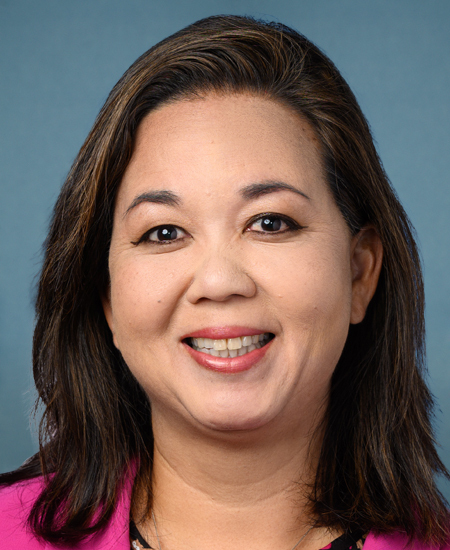
Rep. Jill N. Tokuda
Sponsored bills
Increasing Land Access, Security, and Opportunities Act This bill provides statutory authority for and expands the Farm Service Agency's (FSA's) Increasing Land, Capital, and Market Access Program (the Increasing Land Access Program) for farmers, ranchers, and forest owners. Specifically, the FSA must make competitive grants to, enter into cooperative agreements with, or provide other capital support to eligible entities (e.g., state or local governments, Indian tribes, nonprofit organizations, and institutions of higher education) to provide direct assistance to farmers, ranchers, and forest owners who are (1) historically underserved, or (2) operating in high-poverty areas. The bill specifically excludes from assistance any foreign-based or foreign-owned corporation. The direct assistance may include payments to intended beneficiaries to acquire real property (including air rights and water rights), secure clear title on an heirs' property farmland, and improve or remediate land, water, and soil. Eligible entities may also use grants (1) to provide direct assistance to intended beneficiaries in assessing, purchasing, acquiring, or retaining eligible land; (2) for activities designed to support farm establishment and long-term viability; and (3) to provide technical assistance. The FSA must establish a stakeholder committee and, in collaboration with the committee, develop a process for evaluating proposals and distributing funds to eligible entities. In developing this process, the FSA must consider perspectives from diverse stakeholders, diverse geographic distribution, and diverse farming models, practices, and purposes.

Maddy summaryThe SHELLS Act creates a new Office of Aquaculture within the U.S. Department of Agriculture to support sustainable shellfish farming (like oysters and clams), algae cultivation, and land-based aquaculture systems. It establishes an advisory committee with 14 members representing aquaculture farmers, Tribal communities, coastal towns, academic institutions, and food industry stakeholders to advise on best practices and barriers. The bill authorizes $25 million annually (2024-2028) for the office to provide technical assistance, coordinate with agencies like NOAA, and gather production data. This directly affects shellfish and algae producers, coastal communities, and Tribal nations by promoting practices that support food security while limiting environmental harm.
Maddy summaryThe Forest Data Modernization Act of 2023 updates the U.S. Forest Service's national forest inventory program to improve data collection on forest resources, with specific focus on forest carbon. It mandates new surveys of timber products and woodland owners, standardizes definitions for forest data reporting, and requires the Forest Service to develop a strategic plan every five years integrating remote sensing technology and carbon data (including soil carbon). The bill ensures collected data is publicly accessible while protecting the confidentiality of individual landowners' non-aggregated information. These changes aim to enhance the accuracy of forest resource tracking for management and policy decisions across public and private lands.
Maddy summaryHR 3904, the "Crop Insurance for Future Farmers Act," increases federal crop insurance subsidies for beginning farmers and ranchers. It revises the definition of a "beginning farmer" from 5 to 10 crop years of experience, allowing more new operators to qualify. The bill also establishes a tiered subsidy system: new farmers receive 15 percentage points higher subsidies for their first two years, 13 points for the third year, 11 points for the fourth year, and 10 points for years five through ten. This directly affects new agricultural producers by making crop insurance more affordable during their early years of operation.
Maddy summaryThis bill prohibits federal involvement in commercial greyhound racing, live lure training, and open field coursing by banning interstate activities related to these practices. It makes it unlawful to conduct betting on greyhound races (including remote gambling), use live animals as bait, or transport animals for these purposes. The law specifically targets the declining greyhound racing industry (now operating at only two tracks in West Virginia), banning federal facilitation of betting, live bait use, and interstate transport of animals for racing or training. It does not affect horse racing or state laws already prohibiting these activities in most states.
Mango Plant Health Initiative Act This bill establishes a research and extension grant program for a mango plant health initiative. Specifically, the bill authorizes the Department of Agriculture (USDA) to provide competitive grants for studying potential resistance and tolerance of mangos to native and nonnative disease and insect pests; conducting research for treatment of pests that affect mangos; conducting field studies to evaluate cultivars of mangos with enhanced resistance to diseases and pests; educating growers on best practices to promote the safe production of mangos; and establishing area-wide integrated pest management programs in areas affected by, or at risk of being affected by, specified pathogens or pests. The bill also extends the authority for several existing USDA high-priority research and extension initiatives through FY2028.
Maddy summaryThis bill establishes a federal pilot program to help homeless individuals access SNAP (Supplemental Nutrition Assistance Program) benefits. It authorizes $12.5 million annually (2024-2029) to fund grants for community organizations, homeless service providers, and public housing agencies to provide direct outreach, application assistance, transportation to SNAP offices, and staff training. The program specifically targets barriers like lack of documentation and awareness, focusing on helping homeless households enroll in SNAP by connecting them with existing resources. Grantees must report annually on outcomes, including the number of homeless individuals served and enrollment impacts. The pilot runs for up to 5 years, with funds supplementing (not replacing) existing state/local programs.
Maddy summaryThis bill requires the Attorney General to publish an annual public report detailing the Bureau of Alcohol, Tobacco, Firearms, and Explosives' (ATF) inspections of gun dealers, including the number of inspections, serious violations found (such as illegal transfers or record falsification), and actions taken like license revocations. The report must include specific data points - such as the number of licenses revoked or not renewed, reasons for not revoking licenses, and geographic breakdowns - and be posted online. It also mandates a Government Accountability Office (GAO) study examining ATF's enforcement of firearm license rules, focusing on systemic issues, geographic enforcement differences, and outcomes of license revocation processes. The bill increases transparency around gun dealer oversight without changing legal requirements for dealers.
Maddy summaryThe SOS Act of 2023 increases annual funding for school resource officers from $1,047,119,000 (for 2006-2009) to $1,097,119,000 for fiscal years 2024-2033. It also requires that at least $50 million of this funding be allocated through grants to local governments or law enforcement agencies specifically for school safety programs. This bill directly affects schools and local law enforcement by changing federal funding levels and mandating a dedicated portion for school-based safety initiatives. The key change is the increased funding amount and the new requirement for $50 million in targeted grants for school safety applications.