

Maddy summaryThe FABRIC Act amends the Fair Labor Standards Act to establish new protections for workers in the garment industry. It prohibits piece-rate pay, requiring employers to pay hourly wages that meet or exceed minimum wage standards, while allowing incentive bonuses. The bill creates joint liability for "brand guarantors" (brands that contract with garment manufacturers) for labor violations, and requires garment manufacturers and contractors to register with the Department of Labor, providing detailed business and employee information. The law also establishes an Undersecretary of the Garment Industry and a support program to fund workforce development and equipment for U.S. garment manufacturers. These provisions directly affect garment workers, manufacturers, contractors, and major fashion brands that contract with them.
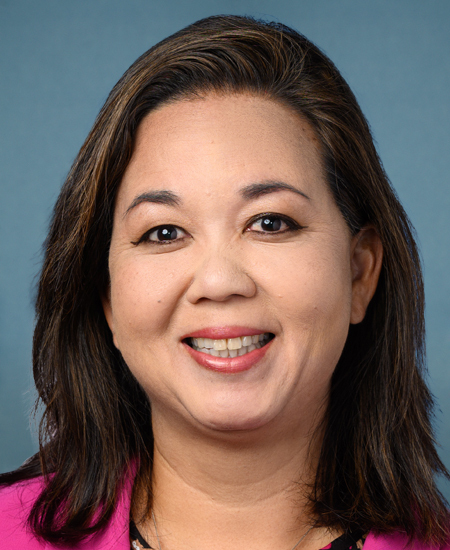
Rep. Jill N. Tokuda
Sponsored bills
Maddy summaryHR 5433, the Child Care Stabilization Act, provides $16 billion annually from 2024 to 2028 to stabilize the child care sector through grants administered by the Health and Human Services Secretary. It directly affects licensed child care providers by offering stable funding to cover operating costs, while supporting higher wages for early educators without raising family fees. Key provisions include expanding access to high-quality, affordable care - especially for infants/toddlers, rural communities, and children with disabilities - and addressing shortages in underserved areas. The funding builds on existing American Rescue Plan resources, aiming to strengthen the child care workforce and increase available options for working families.
Maddy summaryHR 5428, the No Tax Breaks for Union Busting (NTBUB) Act, prevents employers from deducting certain expenses related to influencing workers' decisions about union representation. It targets spending on tactics like anti-union meetings, workplace surveillance, or consultants during organizing campaigns, making these costs non-deductible for tax purposes. Employers must report such expenses on their tax returns, including details about the activities and amounts spent. The bill aims to remove tax incentives for employer interference in union elections, aligning with federal labor law protections for workers' collective bargaining rights.
Maddy summaryHR 3152, the "Fight CRIME Act," aims to maintain international restrictions on Iran's missile-related activities by requiring diplomatic efforts to extend these restrictions before they expire in October 2023. The bill mandates annual reports detailing U.S. diplomatic strategies, potential impacts of expiration, and measures to deter missile technology transfers to Iran. It establishes sanctions against foreign individuals or entities that knowingly support Iran's missile or drone programs, including asset freezes and visa restrictions. These sanctions apply regardless of whether UN restrictions remain in effect after their expiration, directly affecting foreign entities involved in these activities.
Maddy summaryHRES 679 is a symbolic House resolution supporting the designation of September 10-16, 2023, as "Celebrate Community Week." It recognizes four international service organizations - Kiwanis International, Lions Clubs International, Optimist International, and Rotary International - for their community service efforts. The resolution encourages these groups to continue promoting community service, especially for youth, and applauds their annual projects addressing needs like youth development, health, education, and humanitarian challenges. It has no funding or policy changes; it simply expresses congressional support for their volunteer work.
EITC Modernization Act This bill extends the earned income tax credit to taxpayers with certain dependents, including children and aged dependents, and to qualifying students. It also establishes a matching grant program for tax return preparation assistance for low-income taxpayers.
Equality in the Halls of Congress Act This bill authorizes the President to invite each U.S. territory to provide and furnish no more than two statues for placement in National Statuary Hall.
Women's Business Centers Improvement Act of 2023 This bill reauthorizes the Women's Business Center Program through FY2027, raises the cap on individual center grants, establishes an accreditation program for grant recipients, and revises the duties of the Office of Women's Business Ownership. Specifically, the bill modifies the Women's Business Center Program to enable the Small Business Administration (SBA) to provide initial and continuation grants to eligible entities to operate women's business centers for the benefit of women-owned small businesses. The SBA must also publish standards for a program to accredit entities that receive grants from the Women's Business Center Program, and such entities' receipt of continuation grants shall be contingent upon their obtaining accreditation.
Maddy summaryHR 5351, the Nationwide Right to Unionize Act, repeals a federal law (Section 14(b) of the National Labor Relations Act) that currently allows states to enact "right-to-work" laws. This would prevent states from banning agreements requiring workers to pay union dues as a condition of employment, directly affecting workers in states with such laws. The bill's key mechanism is overriding state right-to-work statutes with federal law, ensuring union security agreements remain enforceable nationwide.
Maddy summaryThis bill helps disaster survivors without formal property deeds prove ownership for FEMA aid by expanding acceptable evidence to include mortgage statements, property tax receipts, wills, death certificates, or other documentation showing occupancy or ownership ties. It allows FEMA to consider "constructive ownership" when proof is lacking, prohibits requiring notarized statements, and updates eligibility language from "uninhabitable" to "damaged" by disasters. The law applies to disaster assistance funds appropriated after enactment, directly affecting households seeking housing aid after major disasters. It streamlines access to aid for those with incomplete documentation, such as survivors inheriting property without formal transfers.