

Maddy summaryThis bill makes the Department of Education's 2023 SAVE Plan repayment regulations permanent by incorporating them directly into federal law. It directly affects federal student loan borrowers who use the SAVE Plan, which sets income-driven repayment terms. The key mechanism is transferring the specific rules from the 2023 regulations (published in the Federal Register) into Title 34 of the U.S. Code, ensuring those terms remain in effect without needing future regulatory updates. This change provides stability for borrowers and eliminates the need for the Department to reissue the same rules as new regulations.
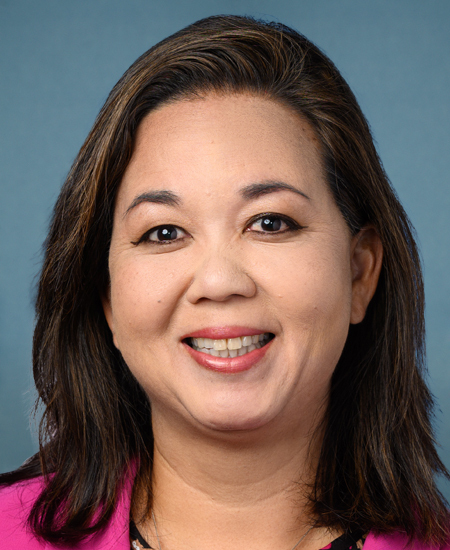
Rep. Jill N. Tokuda
Sponsored bills
Generating Relief for Academic Debt Using Assisted Tax Efficiency Act or the GRADUATE Act This bill expands the tax deduction for student loan interest to include payments toward principal. It also increases the maximum allowable amount of the deduction.
Maddy summaryHR 6592, the Fight Book Bans Act, provides federal grants to reimburse public school districts for legal costs when they choose to keep instructional or library materials after parental objections. It directly affects school districts (covered local educational agencies) that select materials for students and handle challenges to their removal. The bill authorizes up to $100,000 per case in grants to cover attorney fees and court costs, provided the district didn’t remove the materials and wasn’t reimbursed by the state. Funding of $15 million is authorized for fiscal years 2024-2028. The grants are strictly for legal challenges to decisions not to remove materials, not for the content of the materials themselves.
Maddy summaryHR 5785 modifies the Edith Nourse Rogers STEM Scholarship for veterans and military dependents pursuing STEM degrees. It updates eligibility by adding "or graduate" to degree requirements, reduces maximum benefit periods from 60 to 45 months for undergraduate and 90 to 67.5 months for graduate study, and adds new priority criteria for beneficiaries who've used the most entitlement months or are studying STEM fields. The bill also requires veterans to exhaust all other educational benefits before using this scholarship. These changes directly affect individuals seeking STEM education benefits under the program.
Maddy summaryHRES 907 is a non-binding House resolution condemning rising antisemitism in the U.S., citing increased hate crimes (25% rise in 2022 per FBI data) and campus incidents (41% increase from 2021-2022 per ADL). It calls on all Americans, including campus leaders and government agencies, to combat antisemitism and urges implementation of the U.S. National Strategy to Counter Antisemitism. The resolution specifically requests increased funding for the Nonprofit Security Grant Program to strengthen safety protections for Jewish communities. It directly affects Jewish Americans, campus communities, and government agencies responsible for hate crime prevention and community safety.
Maddy summaryHR 6576, the Full-Service Community School Expansion Act of 2023, authorizes $500 million to $1 billion annually for fiscal years 2024-2028 to expand full-service community schools. The bill directly affects public elementary and secondary schools with at least 40% of students eligible for free or reduced-price lunch or identified for improvement under federal education law. Key mechanisms include funding planning grants to develop community-wide leadership teams, implementation grants for schools to provide integrated student supports (health, mental health, housing services), expanded learning opportunities (after-school programs, career training), and family engagement activities. The bill requires schools to establish collaborative leadership structures, maintain public transparency, and ensure services complement rather than replace existing programs. This legislation aims to create school environments that address students' academic, social, emotional, and health needs through coordinated community partnerships.
Maddy summaryHRES 874 is a symbolic resolution expressing the House's support for designating November as "Prematurity Awareness Month." It does not create new laws or alter funding but urges the public, organizations, and communities to observe the month through events, promote awareness, and support preterm birth prevention programs. The resolution highlights statistics on preterm births (383,000 babies born preterm in 2021) and health disparities, but its sole action is endorsing the awareness designation. As a non-binding resolution, it has no direct impact on policy or affected individuals beyond raising public visibility.
Maddy summaryHRES 870 is a symbolic House resolution supporting National Rural Health Day, observed annually on the third Thursday of November. It recognizes rural health care providers and the 60+ million people living in rural communities who face challenges like hospital closures, limited access to care, and health disparities. The resolution expresses commitment to improving rural health care accessibility and affordability but includes no new funding, programs, or policy changes - only a formal acknowledgment of existing efforts. It directly affects rural communities by honoring their health care contributions through a non-binding statement.
Billionaire Minimum Income Tax Act This bill imposes a minimum tax on individual taxpayers whose net worth for the taxable year exceeds $100 million. The tax is equal to 25% of the sum of a taxpayer's taxable income, plus net unrealized gains for the taxable year. The tax may not exceed 40% of the amount by which the taxpayer's net worth exceeds $100 million.
Maddy summaryHRES 893 designates November 2023 as "National Homeless Children and Youth Awareness Month" to highlight the issue of homelessness among children and youth in the U.S. The resolution does not create new programs or funding but encourages businesses, governments, schools, and organizations to raise awareness about the causes and solutions to child and youth homelessness. It cites statistics showing high rates of homelessness among students (e.g., 68% high school graduation rate for homeless youth vs. 85.5% overall) and links homelessness to health, education, and mental health challenges. The bill formally supports existing efforts to address homelessness through awareness and prevention, urging continued collaboration to support affected youth. This is a symbolic resolution with no direct policy changes or affected individuals beyond raising public attention.