

Maddy summaryThe Farmers First Act of 2023 amends the Farm and Ranch Stress Assistance Network program to expand mental health support for farmers and ranchers. It increases annual funding from $10 million to $15 million for fiscal years 2024-2028, adds crisis lines to the program’s services, and expands referral options to connect individuals with certified community clinics, health centers, rural clinics, Federally Qualified Health Centers, and critical access hospitals. These changes directly affect agricultural workers facing mental health or substance use challenges by improving access to specialized care. The bill focuses on strengthening existing support infrastructure rather than creating new programs.
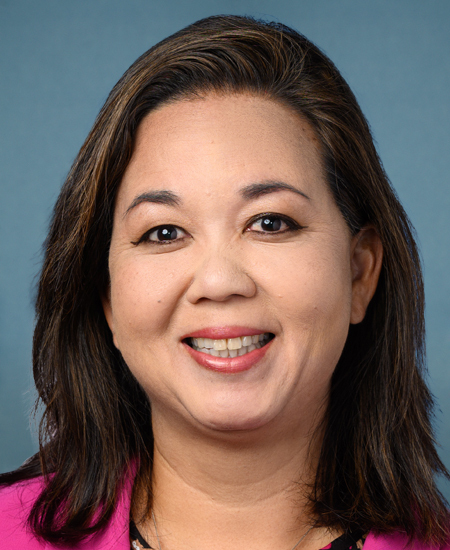
Rep. Jill N. Tokuda
Sponsored bills
Maddy summaryHRES 977 is a symbolic resolution recognizing National Board Certified Teachers (NBCTs), with over 137,000 educators holding this credential nationwide. It supports designating National Board Certified Teacher Week, acknowledges NBCTs' role in improving student achievement (especially in high-need schools), and encourages schools and states to promote NBCT growth and provide support. The resolution highlights that NBCTs are linked to higher student learning gains, greater teacher retention, and increased earnings for students - though it does not create new policies or funding. It is a non-binding statement of appreciation, not a legislative change.
Maddy summaryThe Farm and Food Cybersecurity Act of 2024 requires the U.S. Department of Agriculture to conduct biennial studies assessing cyber threats and vulnerabilities across the entire food supply chain - including farmers, processors, distributors, and retailers - and submit reports to Congress detailing risks to food safety, public health, and national security. It also mandates annual cross-sector simulations with agencies like Homeland Security and Health and Human Services to test emergency responses to food-related cyber incidents, involving government and private sector stakeholders. The bill authorizes $1 million annually (2024-2028) to fund these studies and simulations, aiming to identify gaps and improve coordination. These requirements directly affect federal agencies, state/local governments, and food industry entities responsible for food production, distribution, and security.
Maddy summaryThis bill allows federal firefighter grant funds to be used for evidence-based peer support programs addressing mental health. It directly helps firefighters by expanding access to peer-led mental health support through existing grant programs. The key provision adds a new funding category (subparagraph F) to authorize these programs under the Federal Fire Prevention and Control Act. Fire departments can now implement or grow peer support initiatives using current grant resources without requiring new legislation.
Maddy summaryHRES 976 is a resolution recognizing Certified Registered Nurse Anesthetists (CRNAs) for their 150+ year contributions to healthcare. It highlights CRNAs as essential providers of anesthesia and pain management, especially in rural areas and military/veterans' healthcare settings, where they administer over 50 million anesthetics annually. The resolution encourages public and professional recognition of CRNAs during National CRNA Week (January 21-27, 2024) and urges stakeholders to utilize CRNAs' full potential. As a non-binding commemorative resolution, it does not create new policies or directly affect healthcare delivery.
Maddy summaryHR 7056, the Access to Family Building Act, establishes federal rights for individuals to access assisted reproductive technology (ART) like IVF without unreasonable restrictions, directly affecting patients seeking fertility treatments and health care providers offering ART services. The bill prohibits states from imposing limitations on ART that are more burdensome than those for comparable medical procedures, fail to advance safety, or unduly restrict access, while allowing health and safety regulations that are necessary and least restrictive. It creates federal enforcement mechanisms, including lawsuits by the Attorney General or affected individuals to challenge violating state laws, and preempts conflicting state regulations. The bill explicitly preserves state authority over health/safety regulations and does not alter existing state insurance coverage laws for ART.
Maddy summaryThe Nurse Faculty Shortage Reduction Act of 2024 creates a new federal grant program to address nursing faculty shortages. It authorizes $28.5 million annually (2024-2028) to help nursing schools supplement faculty salaries, covering the gap between clinical nurse pay and teaching salaries. Schools must submit detailed salary data and plans to sustain higher pay after the 3-year grant period. The program prioritizes schools in high-need areas, serving vulnerable populations, or recruiting underrepresented faculty, with a report required to Congress after 3 years.
Maddy summaryThe PREPARE Act of 2023 establishes an Interagency Council composed of senior officials from 25 federal agencies to coordinate extreme weather resilience efforts across the government. The law requires each federal agency to develop and update comprehensive extreme weather plans that integrate climate considerations into agency operations, with plans submitted annually to the Office of Management and Budget. The Council will create a public website to share resources, best practices, and progress updates, and will issue annual reports to Congress detailing implementation and effectiveness. This legislation directly affects all federal agencies by mandating they incorporate extreme weather planning into their operations and budgeting processes. The Act aims to improve government coordination on climate resilience without creating new regulatory requirements or duplicating existing federal programs.
Maddy summaryHRES 882 is a non-binding resolution passed by the U.S. House of Representatives on November 21, 2023, declaring support and gratitude to food banks, food pantries, and community-based organizations addressing food insecurity. It recognizes these groups' work in serving over 5 billion meals annually, rescuing wasted food (nearly 118 billion pounds yearly), and supporting vulnerable populations including 44.2 million people in food-insecure households in 2022. The resolution specifically acknowledges their role in providing emergency aid, nutrition education, and disaster response, while highlighting that 55% of food-insecure households did not access federal nutrition programs. It does not create new policies or funding but formally commends these organizations' contributions to reducing food insecurity and improving community health.
Maddy summaryThis resolution expresses the U.S. House of Representatives' support for designating October 1-7, 2023, as "National 4-H Week." It recognizes 4-H as the nation's largest youth development organization, serving nearly 6 million young people through programs in health, science, agriculture, and civic engagement, delivered by land-grant universities and over 600,000 volunteers. The resolution does not create new laws or funding but formally acknowledges 4-H's role in empowering youth leadership and encourages public recognition of its impact. It directly affects 4-H members, volunteers, and the broader network of land-grant institutions and the USDA's Cooperative Extension System.