

International Violence Against Women Act of 2022 This bill requires a U.S. global strategy to prevent and respond to violence against women and girls. The bill establishes in the Department of State an Office of Global Women's Issues, which shall be headed by an Ambassador-at-Large for Global Women's Issues. The Ambassador-at-Large shall (1) coordinate U.S. government efforts regarding gender equality and the advancement of women and girls in foreign policy, and (2) develop or update periodically a U.S. global strategy to prevent and respond to gender-based violence. The bill establishes in the U.S. Agency for International Development the position of Senior Coordinator for Gender Equality and Women's Empowerment who shall coordinate policies, programs, and funding regarding gender equality and women's empowerment.
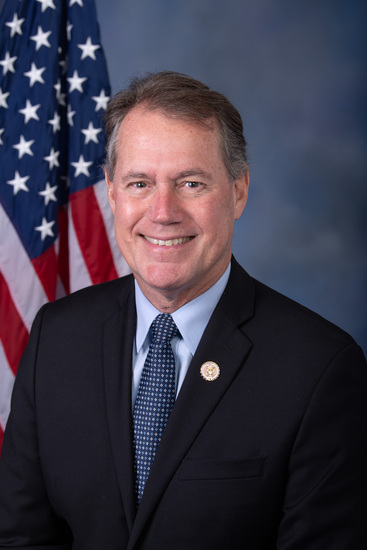
Rep. Ed Case
Sponsored bills
Stop Transnational Repression Act This bill establishes a new criminal offense related to transnational repression (e.g., activities of foreign governments to harass, intimidate, or coerce individuals in the United States).
Coral Reef Sustainability Through Innovation Act of 2022 This bill authorizes the federal agencies on the U.S. Coral Reef Task Force, which includes the National Oceanic and Atmospheric Administration, to carry out prize competitions that promote coral reef research and conservation. The prize competitions must be designed to help the United States achieve its goal of developing new and effective ways to advance the understanding, monitoring, and sustainability of coral reef ecosystems. Priority is given to establish programs that address communities, environments, or industries that are in distress due to the decline or degradation of coral reef ecosystems.
READ Act Reauthorization Act of 2022 This bill reauthorizes a law that requires the implementation of a strategy to promote quality basic education in partner countries by (1) expanding access to basic education for all children, particularly marginalized children and vulnerable groups; and (2) improving the quality of basic education and learning outcomes.
Advancing Equality for Wabanaki Nations Act This bill allows the Wabanaki Nations in Maine to access future federal laws that are passed by Congress for the benefit of Indian tribes. Four Indian tribes (Maliseet, Micmac, Penobscot, and Passamaquoddy) make up the Wabanaki Nations. Currently, these tribes are unable to access certain federal laws and related benefits because such laws are preempted by the Maine Indian Claims Settlement Act of 1980.
Climate Adaptation Science Centers Act or the CASC Act This bill provides statutory authority for the Department of the Interior's National and Regional Climate Adaptation Science Centers. The centers must provide scientific expertise to managers of natural resources, cultural resources, and ecosystem services to inform decisions that aid adaptation to a changing climate and extreme weather events. The program shall include a National Climate Adaptation Science Center and Regional Climate Adaptation Science Centers. Among its activities, the National Center shall serve as the national office for the regional centers, develop and facilitate coordination among the regional centers, and conduct research on cross-regional and national science priorities. Regional centers shall develop research, education, training, and advisory service priorities regarding the impacts of climate trends and variability on natural and cultural resource management. Interior shall establish an Advisory Committee on Climate and Natural Resource Sciences to advise the National and Regional Climate Adaptation Science Centers on specified matters, including (1) the contents of a national strategy identifying key climate adaptation science priorities to advance the management of natural and cultural resources in the face of climate change; and (2) the integration of equity, particularly for historically underserved communities, in the operation of the National Center and regional centers.
Maddy summaryThis bill ratifies the Bureau of Indian Affairs' 2018 decision to place approximately 6.7 acres of land into federal trust for the Samish Indian Nation. It confirms this trust status for the specific land described in the 2018 decision and applies to all current or future legal challenges regarding this land or similar actions. The bill explicitly states it does not prevent the Samish Nation from seeking additional land to be placed into trust in the future. It directly affects the Samish Indian Nation's ownership rights to this specific parcel and their legal standing on related land claims.
Save Oak Flat Act This bill repeals the requirement for the Department of Agriculture to convey the 2,422 acres of Forest System land located in Tonto National Forest in Pinal County, Arizona, known as Oak Flat, to Resolution Copper Mining, LLC, in exchange for various parcels of land owned by Resolution Copper. Oak Flat is withdrawn from (1) entry, appropriation, or disposal under the public land laws; (2) location, entry, and patent under the mining laws; and (3) disposition under all laws pertaining to mineral and geothermal leasing or mineral materials.
The Jackie Walorski Maternal and Child Home Visiting Reauthorization Act of 2022 This bill reauthorizes through FY2027, increases funding for, and modifies the Maternal, Infant, and Early Childhood Home Visiting Program. This program supports home visits for expectant and new parents who live in communities that are at-risk for poor maternal and child health outcomes. Changes to the program include setting out requirements for allocating program funds; increasing the percentage of funds reserved for tribal entities; establishing a publicly available dashboard that reports program outcomes; requiring activities to reduce unnecessary data collection, reporting, and other administrative requirements of the program; and allowing for virtual home visits (provided certain conditions are met). The bill also reduces funding for the Medicare Improvement Fund.
Uyghur Policy Act of 2021 This bill addresses human rights issues concerning the Uyghurs and other minority groups in the Xinjiang Uyghur Autonomous Region in China. The bill authorizes the establishment of a Special Coordinator for Uyghur Issues position within the Department of State. The State Department's Bureau of Educational and Cultural Affairs may, subject to appropriations, make certain funds available to human rights advocates working on behalf of Uyghurs and members of other ethnic and religious minority groups persecuted in China. The funds, if made available, shall be used to facilitate the presence of such human rights advocates at public diplomacy forums to speak on issues related to the human rights and religious freedoms of minority groups persecuted in China. The State Department must ensure that Uyghur language training is available to Foreign Service officers. It must also ensure that a Uyghur-speaking member of the Foreign Service is assigned to U.S. diplomatic and consular missions in China.